Owais Saqlain Ahmed
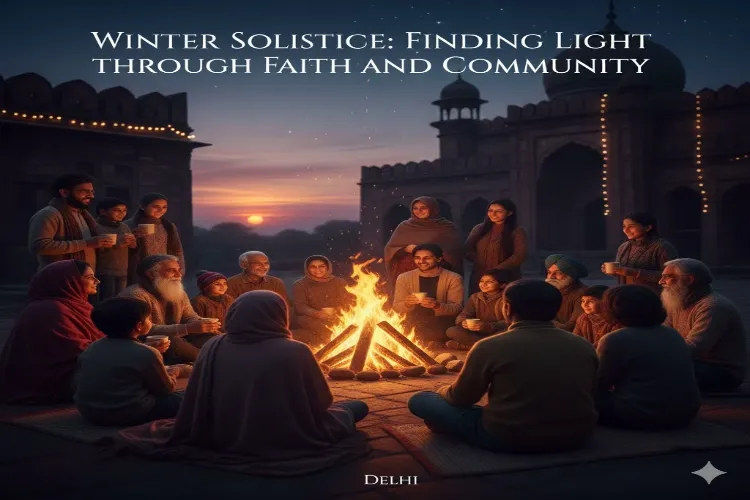
December 21st: Earth tilts 23.5 degrees away from the sun, and Delhi gets just 10 hours and 20 minutes of daylight. Darkness swallows the city by 5:30 PM. This is the winter solstice—the year's longest night. Ancient Persians refused to sleep during Yalda, convinced unconsciousness would let darkness win permanently. Norse warriors built bonfires visible across fjords. Romans flipped their world upside down during Saturnalia: slaves commanded masters, the Senate closed, chaos replaced order. Civilizations that never met, separated by continents and centuries, all shared one primal terror—what if the sun doesn't come back?
The Quran cuts through that fear: "And of His signs are the night and day and the sun and moon. Do not prostrate to the sun or to the moon, but prostrate to Allah, who created them" (41:37). Stop worshiping the pattern. Understand who designed it. Islam teaches differently: darkness isn't the enemy. It's the test of whether you'll persevere when you cannot see the finish line.
Prophet Muhammad knew this intimately. For thirteen years in Mecca (610-622 CE), he faced daily torture and mockery. Bilal was dragged across burning sand with a boulder crushing his chest. Sumayya was stabbed to death—Islam's first martyr. Thirteen years of showing up when nothing seemed to change. Instead of abandoning the effort, he told followers about Prophet Yusuf—betrayed, enslaved, imprisoned for years. Yet Yusuf emerged as Egypt's treasurer. The Quran's lesson: "So patience is most fitting" (12:18). The patience of planting seeds in frozen ground, trusting roots grow unseen.
This is what Malala Yousafzai did. Shot at fifteen for advocating girls' education, she kept showing up. In her 2013 UN speech: "I raise up my voice—not so that I can shout, but so that those without a voice can be heard." Your voice matters most when darkness makes speaking hardest.
That 5:30 PM exhaustion? It's not weakness. Research in The Lancet confirms reduced sunlight lowers brain serotonin production. The American Psychiatric Association reports 5% of U.S. adults experience Seasonal Affective Disorder, with another 10-20% experiencing milder symptoms. The Quran stated this 1,400 years ago: "And We made the night as a covering and made the day for livelihood" (78:10-11). The Prophet adjusted seasonally—sleeping earlier, waking later. He honored his circadian rhythm.
When Aisha asked about the most beloved deeds, he replied: "Those done consistently, even if small." That meditation app you forgot? Better than the perfect routine you keep planning. Winter asks for your most sustainable, not your best.
But winter turns dangerous when isolation sets in. That friend who stopped replying. That cousin only active in obscure forums. A 2020 Massachusetts General Hospital study found social connections are the strongest protective factor against depression. Young people feeling disconnected become vulnerable to anyone offering belonging.
The Prophet understood this. His Constitution of Medina created community where Muslims, Jews, and Arab tribes shared civic responsibility while maintaining distinct identities. Preventing extremism means ensuring nobody faces darkness alone.
After tonight, light returns. One minute tomorrow. Then another. Egyptian footballer Mohamed Salah showed this. A Stanford study found his presence reduced Liverpool hate crimes against Muslims by 16% and anti-Muslim tweets by 50%. Like sunlight after solstice—barely noticeable at first, unstoppable over time.
So stop fighting the 5:30 PM shutdown. The Prophet said, "Your body has rights over you." Text someone who's been quiet with a real question. The Prophet taught believers are "like a building whose parts support each other." As Allah promises: "Indeed, with hardship comes ease" (94:5-6).
Tomorrow, the sun rises one minute later. You won't notice. But in two weeks, evenings feel different. That's how hope works—accumulated minutes of light you barely noticed arriving.
Tonight, your assignment sits unfinished. Your coffee went cold. The day ended before you were ready. That's okay. Can you be gentle with yourself? Can you text your friend? Can you sleep earlier without calling it defeat?
The Persians fought darkness. You don't have to. The Prophet honored rest. Malala showed up consistently. Salah kept being himself until the world noticed.
Every winter solstice has been followed by spring. Not because humanity earned it, but because Allah designed the pattern. The sun will return. Your energy will return. Through divine design, not your struggle.
READ MORE: Young bride Mrs Yasim taught me differences can be celebrated
So tonight, make chai. Text your friend. Sleep when your body asks. These small acts aren't preparations for better days. They are life getting better—one quiet moment at a time. Darkness is temporary. Your presence is sacred. Light always finds its way home.



.png)