Ashhar Alam/ New Delhi
Every month, in Pudukkottai, Tamil Nadu, women walk into a gathering that did not exist a generation ago. They come carrying stories of abandonment, domestic violence, arbitrary divorce, denial of inheritance, and years of silence. Instead of facing an assembly of male elders, they are heard by women who understand their struggles, guide them towards legal remedies, offer counselling, and help them reclaim dignity.
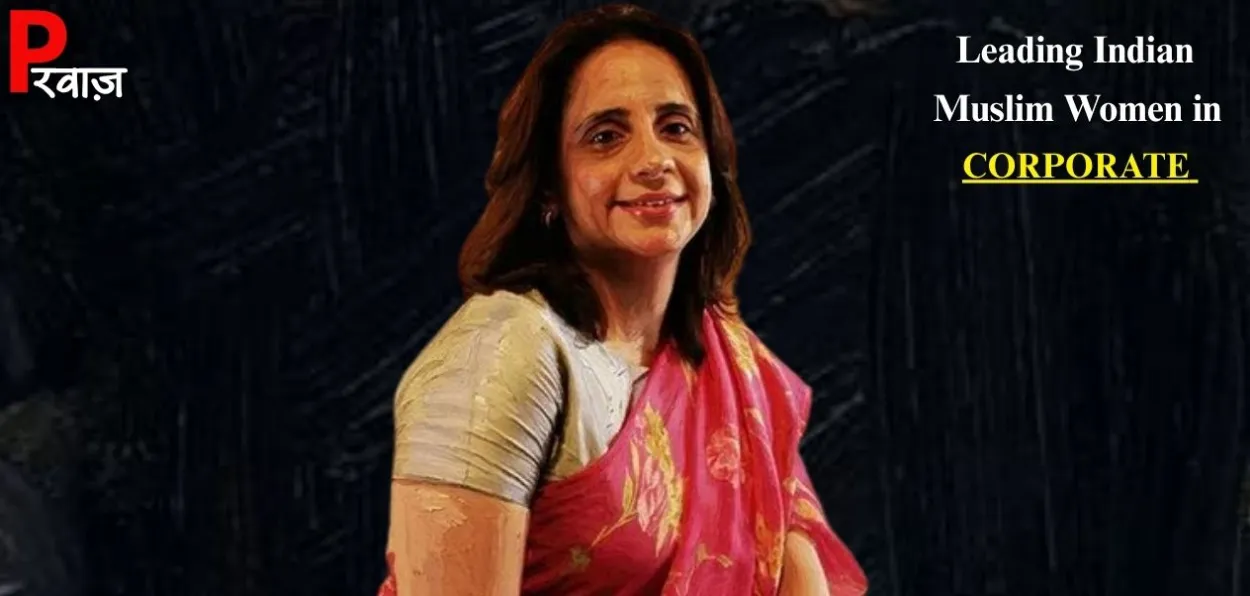
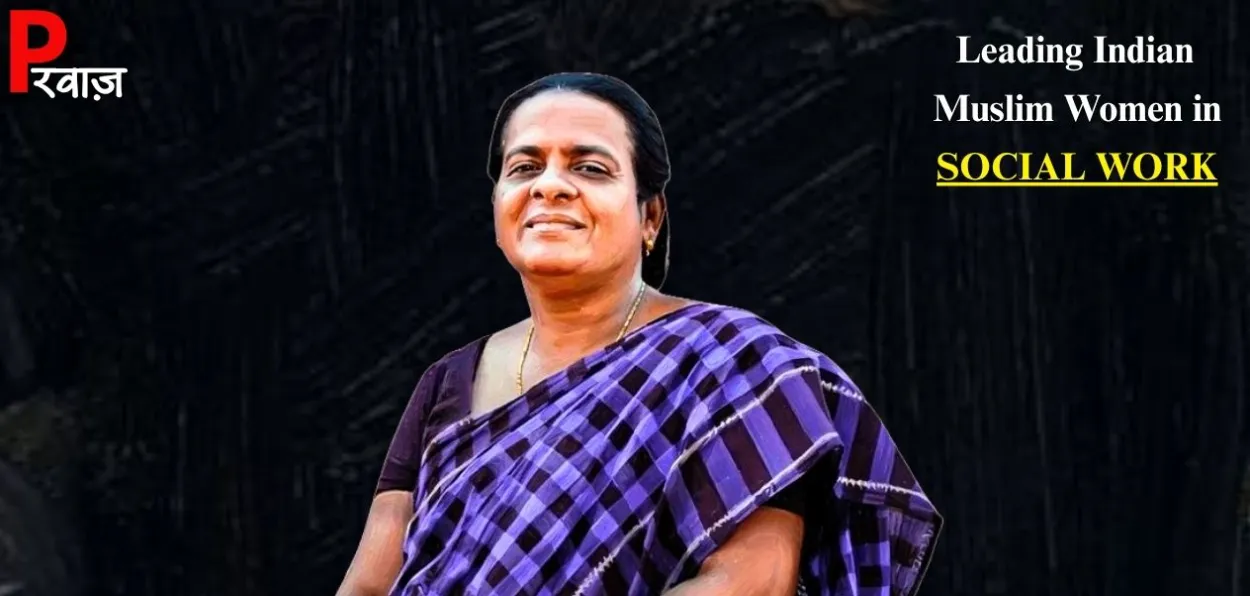
This forum—the Tamil Nadu Muslim Women's Jamaat Committee—is the result of one woman's determination to create a space where Muslim women could speak for themselves. That woman is D. Sharifa Khanam, a social activist whose work has transformed the lives of thousands of women over the past four decades.
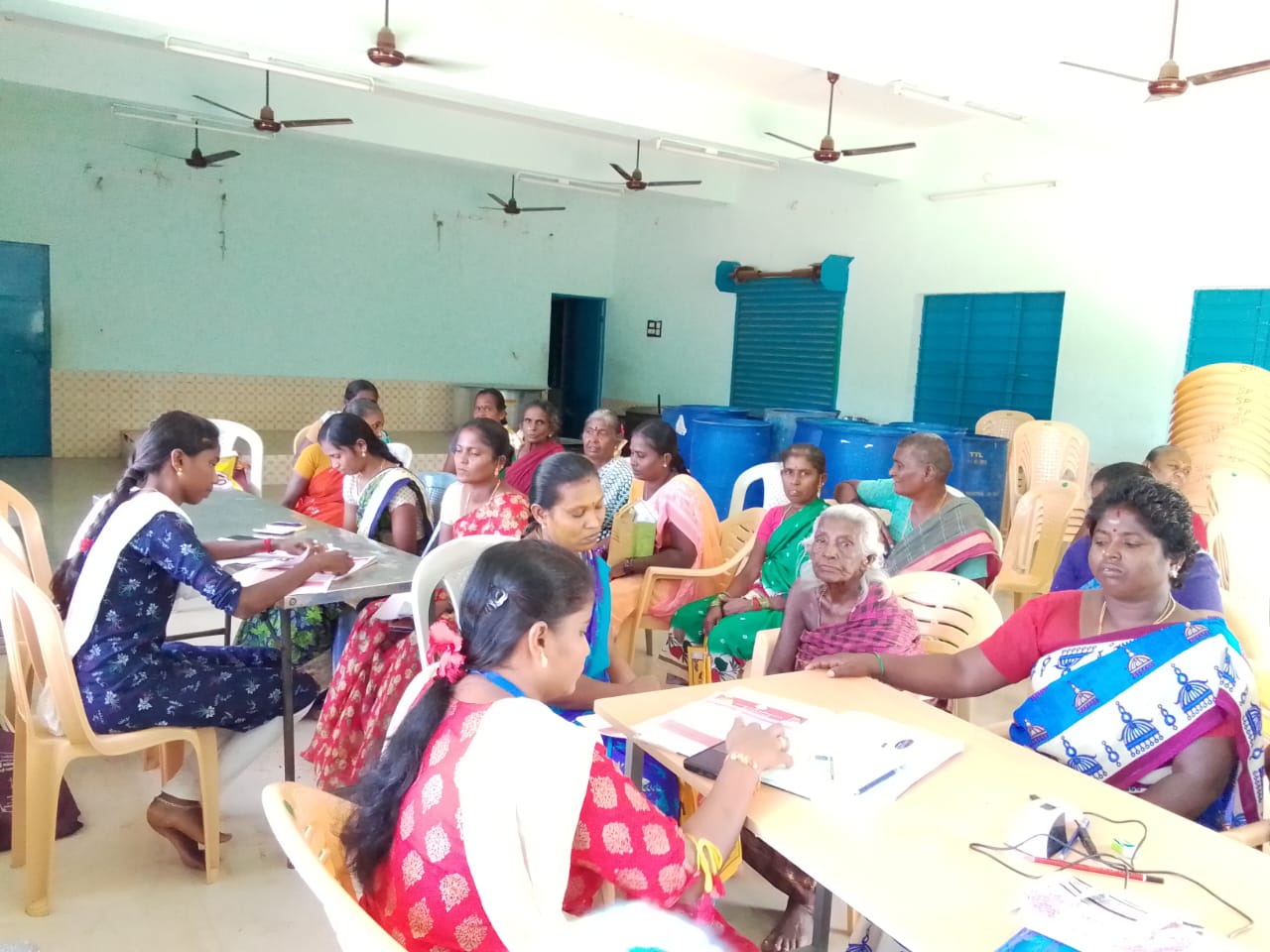 Women attending mediation camp of STEPS
For Khanam, the fight for justice did not begin with activism. It began with observation.
Born into a large family in a village in Tamil Nadu, she was the youngest of ten siblings. Her mother, an Urdu schoolteacher, raised the children largely on her own after separating from Khanam's father. Like many girls growing up in conservative settings, Khanam accepted male authority as an unquestioned reality. Patriarchy was not something to be challenged; it was simply the way life functioned.
One of her elder brothers, who later studied at IIT Kanpur, encouraged her academic ambitions and helped her secure admission to Aligarh Muslim University. Moving from a small village to one of India's leading universities exposed her to ideas, experiences and debates that extended far beyond her immediate surroundings.
Yet the defining moment of her journey came after graduation.
During a women's conference in Patna in the late 1980s, Khanam worked as a translator, interpreting discussions from Hindi and English into Tamil for delegates from across the country. Listening closely to countless testimonies, she realised that women's suffering was not confined to any one region, religion or social class. Different languages narrated the same stories—violence within homes, unequal opportunities, economic dependence and the denial of basic rights.
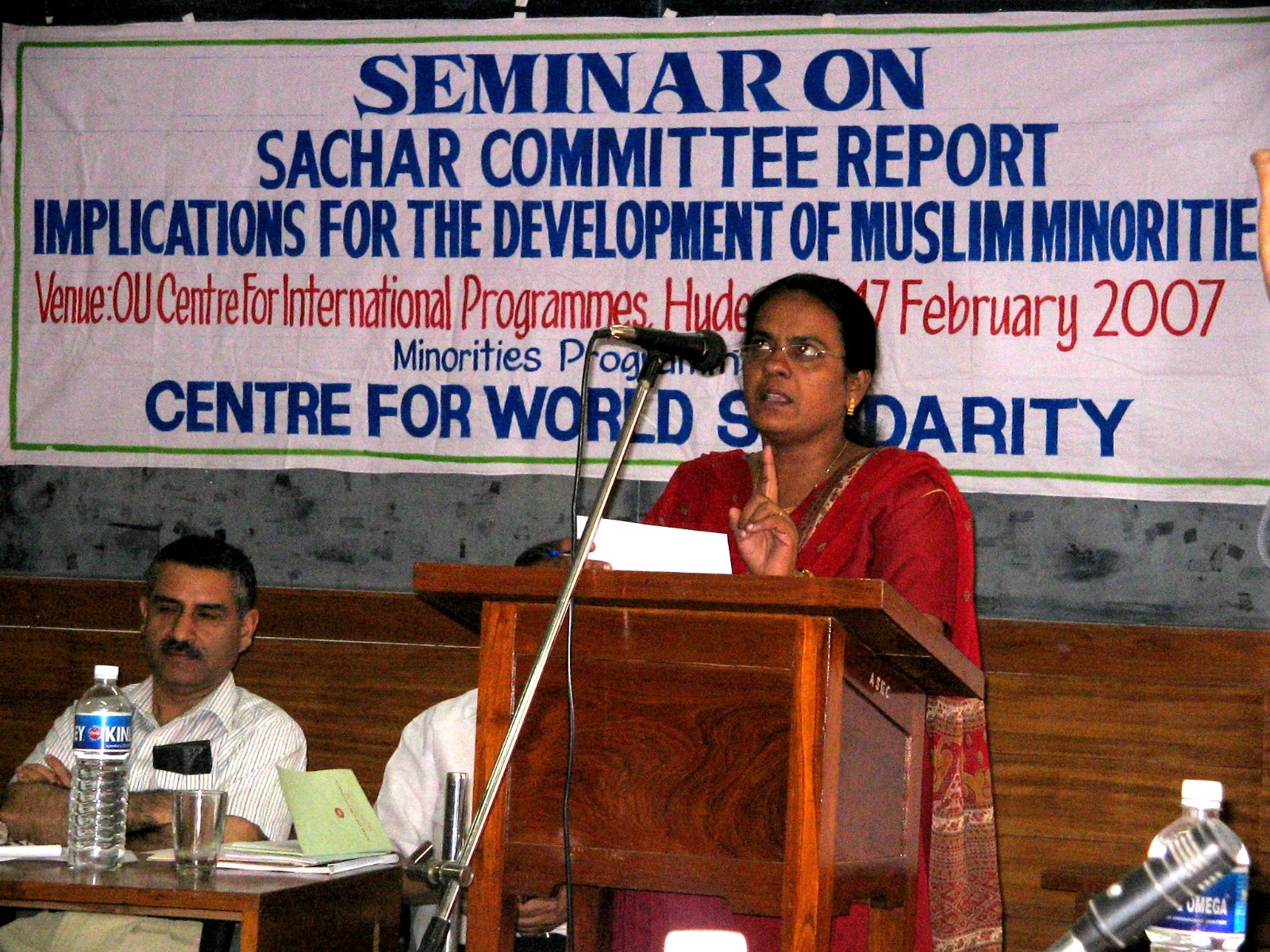 D. Sharifa Khanam speaking at a seminar
That experience fundamentally changed her understanding of women's lives.
In later interviews, Khanam has recalled thinking of herself as someone waiting, much like Cinderella, for a fairy godmother to appear and solve problems. Eventually, she concluded that no such rescuer was coming. If change had to happen, women would have to become their own protectors—and each other's.
Back in Pudukkottai, she began modestly.
Using money earned from private tuition classes and selling saris, Khanam gathered a small group of women to discuss their concerns and search for practical solutions. What started as an informal initiative soon evolved into a structured movement.
In 1987, she founded the STEPS Women's Development Organisation, an organisation dedicated to supporting women experiencing domestic violence, divorce, abandonment, poverty and social exclusion. Initially, the focus was on counselling families and mediating disputes, but the work steadily expanded to include legal assistance, rehabilitation and advocacy.
Recognising the impact of the initiative, the district administration allotted land that enabled STEPS to establish a permanent base for its activities.
While working with women from different communities, Khanam says she rarely viewed herself primarily through the lens of religion. That changed during episodes of communal violence in neighbouring regions. The insecurity experienced by Muslim families, particularly women, highlighted another layer of vulnerability that mainstream women's organisations were often reluctant to address.
This led her to examine the functioning of traditional jamaats—community bodies attached to mosques that typically resolve disputes through councils dominated by male elders.
Khanam believed that women seldom received a fair hearing in these forums.
She also observed that many women lacked access to religious knowledge and therefore could not question interpretations of Islamic law presented to them. After reading the Quran in Tamil translation herself, she became convinced that there was often a significant gap between the text and the way some community institutions interpreted it in matters affecting women.
Determined to create an alternative, Khanam established a Muslim women's jamaat in 1991. The initiative eventually grew into the Tamil Nadu Muslim Women's Jamaat Committee, formally emerging in 2000 as an extension of STEPS.
Its objective was straightforward but groundbreaking: to provide Muslim women with a forum where they could seek justice without fear or intimidation.
The committee conducts regular meetings at district and state levels, where women present cases involving divorce, maintenance, domestic abuse, inheritance disputes and other family conflicts. Members first attempt reconciliation through counselling. When necessary, they work with the police or pursue legal remedies through the courts.
Beyond dispute resolution, the organisation also conducts workshops on Shariat, legal rights and women's entitlements under both religious and civil law. It has campaigned for reforms including the abolition of instant triple talaq and greater recognition of Muslim women's property rights.
 Women attending a workshop of STEPS
The journey has not been without resistance.
According to the organisation, the women's jamaat has faced sustained opposition from sections of conservative religious leadership, including threats directed at its members. Yet Khanam has often maintained that the purpose of the initiative was never to challenge religion itself but to ensure that women were not excluded from conversations affecting their lives.
Over time, she has observed encouraging changes. Some mosques in Tamil Nadu have gradually begun creating greater space for women's participation, reflecting a slow but significant shift in community attitudes.
Alongside its advocacy work, STEPS continues to function as a refuge for women escaping violence. The organisation provides temporary shelter, counselling and rehabilitation support while also addressing broader issues such as livelihoods, land rights, education and employment.
Its philosophy is rooted in a simple conviction: self-respect is the foundation of women's empowerment.
According to the organisation, nearly 3,500 women have benefited from its interventions over the years. Awareness programmes for students, rural women and local communities—including workshops, poster campaigns, competitions and self-defence training—have further expanded its reach beyond crisis intervention.
Khanam was unavailable for comment while this article was being prepared. Her office also did not respond to queries regarding the women's jamaat or the idea, discussed in earlier interviews, of establishing a mosque exclusively for women. On previous occasions, however, she has clarified that the concept of a women's mosque was never the ultimate objective. What mattered most was creating spaces where women could gather freely, discuss their concerns and collectively seek solutions.
That vision continues through the work of STEPS and the Women's Jamaat.
READ MORE: Sana Khan: Transforming lives through education and social service
For nearly four decades, D. Sharifa Khanam has quietly built institutions where many believed none were possible. Rather than waiting for change to arrive from outside, she created mechanisms through which vulnerable women could find support, justice and solidarity. In doing so, she has shown that sometimes the most powerful form of leadership is simply giving others the confidence to speak—and ensuring that someone is finally willing to listen.