




Sabiha Fathima/Bengaluru
At 27, when most young professionals are still figuring out stability, Advocate Tuba Sanobar is busy redefining purpose. She does not enter a room quietly — not because she is loud, but because she is certain. Certain of who she is. Certain of what she stands for. Certain that “rights” are not abstract legal vocabulary but living, breathing necessities.
Born in Seoni, a small town in Madhya Pradesh, Tuba’s beginnings were simple. Her father worked with the railways, a job that meant frequent transfers and a life without permanence. Her mother, a homemaker, held the family together through every shift, every adjustment, every compromise. The struggles were real — financial limits, new cities, unfamiliar schools — but so was the determination that their two children, a son and a daughter, would grow up with ambition larger than circumstance.
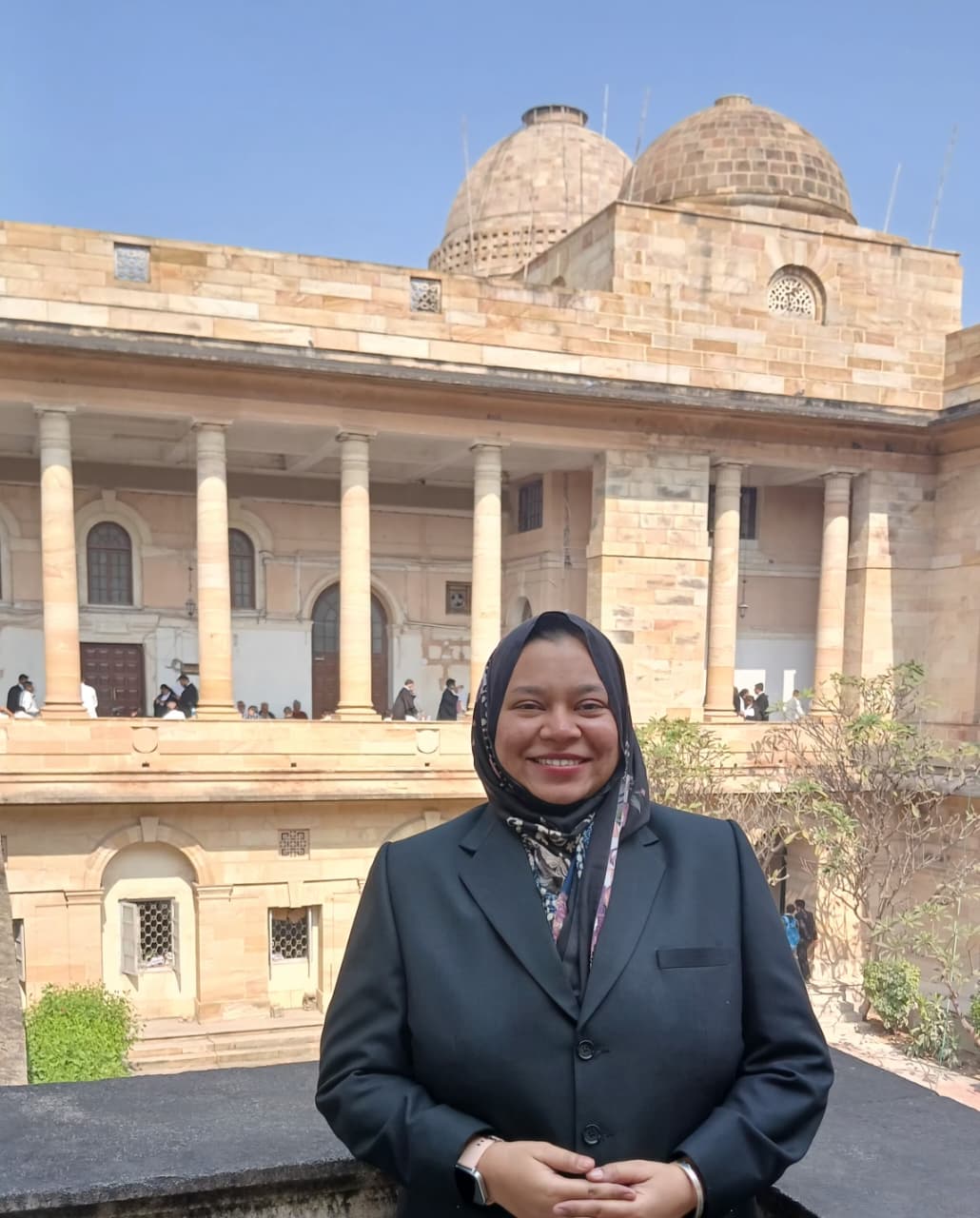 Advocate Tuba Sanobar
As a child, Tuba was never invisible. School stages were her arena. Whether it was debate, singing, or public speaking, she carried a natural magnetism. Singing, especially, was not just a co-curricular activity — it was her emotional language. The applause she received in auditoriums across her school years shaped her confidence. She learned early that a voice, when used well, can move people.
She once dreamed of becoming a journalist. The idea of asking hard questions and telling stories that matter fascinated her. But journalism felt distant, uncertain. Her father advised her to enter the judicial system — a profession that promised respect and stability. She listened. Yet she did not surrender her idealism. Instead, she took it with her into law.
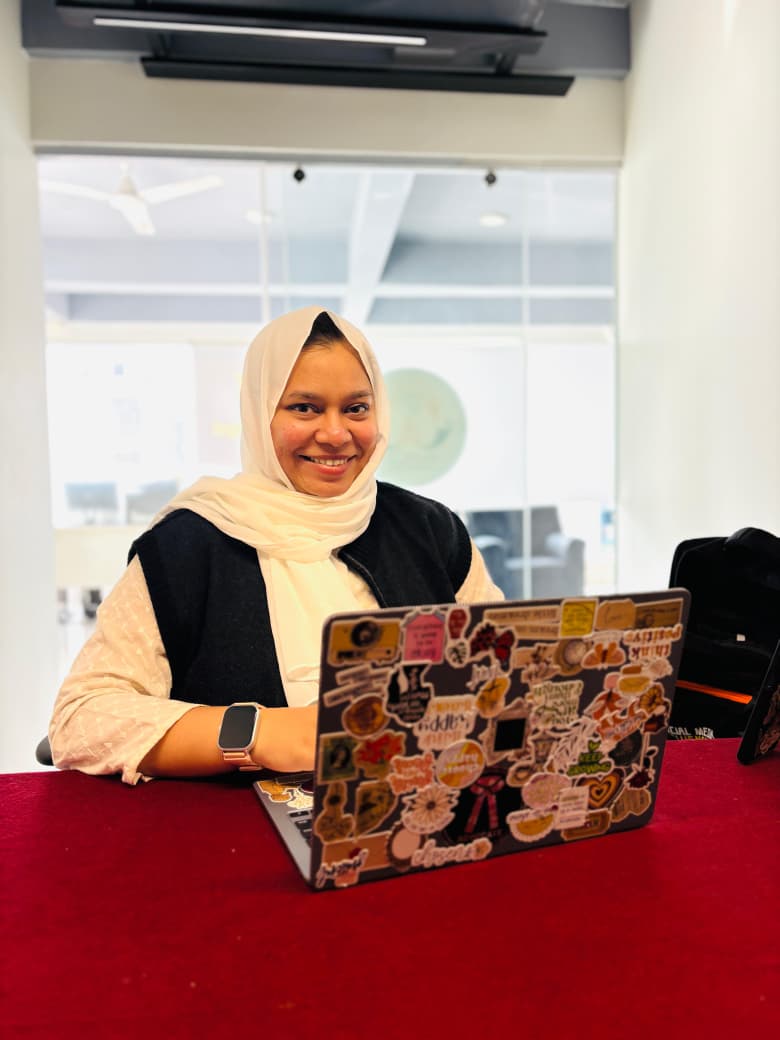 Advocate Tuba Sanobar at work
She pursued her legal education with seriousness, eventually completing her LLM in Criminology from Osmania University. Criminal justice was not just a syllabus to her; it was a lens. Why do certain communities suffer more? Why does justice move slowly for some and swiftly for others? Criminology became her favorite subject because it allowed her to study systems, not just statutes.
Interestingly, until the third year of her law course, she did not even own a mobile phone. In a generation defined by screens, she was studying law without one. Perhaps that distance gave her clarity. During her master’s, she developed a deep interest in data privacy and cyber law — long before it became a trending topic. She began questioning how multinational corporations collect personal data, how artificial intelligence operates in grey zones, how deepfakes threaten truth itself.
 Advocate Tuba Sanobar in library
She studied the European Union’s GDPR and compared it with India’s evolving framework, including the Digital Personal Data Protection Act. To her, data is not just information; it is identity. And identity, if unprotected, becomes vulnerable. She often says that technology travels like nature — beyond borders — but laws remain trapped within them. India, she believes, still needs stronger enforcement mechanisms and a truly data-subject-centric approach.
But Tuba is not someone who lives only in books. Her activism found its rhythm during the Anti-CAA protests. The girl who once sang film songs on school stages now stood before crowds singing Faiz Ahmed Faiz’s “Hum Dekhenge” and Habib Jalib’s “Dastoor.” Her transition from entertainment to resistance was organic. “When I am on stage, I am an artist,” she says — but her art carries conscience.
Writers like Parveen Shakir, Zahra Nigah, and Nisar Kubra shaped her literary sensibilities. Poetry taught her that softness and strength can coexist. Her voice — trained in melody — became sharpened in dissent.
 Advocate Tuba Sanobar
With limited scope to practice pure data privacy litigation at the time, she stepped into the corporate world in Bengaluru to understand compliance frameworks. The job was respectable and financially secure. For many, it would have been the destination. For her, it was a learning curve. She observed how companies treat data as assets but rarely center the human being behind the data.
Yet corporate life gave her something unexpected — confidence in her identity. As a visibly Muslim woman who wears the hijab and offers namaz on time, she chose not to dilute herself. In earlier court appearances, she sometimes felt the weight of silent judgment. People would look at her as if wondering what a hijabi woman could possibly argue. But she learned quickly that facts have no dress code. Once she began speaking — armed with law, logic, and clarity — assumptions dissolved.
She believes social identity must not be hidden to fit in. For her, being seen as a Muslim woman in professional spaces matters. Representation matters. Not for symbolism, but for normalization.
Eventually, comfort began to feel uncomfortable. Corporate growth was steady, but her heart leaned elsewhere. She left the job — not recklessly, but resolutely. She joined the Association for Protection of Civil Rights as Assistant State Convenor for Karnataka, after earlier voluntary involvement with their Telangana reports. Leaving stability was not easy. She could have returned to her hometown. Instead, she chose a path aligned with purpose.
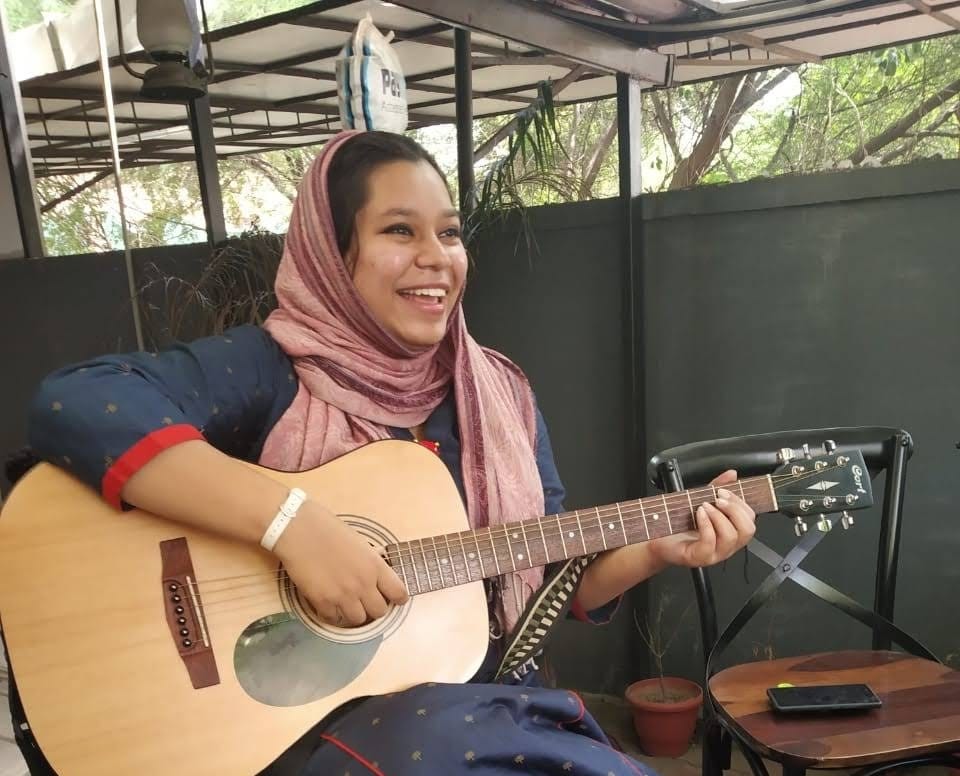 Advocate Tuba Sanobar playing music
Her core agenda has always been rights — especially for women and minorities. One of her most heartfelt initiatives is the SOZ program, aimed at supporting victims of domestic abuse. Working alongside senior advocate B.T. Venkatesh, known for his work in LGBTQ+ rights and as a public prosecutor in Karnataka, she is building legal awareness campaigns that reach women who often do not know the protections available under the Domestic Violence Act.
She is particularly concerned about Muslim women who face both societal and structural barriers. Through social media outreach, community engagement, and legal guidance, SOZ seeks to inform, empower, and support. The initiative currently connects through digital platforms, including [email protected], with plans to expand its reach across Bengaluru.
For Tuba, this is not about charity; it is about correction. Women, she insists, cannot remain confined to private suffering while public systems claim neutrality.
After the pandemic, she became deeply involved in a Muslim Women’s Study Circle. Fortnightly gatherings brought together young professionals to discuss socio-religious issues and community reform. From these discussions emerged the Masjid Project — an idea rooted in reclaiming space.
She believes mosques should function as community centers, not exclusive zones. In several places where women had no designated space, she and her colleagues initiated conversations with management committees. Women’s participation in religious and community spaces, she argues, is not a modern demand but a necessary restoration.
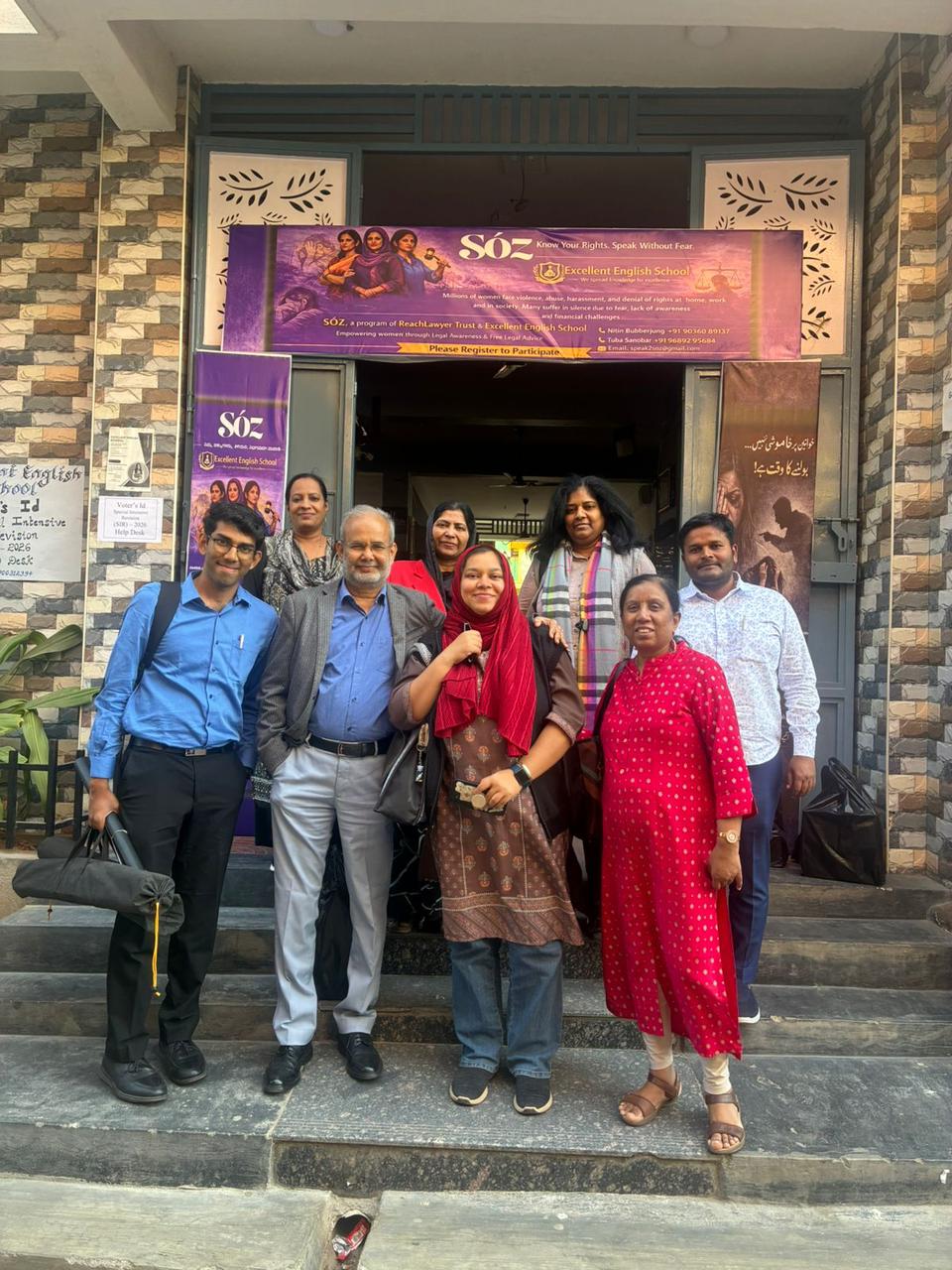 Advocate Tuba Sanobar with the SOZ team Advocate Venkatesh Bubbarjung, Advocate Akhila Vidyasandra, Advocate Nitin Bubbarjung, and Dr. Benazir Baig united to empower women
Her message is simple but powerful: women’s significance is not limited to private devotion. They must be present in decision-making spaces, policy discussions, and public forums.
Tuba does not hesitate to speak about her political aspirations. She wants to enter politics someday. Not for power, but for reform. Her oratory skills — honed since childhood — and her grounding in law position her uniquely. She believes leadership must emerge from lived realities, not detached rhetoric.
Through podcast appearances on platforms like Radiance and Al Balagh, she discusses identity, law, and responsibility. Her recurring message to young people is to live consciously. To have a goal. To understand that rights come with responsibility.
Her journey is not without friction. There were moments when people questioned her visibility, her voice, her ambition. But every time she speaks — whether in a courtroom, on a protest stage, or in a community gathering — she redefines perception.
At 27, Advocate Tuba Sanobar is not chasing applause anymore. She is chasing impact. From a small town in Madhya Pradesh to the evolving legal and activist spaces of Bengaluru, she carries with her the struggles of her parents, the courage of her convictions, and the clarity of her faith.
She sings less for entertainment now and more for awakening. She argues not to win debates but to restore dignity. She wears her identity not as a shield, but as a statement.
READ MORE: Col Sofiya Qureshi redefined the role of women in Military
And in every space she steps into, she leaves behind one unmistakable impression — that youth is not an excuse for hesitation. It is a mandate for change.

.jpg "Gujarat’s women entrepreneurs bring their craftsmanship to life during Navratri")









.webp)