New Delhi
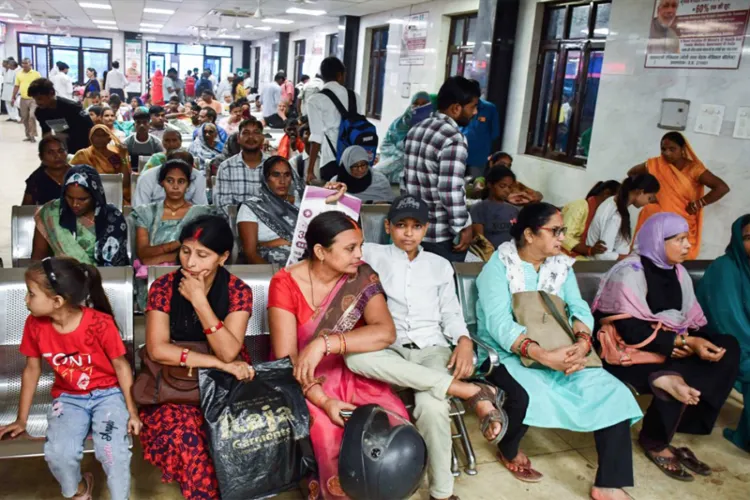
Eight out of ten Indians currently lack the financial safety nets required to manage sudden medical emergencies, even as climate change and environmental volatility emerge as primary drivers of national anxiety. According to the 'a Nishchit Index 2.0' by Aditya Birla Sun Life Insurance, India's national uncertainty score has reached 79, reflecting a deep-seated concern over the intersection of health and financial stability.
The study, based on a survey of 3,583 respondents across 20 towns, suggests that health is no longer viewed as an occasional medical concern but as a continuous financial risk. Approximately 81 per cent of the population expects pollution levels to worsen, while 82 per cent worry about how rising healthcare costs will impact their long-term financial security. Environmental and climate factors have officially moved up the ranks to become the second-largest driver of anxiety across the country.
"Environmental and climate factors now rank as the second largest driver of national anxiety, contributing significantly to India's overall uncertainty score of 79," the report states.
The research indicates that the financial impact of environmental volatility is deeply localised. In the South, residents are increasingly concerned about rising temperatures and vector-borne diseases like dengue and malaria.
Western metros such as Mumbai are seeing productivity losses linked to heatwaves and pollution. Meanwhile, the North reports a rise in illnesses tied to disrupted daily routines, and the East reflects heightened anxiety driven by the challenges of elderly care.
"With 81% expecting pollution levels to worsen and 82% worried about rising healthcare costs, there is growing recognition that climate conditions are directly influencing both physical wellbeing and household finances," the findings reveal.
Despite this heightened awareness, the gap in preparedness remains wide. Nearly 79 per cent of respondents are unsure whether their existing insurance policies cover serious illnesses. Furthermore, 80 per cent of those surveyed expressed doubt regarding the adequacy of their savings in the event of a sudden critical diagnosis. This lack of a buffer is particularly acute in Tier-II and Tier-III towns, where uncertainty levels are higher and financial resources are often more limited.
READ MORE: Two-time world kickboxing champion Tajamul Islam is an ode to human spirit
Mental health has also emerged as a critical point of concern, with 81 per cent of respondents reporting rising stress levels. However, a significant 80 per cent of individuals hesitate to seek professional support, a trend that leads to lost productivity and potential income disruption.
"Individuals must review health cover, build financial buffers and recognise mental wellbeing as central to financial stability, while organisations must expand protection to address evolving risks linked to climate," the report said.











.webp "Representational Image")
.webp "Representational Image")