New Delhi
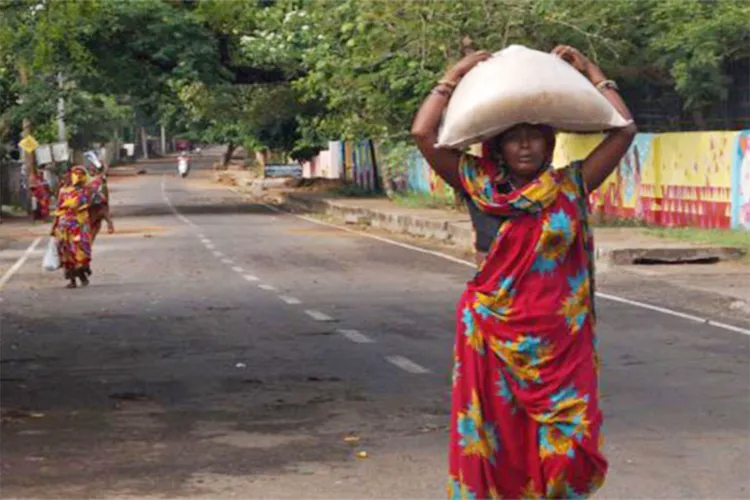
Female labour force participation in India's million-plus cities increased to 27.2 per cent in 2025 from 19.8 per cent in 2017-18, reflecting a significant rise in women's engagement in the labour market, according to data released by the National Statistics Office (NSO).
The data on labour market dynamics in cities with a population of more than 10 lakh showed that women's participation in the labour force has strengthened steadily over the years.
The NSO data also highlighted an improvement in female employment. The Worker Population Ratio (WPR) for women in million-plus cities rose to 25.5 per cent, indicating that a larger share of women is employed compared to previous years.
It stated, "As India advances towards the vision of Viksit Bharat, its cities are increasingly emerging as vital centres of economic activity, innovation and employment generation. A deeper understanding of the economic structure and dynamics of the cities assumes increasing importance for informed policymaking, efficient resource allocation and evidence-based governance".
Overall labour force participation in these cities also improved. The Labour Force Participation Rate (LFPR) in usual status increased to 52.4 per cent in 2025, up from 50.4 per cent in 2021-22 and 47.7 per cent in 2017-18.
The report showed that unemployment levels remained broadly in line with urban India.
The unemployment rate in million-plus cities stood at 4.9 per cent under the usual status approach and 6.8 per cent under the Current Weekly Status (CWS) approach, compared with 4.8 per cent and 6.8 per cent, respectively, for urban India.
Among men, unemployment declined steadily over the years, with the male unemployment rate falling to 4.5 per cent in 2025 from 7.5 per cent in 2017-18.
The report also examined reasons for people staying out of the labour force. Among males, 53.5 per cent cited continuing studies as the main reason for not participating in the labour market.
Among females, 68.7 per cent cited childcare and personal commitments related to homemaking as the primary reason.
The NSO data further showed that earnings in million-plus cities remained higher than the urban India average across employment categories.
Average monthly earnings for self-employed workers stood at Rs 30,858 compared with Rs 23,013 in urban India. Regular salaried employees earned an average of Rs 28,808 per month compared with Rs 26,258 in urban India, while casual labourers earned Rs 624 per day against Rs 550 nationally.
READ MORE: Fauzia Dastango's journey of reviving the art of storytelling
The report also noted that the share of youth aged 15-29 years who were not in employment, education or training (NEET) was lower in million-plus cities at 22.2 per cent compared with 25.0 per cent for urban India.











.webp "Representational Image")
.webp "Representational Image")



.webp)