

New Delhi
The government has prohibited the export of a specified category of battery waste and scrap, including lithium-ion battery black mass, with immediate effect, according to a notification issued by the Directorate General of Foreign Trade (DGFT).
The notification changes the export policy for waste and scrap of primary cells, primary batteries and electric accumulators, including spent batteries, under ITC (HS) Code 85491400 from 'Free' to 'Prohibited'. The restriction will remain in force until further orders.
The decision covers unsorted battery waste and scrap that does not contain lead, cadmium or mercury. The notification identifies this category as lithium-ion battery black mass.
"The export policy of Waste and scrap of primary cells, primary batteries and electric accumulators; spent primary cells, spent primary batteries and spent electric accumulators - Unsorted and not containing lead, cadmium or mercury (Lithium-Ion Battery Black Mass) under ITC (HS) Code 85491400 is amended from 'Free' to 'Prohibited' with immediate effect, until further orders," the notification stated.
Under the earlier policy, the export of the specified category of battery waste and scrap was permitted under the 'Free' category. With the latest amendment, exporters will no longer be allowed to export the material under this category.
The revised policy specifically applies to the category of unsorted battery waste and scrap described in the notification. It does not state a blanket prohibition on the export of every type of battery or battery-related material.
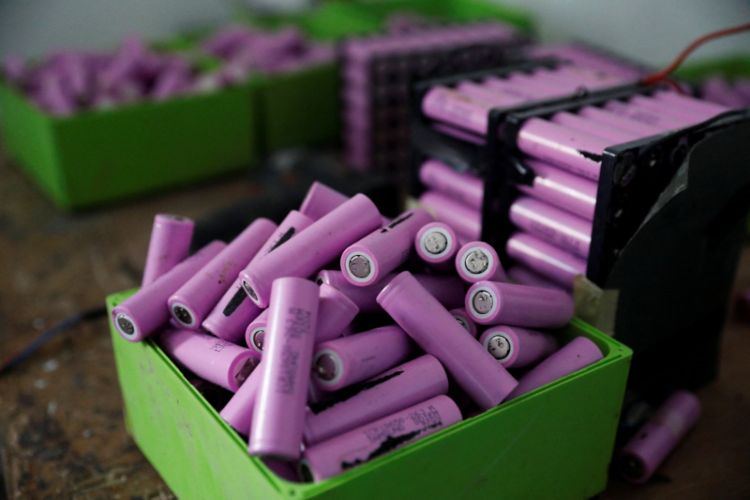
Black mass is a powder-like material produced when used lithium-ion batteries are dismantled, crushed and processed.
It contains valuable materials such as lithium, used in manufacturing lithium-ion batteries for electric vehicles, smartphones and energy storage systems. Cobalt and nickel are important materials used in certain battery chemistries. Manganese and graphite, also used in battery manufacturing and related applications.
Through further chemical processing, particularly hydrometallurgy, recyclers can recover these materials and convert them into compounds that can be used in battery manufacturing.
READ MORE: Engineer Mohammed Kashif turns scrap into art, saves environment
The notification, issued by the Ministry of Commerce and Industry's Department of Commerce, said the Central Government had taken the decision by exercising its powers under Section 3 read with Section 5 of the Foreign Trade (Development & Regulation) Act, 1992, as amended, along with the Foreign Trade Policy, 2023.