Ashhar Alam/New Delhi
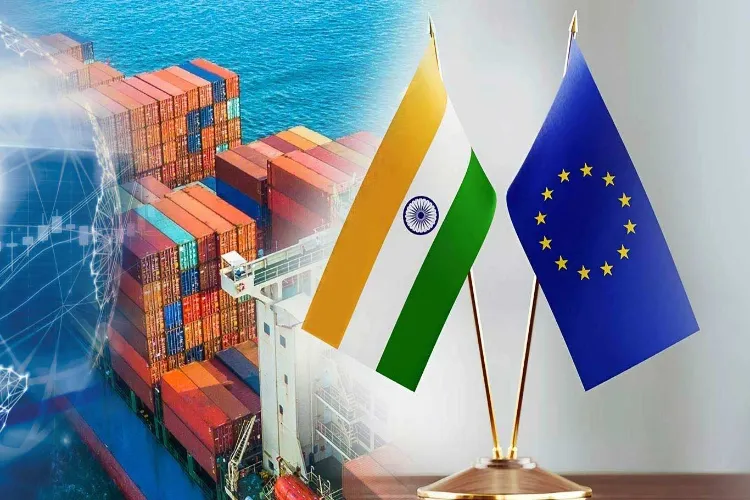
India and the European Union have formally concluded their long-awaited Free Trade Agreement, marking a major milestone in bilateral economic ties. Prime Minister Narendra Modi and European Commission President Ursula von der Leyen jointly announced the breakthrough at the 16th India–EU Summit held on January 27, 2026, describing the pact as one of the most consequential trade agreements India has ever signed.
Once implemented, the India–EU Free Trade Agreement (FTA) is expected to eliminate tariffs across a wide range of goods, with duties dropping to zero immediately after the pact comes into force.
Welcoming the development, Shaleen Toshniwal, Chairman of the Manmade & Technical Textiles Export Promotion Council (MATEXIL), expressed gratitude to Prime Minister Modi and acknowledged the leadership of Union Commerce and Industry Minister Piyush Goyal and Union Textiles Minister Giriraj Singh in steering the negotiations to a successful conclusion. He termed the agreement both landmark and historic for India’s export ecosystem.
Toshniwal noted that the India–EU FTA comes at a critical juncture, when global trade is witnessing fragmentation, rising protectionism, and increased uncertainty amid shifting geopolitical and economic alignments. He added that the European Union remains one of India’s most important economic and strategic partners, and the agreement would significantly strengthen ties between the two sides.
According to Toshniwal, exporters of manmade fibre textiles and technical textiles are particularly optimistic about the deal, as it promises enhanced market access and new growth opportunities for value-added Indian products in the European market.
At present, India exports manmade fibre textiles and technical textiles worth nearly USD one billion each. However, Indian exporters face duties ranging from 8 to 12 percent in EU markets, while competitors such as Bangladesh enjoy zero-duty access — a disadvantage the FTA is expected to eliminate. The removal of tariffs, Toshniwal said, will restore competitiveness and help Indian manufacturers expand their footprint in Europe.
He added that MATEXIL will closely study the provisions of the agreement once they are officially notified and guide its member exporters on compliance, market requirements, and strategies to maximise benefits from the pact. Exporters, he said, must also align their offerings with evolving buyer preferences in EU countries to fully leverage the opportunities created by the FTA.
Expressing confidence in the long-term impact of the agreement, Toshniwal said the India–EU FTA would play a crucial role in advancing India’s export ambitions and contribute meaningfully to the country’s Vision 2047 roadmap.











.webp)