New Delhi
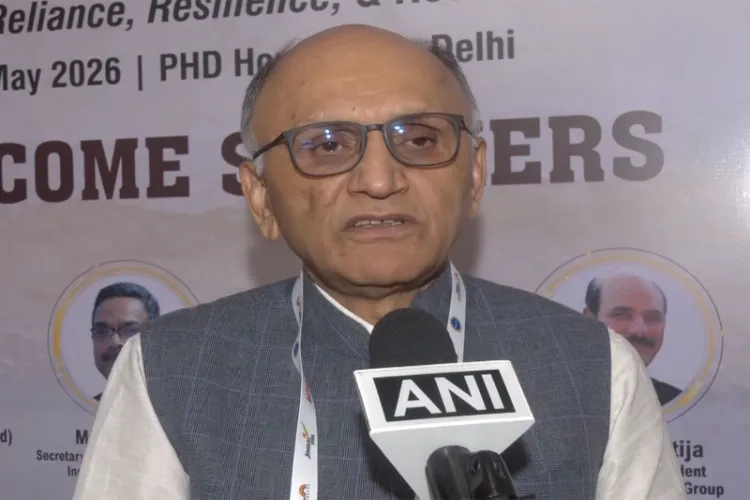
India does not have adequate scrap availability for large-scale green steel production, with only around 25 per cent of the country's steel demand currently being met through scrap-based manufacturing, noted former Steel Secretary of India and Director at Jindal Steel & Power, Sanjay Kumar Singh.
Speaking with ANI, on the sidelines of PHDCCI National Conclave on Raw Material Securitisation for Metals & Minerals Advancing Self-Reliance, Resilience & Resource Security, Singh said, "We do not have scrap in the country. Only 25 per cent of the steel can be made from scrap, whatever we are consuming in the country. So we have to rely on iron ore. And iron ore invariably uses a blast furnace for the production of steel. So that's a challenge in green steel."
He said the steel sector is facing twin challenges of raw material availability and decarbonisation, adding that the quality of iron ore in the country is deteriorating rapidly.
"This is a very critical area for the metal industry. The availability of raw material and the quality of raw material year to year within the country are depleting. Steel industry requires iron ore, coking coal and other metals required as alloys," he said.
According to Singh, lower-grade iron ore increases environmental costs as more energy is required in steel production, leading to higher carbon dioxide emissions.
"And another challenge, which is bigger than the availability of raw material, is sustainability and decarbonisation. When the quality is depleting, it adds to the environmental cost. It requires more energy and emits more carbon dioxide," he added.
Speaking on green steel production, Singh said pilot projects are underway in the country, but fully green commercial steel production remains difficult.
"Steel is one such consumable which cannot be made absolutely green. Some amount of emission it would be doing. Unless we are using renewable energy, scrap and electric arc furnace, emissions cannot come down substantially," he said, adding that these methods can reduce emissions by nearly 80 per cent from current levels.
Highlighting government initiatives, Singh referred to the National Green Hydrogen Mission, the renewable energy push and the proposed green steel mission. He also stressed the importance of the Carbon Credit Trading System (CCTS), saying it would become a major mechanism for reducing emissions in carbon-intensive sectors like steel.
READ MORE: Abeda Inamdar left a cushy job to change lives through education, social reform
"Those who eliminate carbon dioxide get a credit, while those emitting more will eventually have to buy credits. Right now it is voluntary, but in time it will become mandatory," he said.
On the domestic steel industry, Singh said India's crude steel production has reached around 168-169 million tonnes and is growing at nearly 8-9 per cent annually, with consumption also rising at a similar pace.









.webp)
.webp)