New Delhi
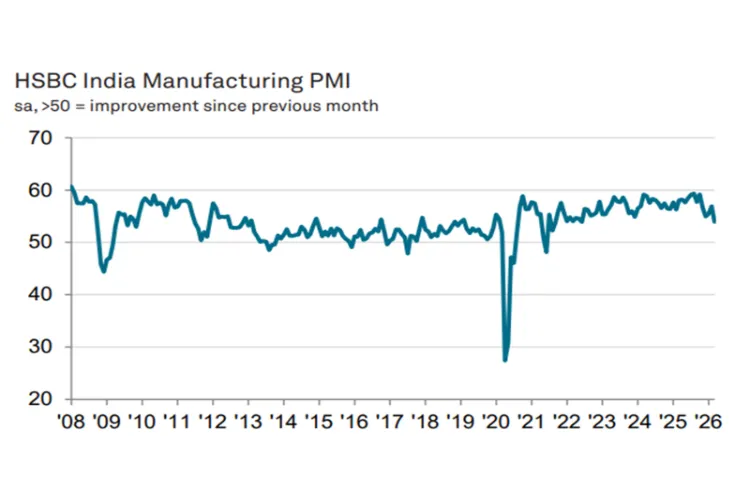
India's manufacturing PMI rose to 54.7 in April, up from 53.9 in March, but still marking the second-slowest improvement in operating conditions in nearly four years. According to HSBC India Manufacturing PMI, while new business intakes and production saw mild recoveries, the rates of increase remained among the weakest since 2022.
The report noted that advertising and demand resilience supported sales and production, yet growth faced hurdles from competitive conditions, the West Asia war, and a reluctance among clients to approve pending quotes.
"The two largest sub-components of the PMI, new orders and output, rose since March but trailed readings seen in at least three-and-a-half years," the report noted.
International demand provided a bright area for the sector as new export orders expanded at the "fastest pace since last September." Firms reported improved interest from several global markets, including Australia, France, Japan, mainland China, and the United Kingdom.
However, the ongoing conflict in the Middle East exerted significant upward pressure on inflation. "Input costs and output charges rose at the quickest rates in 44 and six months respectively," the report stated. "Amid reports of higher prices for aluminium, chemicals, electrical components, fuel, leather, petroleum products and rubber, average cost burdens rose further in April."
The overall rate of inflation reached its highest level since August 2022. This prompted goods producers to lift their fees to the greatest extent in half a year to protect their margins. Consumer goods stood out as the only category where cost inflation slowed, although the rate in this sub-sector still surpassed others and led the rankings for output charge inflation.
Pranjul Bhandari, Chief India Economist at HSBC, said, "India's manufacturing PMI rose to 54.7 in April, up from 53.9 in March, but still marking the second-slowest improvement in operating conditions in nearly four years. Spillovers from the Middle East conflict are becoming more evident, particularly through inflation: input costs increased at the fastest pace since August 2022, and output prices rose at the quickest rate in six months. Even so, output, new orders (including exports) and employment all grew moderately, pointing to continued resilience in India's manufacturing sector."
Despite a cautious approach to inventories, which grew at the slowest pace in nearly five years, manufacturers increased their recruitment efforts. Job creation reached a ten-month high as companies moved forward with expansion plans.
At the same time, lead times for inputs improved, which manufacturers associated with better coordination with both new and existing suppliers. The extent of this improvement in delivery times was historically strong for the period.
RAED MORE: Will BJP make inroads in West Bengal, Kerala and return in Assam?
"The overall level of positive sentiment slipped since March, though it was at its second-highest mark since November 2024," the report said.
Indian manufacturers maintained a positive outlook for growth prospects over the coming year. "Confidence was pinned on hopes that marketing efforts will bear fruit and that pending projects will be approved," the report mentioned.












.webp)
_(1).webp)