




New Delhi
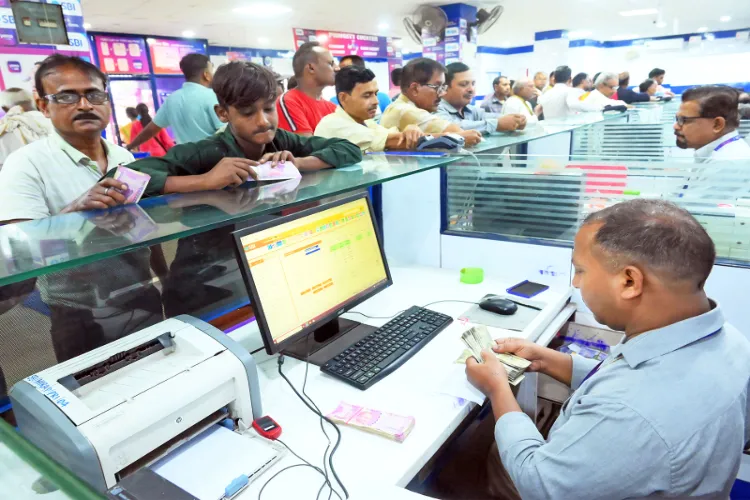
The Non-Banking Financial Company-Microfinance Institutions (NBFC-MFIs) continued to anchor the microfinance ecosystem, commanding a 41.6% share of the total portfolio outstanding as of December 2025, as per the latest MicroLend report released by credit bureau CRIF High Mark.
In contrast, banks saw their portfolio share decline from 32.7% in December 2024 to 26.6% in December 2025, it said.
The report said that while banks posted 13.4% QoQ growth in originations value in Q3 FY26, their overall share in disbursements fell from 36.7% in Q3 FY25 to 26% in Q3 FY26. NBFC-MFIs led originations with a 45.1% share in Q3 FY26, reflecting sustained gains in market positioning.
India's microfinance sector is witnessing cautious stabilisation, marked by portfolio consolidation, improving early-stage delinquencies, and a renewed push toward higher ticket-size lending, the report said.
As of December 2025, the industry's aggregated Gross Loan Portfolio (GLP) stood at Rs 320.9 lakh crore, reflecting a 7.2% quarter-on-quarter (QoQ) and 18% year-on-year (YoY) decline. Active loans also contracted sharply, falling 9.1% QoQ and 23% YoY to 11.2 crore loans.
Originations value rose 9.2% QoQ to Rs 61,716 crore in Q3 FY26, while loan volumes increased 6.8% QoQ to 102.5 lakh loans. On a YoY basis, average ticket size climbed 15.7% from Rs 52,000 in Q3 FY25 to Rs 60,200 in Q3 FY26, underscoring a structural shift toward larger loan sizes.
The Rs 50,000-Rs 80,000 segment now accounts for 42.8% of originations value, up from 36.8% a year earlier. Growth has been particularly strong in the Rs 80,000-Rs1 lakh and Rs 1 lakh+ segments, signaling lender preference for higher-ticket, more established borrowers.
The report highlights significant improvement in borrower leverage metrics. As of December 2025, 93.8% of portfolio outstanding is with borrowers having three or fewer lender associations, up from 94.8% borrower share in December 2024. Borrowers with more than five lender associations now account for just 1.9% of portfolio share.
Additionally, around 70% of portfolio outstanding is concentrated among borrowers with aggregate credit exposure up to Rs1 lakh, indicating alignment with regulatory guardrails and risk moderation.
READ MORE: Muslim couple arrange wedding of their adopted Hindu son
The report highlighted that the top 10 states account for over 82% of the industry's GLP, with Bihar, Tamil Nadu, and Uttar Pradesh together contributing nearly 39% of the portfolio. All top states reported sharper declines in active loans compared to portfolio reductions, reflecting rising ticket sizes and tighter borrower selection norms.
Odisha recorded the strongest YoY improvement in PAR 31-180, while Karnataka posted notable QoQ gains.











.webp)

.webp)

_(1).webp)