Ashhar Alam
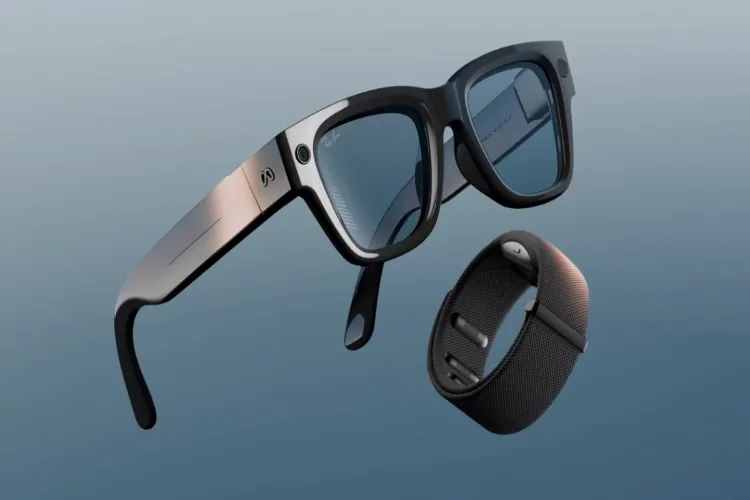
Consumers outside the United States waiting for Meta’s Ray-Ban Display smart glasses and Neural Band may need to be patient a little longer. The company has confirmed a delay in the international rollout of its AI-powered wearable devices, citing limited supply and exceptionally strong demand in the US.
In an announcement made on January 6, Meta said it is temporarily shelving plans to introduce the Ray-Ban Display glasses in several global markets, including the UK, France, Italy, and Canada, as it prioritises fulfilling domestic orders. According to the company, demand in the US has significantly exceeded expectations, stretching waitlists well into 2026.
Launched in September 2025, the $799 Ray-Ban Display glasses represent Meta’s first consumer-facing AI hardware product. The device allows users to view content, receive messages, and interact through a Neural Band wrist accessory that uses neural interface technology for hands-free control.
The smart glasses were developed in collaboration with eyewear giant EssilorLuxottica, the parent company of Ray-Ban. The partnership, which began in 2019 and was renewed in 2024, has already delivered strong commercial results. EssilorLuxottica reported a revenue boost in the third quarter of 2025, partly attributed to its collaboration with Meta.
“Ray-Ban Display is a category-defining product with very limited inventory,” Meta said in a blog post. “Since its launch, consumer interest has been unprecedented, leading to extended wait times.”
Meta is not alone in betting on AI-powered glasses as the next major computing platform. Google recently showcased its Android XR smart glasses and announced a $150 million partnership with Warby Parker. Meanwhile, OpenAI and Apple are also reportedly exploring similar wearable technologies, underlining growing industry interest in post-smartphone devices.
At CES 2026, Meta revealed several new features coming to the Ray-Ban Display glasses. One standout addition is a built-in teleprompter, designed for presentations and public speaking. Users can upload notes from apps such as Google Docs, which appear discreetly on the glasses’ display. The Neural Band allows users to scroll through the text at a personalised pace. The feature will roll out gradually.
Meta also announced EMG Handwriting, a new input method that lets users type messages on WhatsApp and Messenger by tracing letters with a finger on any surface. Initially, the feature will be available only to Early Access users in the US and will support English.
The company is also expanding its pedestrian navigation feature to four additional US cities, bringing the total coverage to 32 locations.
Meta revealed a new proof-of-concept developed in collaboration with Garmin, integrating the Neural Band with Garmin’s in-vehicle infotainment systems. In demos, users can navigate interfaces, scroll through apps, and launch functions using subtle finger gestures detected by the wristband’s surface EMG sensors.
READ MORE: IUML's Fatima Muzaffar Ahmed is the epitome of Muslim woman leadership
In addition, Meta is working with the University of Utah to refine Neural Band functionality for people with varying levels of hand mobility, aiming to make the technology more inclusive.
As Meta refines its hardware and expands functionality, the delayed global rollout underscores both the promise and the supply challenges of next-generation AI wearables.














_(1).webp)
.webp)