




 Amir Suhail Wani
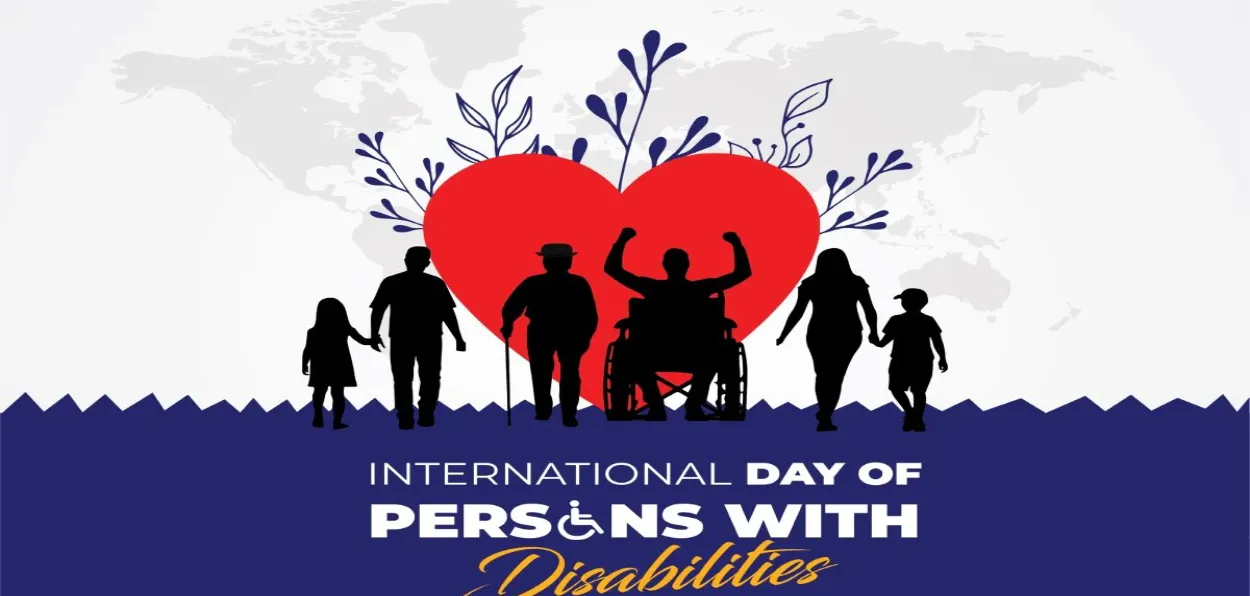
On December 3, the world comes together to observe the International Day of Persons with Disabilities (IDPD). The day is more than a ceremonial commemoration; it is a global reminder of the dignity, potential and rights of persons with disabilities, and an urgent call to address the barriers—visible and invisible—that hinder their full participation in society.
In a world that is increasingly recognising diversity as a strength, the inclusion of persons with disabilities is not optional but a fundamental prerequisite for justice, equality and sustainable development. As nations strive to meet the Sustainable Development Goals, disability inclusion remains central to the very idea of “leaving no one behind.”
Perceptions shape reality, and in the case of persons with disabilities, perceptions have historically been the greatest obstacle to inclusion. For generations, disability was framed through a charity-driven and medicalised lens, where the individual was viewed as someone to be pitied, “fixed,” or cared for. This worldview reduced persons with disabilities to the margins, often denying them schooling, employment, autonomy, social interaction and equal citizenship. Such attitudes did not just limit opportunities—they shaped policies, environments and behaviours in ways that reinforced exclusion.
Over the last several decades, disability rights movements have radically transformed the global conversation. The emergence of the social model of disability has helped reframe disability not as a personal deficit, but as a socially created condition emerging from barriers in the physical, institutional and attitudinal environment. Under this model, a lack of ramps, inaccessible transport, discriminatory hiring practices, inaccessible digital resources or insensitive language becomes the true source of disability—not the impairment itself. This shift has been instrumental in restoring agency, dignity and voice to persons with disabilities.
Changing perceptions also requires confronting the deep-seated stereotypes that still persist. Persons with disabilities are often underestimated, infantilised or seen as incapable of decision-making. Many face implicit bias in schools, workplaces, healthcare settings and even within families.
Representation in media and public life continues to be limited or distorted, often portraying persons with disabilities either as objects of pity or as superhuman “inspirations.” A more balanced, respectful and realistic portrayal is necessary to normalise disability as a natural part of human diversity.
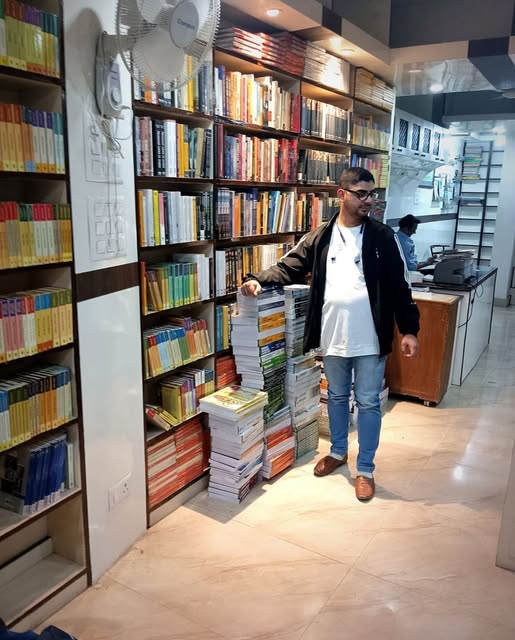 The author inside a library
Perception change is not just an intellectual exercise; it is a cultural transformation. It requires families to encourage independence rather than overprotection, educators to adopt inclusive attitudes, employers to recognise competence beyond disability, and communities to embrace diversity with empathy and understanding. When perceptions evolve, barriers begin to crumble, and inclusion becomes a lived reality rather than a theoretical aspiration.
However, having robust policies is only the first step; implementation remains the real challenge. Even today, many public buildings, transport networks, educational institutions and digital platforms fall short of accessibility standards.Employment rates for persons with disabilities remain low due to inaccessible workplaces, inadequate skilling opportunities and employer prejudices. Healthcare and rehabilitation services continue to vary drastically between urban and rural areas, leaving many without the support they need for independent living. Assistive technologies remain financially out of reach for a significant portion of the population, despite their transformative potential.
Policy gaps also emerge from the lack of reliable and disaggregated data on disability. Without accurate data, planning, budgeting and targeted interventions remain insufficient. Monitoring mechanisms to ensure the enforcement of disability rights are often under-resourced, and many stakeholders lack the awareness required to implement legal provisions effectively.
Strengthening disability-inclusive policy implementation requires coordinated governance, adequate funding, and continuous capacity-building of institutions. It also demands the active involvement of organisations of persons with disabilities (OPDs), ensuring that policies are shaped and refined by those who understand disability most intimately. Public–private partnerships can play a pivotal role in promoting workplace inclusion, advancing accessible technologies and creating sustainable livelihood pathways.
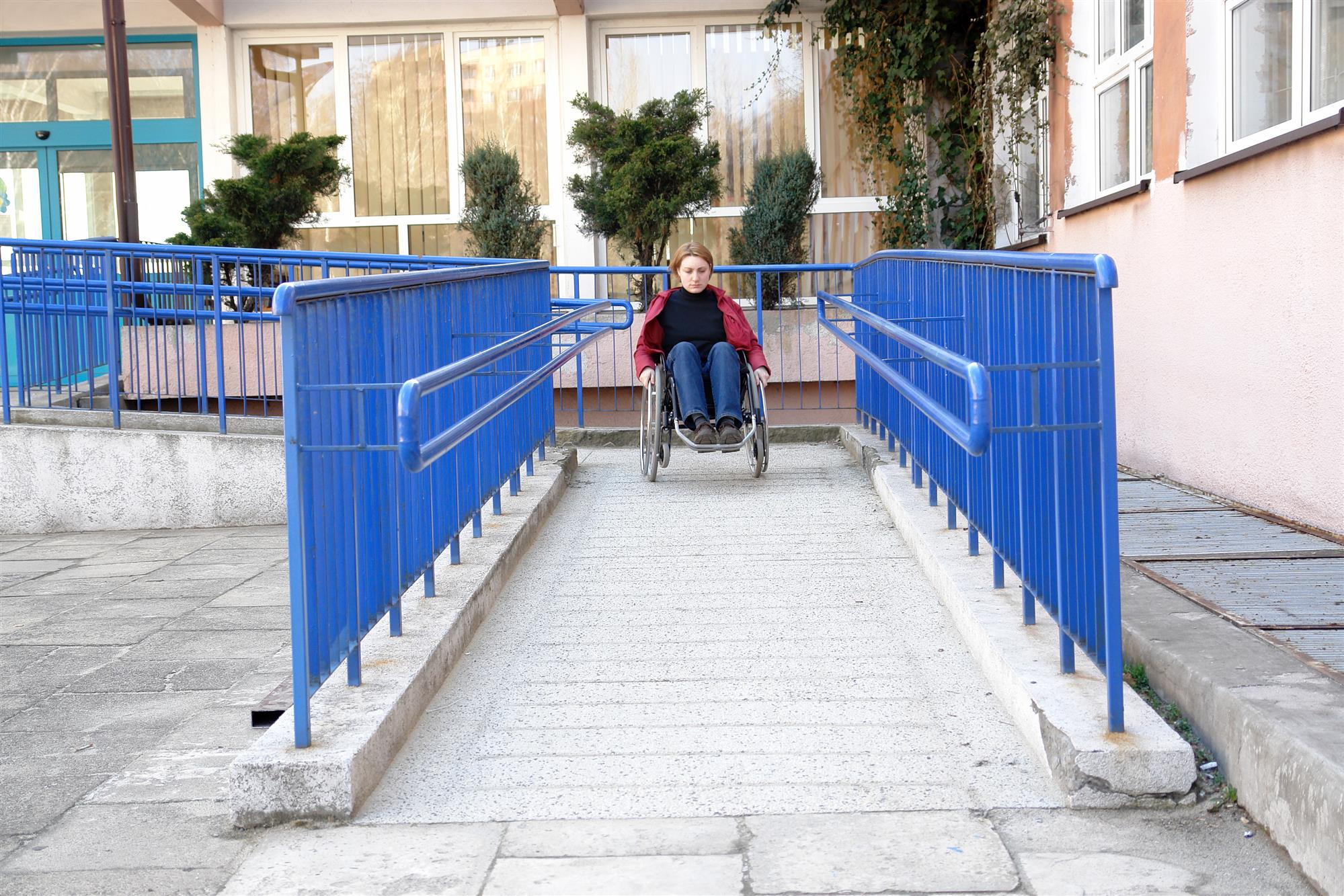 Ramp is a basic infrastructure for helping wheelchair bound persons
Policies must not merely exist—they must transform lives. Only when the lived experiences of persons with disabilities reflect the promises of the laws can societies truly claim progress.
Behind every barrier removed lies a powerful possibility. When societies commit to inclusion—not as charity but as a right—the opportunities for persons with disabilities become vast and transformative. Inclusion in education, employment, technology, community life and leadership reshapes not only individual lives but entire communities.
Inclusive education, for example, remains the foundation for long-term empowerment. Schools that adopt universal design principles, integrate assistive technologies, train teachers in inclusive pedagogies and create supportive environments enable children with disabilities to learn alongside their peers with dignity. Such exposure also nurtures empathy, social cohesion and mutual respect among all students, contributing to a more inclusive society in the long run.
Economic empowerment is equally critical. Persons with disabilities possess diverse talents, skills and perspectives that enrich workplaces. With the right training, reasonable accommodations, accessible infrastructure and employer sensitisation, they excel across sectors—from arts and administration to technology, entrepreneurship and public service. Economic independence enhances self-esteem and reduces social vulnerability, while also contributing meaningfully to the economy.
Technology today stands as one of the most exciting arenas of possibility. Breakthroughs such as AI-driven aids, screen readers, adaptive devices, navigation tools, smart home systems and advanced prosthetics are redefining what independence looks like for many. Digital accessibility, when incorporated into mainstream platforms, ensures that persons with disabilities can participate fully in education, work, governance and social interaction. The fusion of innovation and universal design continues to open once unimaginable doors.
Equally important is the space for meaningful participation and leadership. Persons with disabilities are increasingly asserting their presence in public life—as activists, policymakers, educators, artists, athletes and entrepreneurs. Their contributions are shifting societal narratives, influencing policy reforms and inspiring younger generations. True inclusion is achieved when leadership spaces reflect the diversity of society, including the voices of persons with disabilities at every level.
Finally, at the heart of all possibilities lies community. Families, neighbours, institutions and civil society organisations play a critical role in fostering supportive and inclusive environments. When communities embrace accessibility not as an obligation but as a shared value, inclusion becomes embedded in everyday life.
ALSO READ: Syed Nawaz Miftahi illuminates the world of the blind
The International Day of Persons with Disabilities reminds us that inclusion is both a moral responsibility and a developmental imperative. A society’s progress cannot be measured solely by its economic achievements, but by how it treats those at its margins. Today, as we rethink perceptions, strengthen policies and widen the horizon of possibilities, we move closer to a world where every person—regardless of ability—can live with dignity, equality and opportunity.

_(1)_(1).webp "Khanqah Emadia Qalandaria, Patna, Bihar")








.webp "Representational Image")
.webp)


.webp)