New Delhi
Indian health authorities are closely monitoring the evolving Ebola outbreak in parts of Democratic Republic of the Congo and Uganda, while public health experts have stressed the need for heightened surveillance and preparedness to prevent any possible importation of the virus into India.
The World Health Organization on May 17 declared the ongoing outbreak caused by the Bundibugyo strain of Ebola a Public Health Emergency of International Concern (PHEIC), its highest level of international health alert. As of May 16, WHO reported eight laboratory-confirmed cases, 246 suspected infections, and 80 suspected deaths in eastern Congo’s Ituri province, while two imported cases—including one death—were confirmed in Kampala, Uganda. WHO noted that the outbreak does not currently meet the criteria for a pandemic emergency.
Officials in New Delhi said the National Centre for Disease Control is continuously tracking global developments, and a preparedness review has already been conducted to assess airport screening, surveillance systems, laboratory readiness, and emergency response protocols in case of any suspected case emerging in the country.
Ebola virus disease is a severe and often fatal illness caused by the Ebola virus. It spreads through direct contact with blood, bodily fluids, tissues of infected individuals, contaminated surfaces, or infected animals. Unlike airborne viruses such as COVID-19, Ebola typically requires close physical contact for transmission.
Symptoms usually begin suddenly and may include fever, extreme fatigue, muscle pain, headache, and sore throat, followed by vomiting, diarrhoea, abdominal pain, skin rash, and, in severe cases, internal or external bleeding.
India has recorded only one known Ebola case so far—reported in 2014 when a traveller returning from Liberia tested positive in Delhi. Authorities had then successfully contained the case through isolation and contact tracing, preventing further spread.
Sanjay Rai of All India Institute of Medical Sciences said India’s immediate risk remains low but emphasised that global connectivity means infectious diseases can cross borders quickly. He noted that travellers arriving from affected regions require close observation and rapid health screening.
Rai explained that Ebola’s mode of transmission reduces the likelihood of large-scale community spread, but healthcare workers and family caregivers remain particularly vulnerable if proper infection-control measures are not followed. He added that in a densely populated country like India, even a single imported case would need swift detection and isolation to prevent secondary transmission.
Randip Guleria of Medanta said India’s preparedness has improved significantly since the COVID-19 pandemic, with stronger laboratory networks, emergency response systems, and infection-control awareness now in place.
He stressed that hospitals, airport authorities, and surveillance teams must remain alert, especially when dealing with international travellers showing unexplained fever, bleeding symptoms, or recent travel history to affected areas.
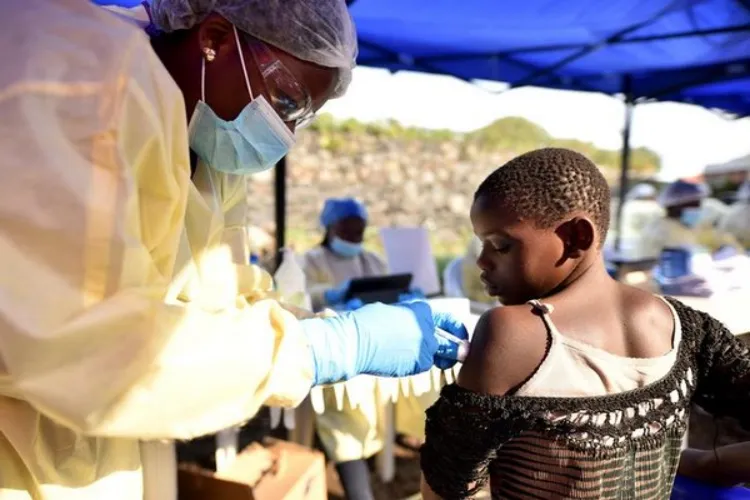
Experts said key preventive measures include strict traveller screening, rapid isolation of suspected cases, proper use of personal protective equipment by healthcare workers, timely laboratory testing, and public awareness to prevent panic or misinformation.
READ MORE: Shahida Murtaza's academic research forms backbone of governments' policies
Health specialists also underlined that strengthening international cooperation, transparent disease reporting, and sustained investment in surveillance systems remain essential to preventing regional outbreaks from becoming global emergencies.













.webp)
.webp)