New Delhi
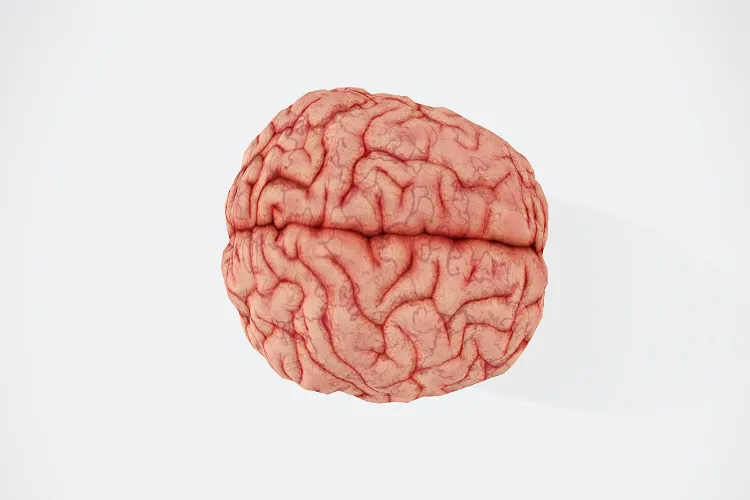
The human brain, widely considered one organ, may have evolved as two independent ones over hundreds of millions of years, according to a new study, with findings potentially overturning a prevailing model of brain development.
Researchers, led by those at the US' Stanford University, said scientists have subscribed to the theory that there is a single progenitor cell early in development that gives rise to the entire brain -- the model, a prevailing one, suggests all parts of the brain share a common developmental origin.
The team looked at developing mouse embryos and showed that the human brain consists of two ancient nervous systems cleverly packaged together -- a more primitive part that regulates the hearts' beating and breathing, among other functions, and another making one distinctly human, capable of poetry, mathematics and wondering about the species' origins.
The two systems develop parallelly, cells from which never intersect or overlap, they found.
The discovery, published in the journal Nature Neuroscience, could help explain why scientists have struggled for decades to grow neurons of the hindbrain -- one of brain's three main regions -- in the laboratory, the researchers said.
The gap hampered research into devastating diseases affecting the brain stem, including spinal muscular atrophy and amyotrophic lateral sclerosis, both of which impact motor neurons, they said.
"We've shown for the first time that the front of the brain arises from a totally different progenitor cell than the back of the brain," senior author Kyle Loh, associate professor of developmental biology at Stanford University, said.
"Our discovery means that we can now grow neurons from the back of the brain, the hindbrain, in a petri dish and study their functions," Loh said.
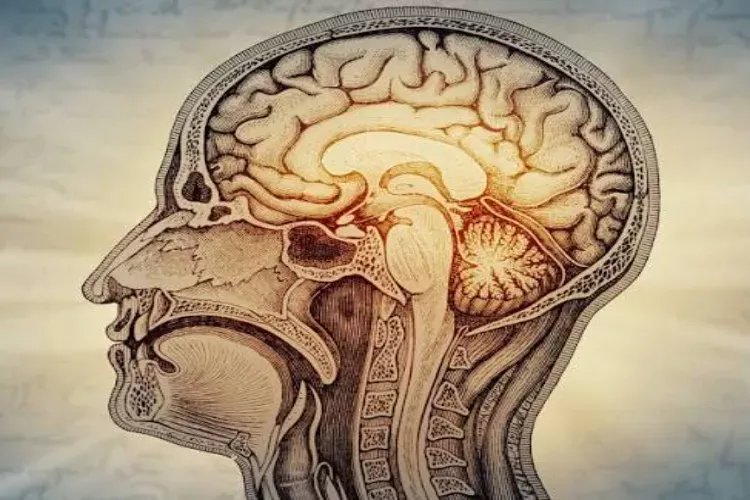
The adult brain has three main regions -- the forebrain, midbrain and hindbrain.
While the forebrain is responsible for higher-level thinking, including language, consciousness and abstract reasoning, the hindbrain -- located at the back of the skull and often called the brain stem -- controls essential, automatic functions that keep humans alive, such as breathing, sleeping, regulating heartbeat and hunger urges.
Neurons of the hindbrain also control muscles of the face, tongue and throat, which affect speech and swallowing, and can be impacted in spinal muscular atrophy and amyotrophic lateral sclerosis.
The researchers arrived at the results while studying the earliest moments of embryonic development, during a stage called gastrulation when the body first takes shape.
The hindbrain was found to follow a separate developmental path, running in parallel to, rather than branching off from, the pathway creating the forebrain and midbrain.
Two different brain progenitor cells were identified, one expressing the gene 'Otx2' and destined to become the forebrain and midbrain, and another expressing the gene 'Gbx2' and committed to forming the hindbrain.
The researchers showed that the two cell populations never overlap -- they are mutually exclusive from the earliest stages of development.
The team then examined the DNA packaging, or chromatin, in the cells. Chromatin is a way cells determine which genes can be easily accessed and which are bundled away out of reach.
They found that the anterior neural ectoderm (future forebrain and midbrain) and posterior neural ectoderm (future hindbrain) have fundamentally different chromatin configurations.
The differences essentially locked each progenitor cell into its respective fate, like travellers on parallel tracks that never cross, the team said.
"Previous attempts to make hindbrain neurons likely tried to coax forebrain and midbrain progenitors into hindbrain cells, which our study shows is not possible," graduate student Rayyan Jokhai, a co-first author of the research, said.
READ MORE:Mohammad Amaanullah built a fragrance empire against odds
"Two parallel brain progenitors emerge simultaneously during gastrulation: anterior neural ectoderm (forebrain/midbrain progenitor) and posterior neural ectoderm (hindbrain progenitor)," the authors wrote.

.webp "Representational Image")