




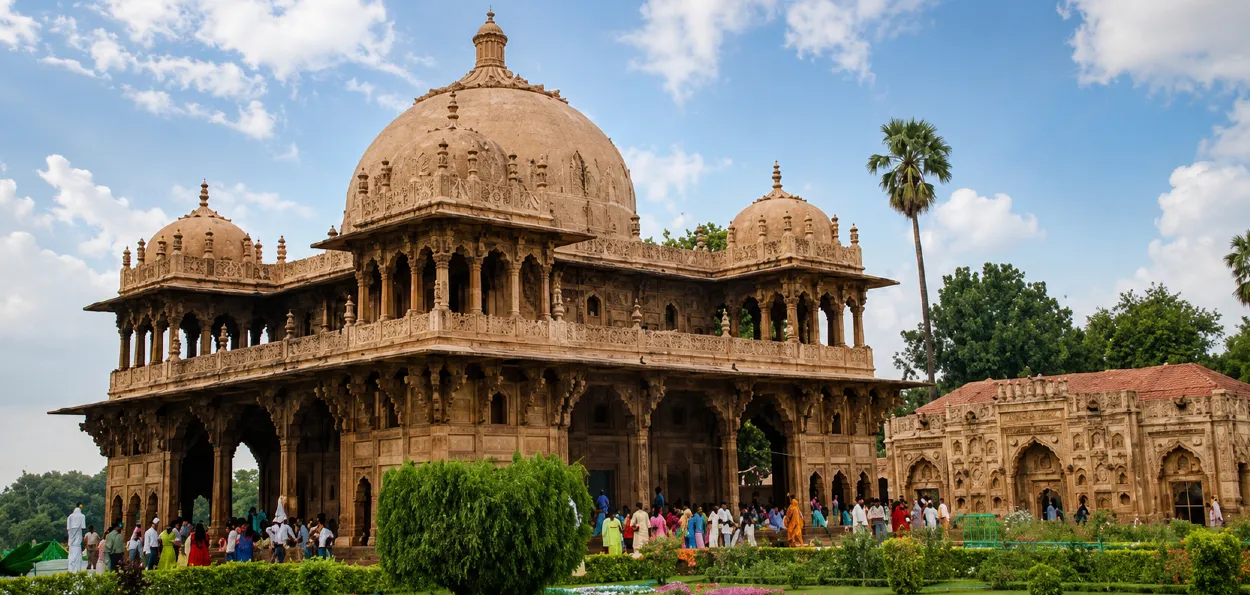
Mahfooz Alam/Patna
Khanqah Munemia at Meethan Ghat in Patna City is a living example of the Sufi tradition of combining spirituality with public service. Without distinction of religion or community, it supports the poor, provides educational assistance to underprivileged students, offers healthcare services, and promotes interfaith dialogue, reinforcing the values of harmony, brotherhood, and national unity.
To institutionalize these welfare activities, the Khanqah established Silsila, a socio-religious, educational, literary and social organization, in 1999. Since then, it has assisted hundreds of students and thousands of patients while promoting education, healthcare, communal harmony and national integration.
The Khanqah is headed by Maulana Dr. Shamimuddin Ahmad Munami, while Professor Masoodur Rahman, a noted Islamic scholar, oversees many of Silsila's activities.
.webp) Madrasa students at Khanqah Munemia
Madrasa students at Khanqah Munemia
Speaking to Awaz–The Voice, Prof. Rahman said Silsila functions entirely through public support and is dedicated to helping economically weaker sections gain access to education and basic necessities.
He said Islam makes the pursuit of knowledge an obligation and that society must ensure financial hardship does not deprive deserving students of education.
Each year, Silsila provides financial assistance to around 100 students, from school level to graduation. Children from low-income families receive support for school and examination fees, coaching, admissions and other educational expenses. The organization also helps deserving students secure admission to professional courses such as MBBS, engineering and diploma programmes.
.webp) Celebration of Independence day at Khanqah Munemia
Celebration of Independence day at Khanqah Munemia
Prof. Rahman said the organization receives no government funding. Its welfare programmes are sustained by voluntary contributions from members and philanthropists.
Under the guidance of Maulana Munami, the organization also conducts essay competitions, writing contests and examinations on Islamic knowledge, encouraging students through prizes and recognition while promoting ethical values alongside education.
.jpg) All interfaith event at the Khanqah Munemia
All interfaith event at the Khanqah Munemia
Healthcare is another major area of work. Weekly medical camps provide free check-ups to people of all communities, with specialist doctors examining patients and arranging treatment where necessary. During the COVID-19 pandemic, Silsila carried out relief work for affected families.
The organization also operates ambulance services at highly subsidized rates for patients and for transporting the deceased. Those unable to pay receive the service free of cost.
Promoting communal harmony remains central to the Khanqah's mission. Silsila regularly organizes interfaith interaction programmes that bring together people of different religions to encourage dialogue, remove misconceptions and strengthen mutual understanding.
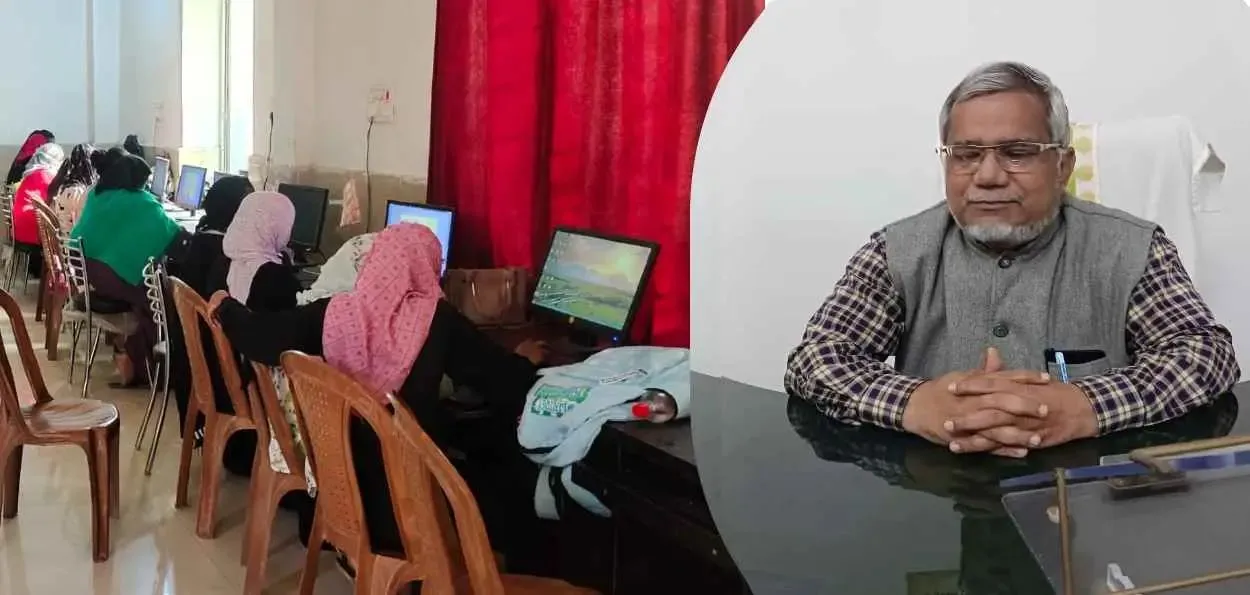 Computer class and Professor Masoodur Rahman
"Khanqahs have never limited themselves to preaching peace and brotherhood; they have consistently practised these values and worked towards strengthening national integration," Prof. Rahman said.
He added that peace, harmony and mutual respect are among India's greatest civilizational strengths and that Sufi institutions have long nurtured these ideals at the grassroots.
Silsila also organizes seminars and symposiums on eminent scholars and literary personalities and publishes books on religious, educational and literary subjects. These publications are distributed among students and educational institutions to promote an authentic understanding of Islam.
.jpg) A Hindu couple praying at the Khanqah Munemia
A Hindu couple praying at the Khanqah Munemia
Apart from educational and medical assistance, the organization provides financial and legal aid to needy families. While it does not solicit public donations in the conventional sense, its activities are supported by members and philanthropists. During Ramadan, it accepts Sadaqah and Zakat contributions for charitable programmes.
ALSO READ: Assam relief effort shows the unity of Indians in crisis
Operating from the premises of Khanqah Munemia, Silsila also prepares Patna's unified Ramadan timetable each year in consultation with representatives of major Muslim organizations. The consensus-based calendar has been followed for years and reflects the organization's commitment to unity within the community.







.webp)
.webp)
.webp)