New Delhi
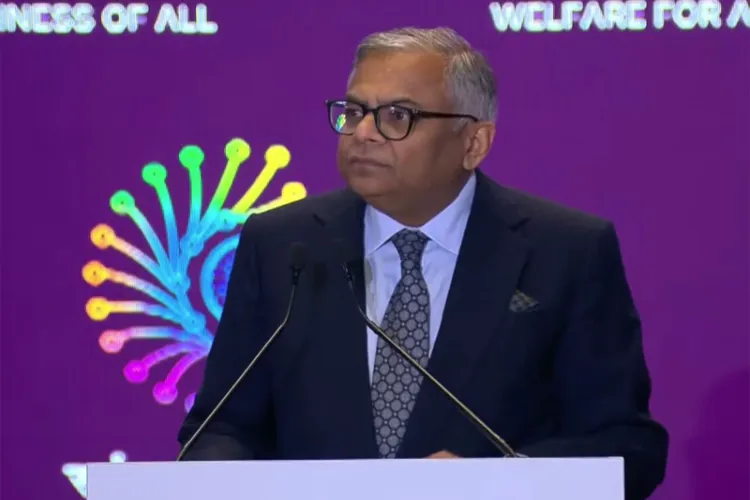
Artificial intelligence is no longer being viewed merely as an additional technological capability but is fast emerging as the foundational architecture powering modern enterprises, Natarajan Chandrasekaran, chairman of Tata Consultancy Services, has said.
In his message to shareholders in the company’s 2025–26 annual report, Chandrasekaran described AI as the “infrastructure of intelligence,” stating that businesses across the world are increasingly integrating artificial intelligence into core decision-making, operations, and long-term strategy.
He said TCS has significantly expanded its “Human+AI” operating model, with the company now generating annualised revenue of USD 2.3 billion from AI-led services and USD 11.5 billion from next-generation technology segments including cloud computing, data platforms, and cybersecurity.
According to Chandrasekaran, artificial intelligence is set to fundamentally reshape how organisations allocate capital, design supply chains, manage operational risks, and engage with customers and stakeholders.
He noted that generative AI and agentic AI are entering a more mature phase, with enterprises worldwide moving beyond pilot projects and beginning large-scale deployment across mission-critical functions.
Outlining the company’s strategic roadmap, Chandrasekaran said one of TCS’s major priorities will be building secure, resilient, and sovereign AI infrastructure designed to support enterprise-scale adoption.
As part of this vision, the company plans to develop an industry-focused AI operating system aimed at accelerating the deployment of agentic AI solutions across multiple business sectors.
He also revealed that TCS intends to build India’s first dedicated AI-centric data centre featuring rack density exceeding 160 kilowatts, strengthening the company’s “Infrastructure to Intelligence” strategy.
The company is also deepening partnerships with hyperscalers, frontier AI companies, and industrial OEMs to expand its AI ecosystem and technology offerings.
Chandrasekaran said shifting global economic and geopolitical dynamics—including increasing pressure on power, computing capacity, and geographic diversification—are positioning India as an important “plus-one” destination for global AI infrastructure investments.
On the financial front, TCS reported a strong performance for the March quarter, posting a 12.22 per cent rise in net profit to Rs 13,718 crore, supported by improved operational margins.
For the full 2025–26 financial year, the company reported profit after tax of Rs 49,210 crore, reflecting steady year-on-year growth.
TCS also returned to workforce expansion during the fourth quarter, adding 2,356 employees and taking its total headcount to 584,519 as of March 31, marking its first net hiring quarter after two successive periods of decline.
READ MORE: Najma Akhtar: Ex-VC played a key role in shaping India's educational growth
During the January–March quarter, the company secured fresh deals worth USD 12 billion, with the largest contributions coming from North America and the banking, financial services, and insurance segment.













.webp "Representational Image")


_(1).webp)