New Delhi
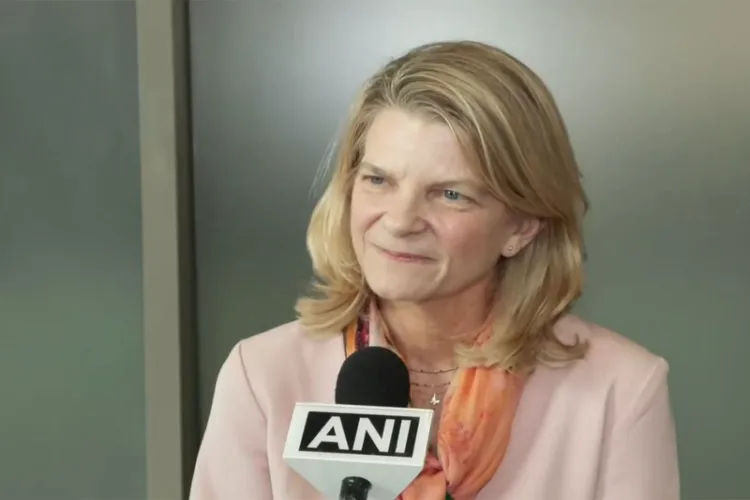
UNICEF India Representative Cynthia McCaffrey on Monday described artificial intelligence as a major opportunity to enhance children’s education and overall development, while emphasising that strong safeguards must be embedded in such systems from the very beginning.
In a conversation with ANI, McCaffrey said both UNICEF and the Government of India recognise AI’s potential to broaden learning experiences and improve access to knowledge for children, teachers and parents.
She noted that AI can significantly widen educational access and provide new tools for instruction and information-sharing. However, she stressed that regulatory frameworks and protective measures should be integrated at the design stage, rather than introduced later. According to her, while the benefits are substantial, risk mitigation must be prioritised early in development.
McCaffrey acknowledged that, like any transformative technology, AI carries potential dangers. She said system designers and developers must proactively address these risks and ensure safety features are built in from the outset. UNICEF, she added, is advocating for AI systems to be “safe by default,” rather than relying on corrective steps after deployment.
Speaking about the organisation’s priorities at the AI Summit, McCaffrey outlined three central objectives: engaging with a broad range of stakeholders, encouraging inclusive and secure AI design, and strengthening AI literacy. She said UNICEF is working with industry leaders, government representatives, young people and civil society groups to better understand the rapidly evolving AI landscape.
She emphasised that AI tools should be intentionally inclusive, ensuring that benefits reach all children from the earliest stages of development. In addition, she highlighted the importance of equipping children, parents and caregivers with the knowledge needed to navigate both the opportunities and risks associated with AI.
On the subject of global AI governance, McCaffrey expressed hope that international leaders would place children at the centre of emerging policy frameworks. She said decision-makers should adopt proven approaches and explicitly recognise children and young people as key stakeholders in shaping AI’s future — both to support their development and to safeguard their well-being.
READ MORE: Neerja Mattoo for popularising Kashmiri mystic poets
Addressing the increasing use of AI in sectors such as healthcare and education, McCaffrey underlined that the technology should strengthen existing systems rather than replace human professionals. Referring to discussions held with FICCI, she said AI cannot substitute for teachers, parents, nurses or doctors. Human connection and interaction, she stressed, remain irreplaceable even as technology advances.