Vidushi Gaur/ New Delhi
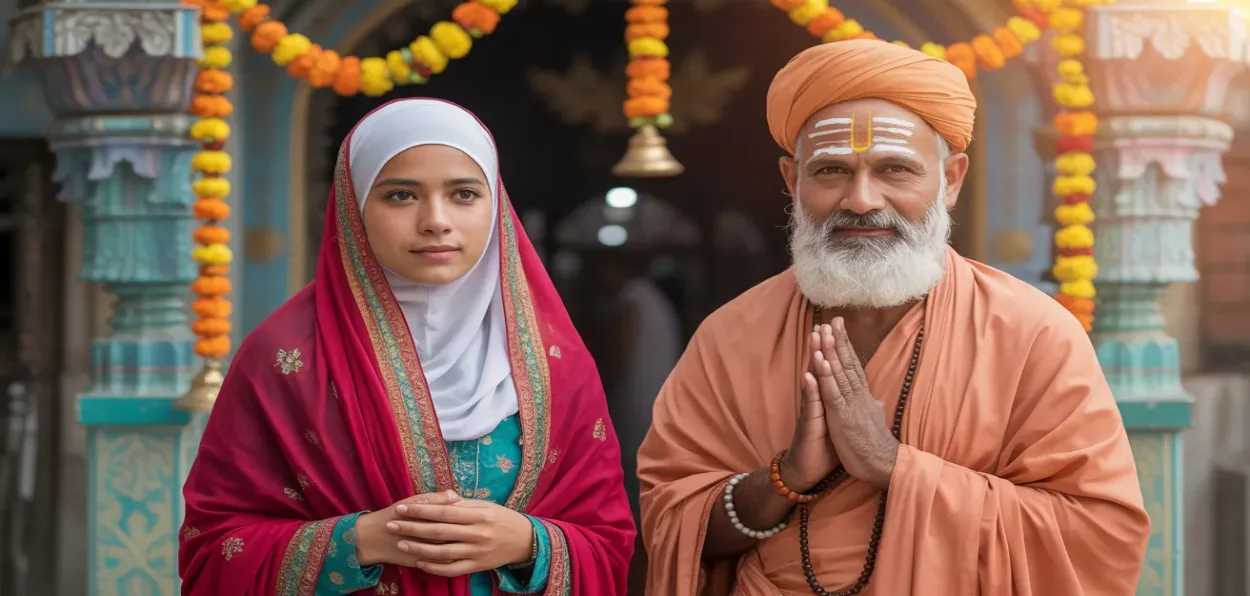
A heartwarming moment unfolded recently at a temple in Bihar where Baba Bihari Singh, associated with a temple Trust, gifted a expensive-looking wooden bed, and other household essentials to the soon-to-be-Muslim bride. He called it "Kanyadaan" signifying a ritual in Hindu wedding ceremony, which is about a father's prerogative and responsibility in giving away his daughter to a man in marriage.
A video of the gesture shared on social media drew widespread attention and admiration.
Baba Bihar Singh runs the Maa Vishhri Seva Samiti Trust which is based in the Mokhalchak Dham area of Bihar. The Trust in engaged social work, particularly focusing on assisting with the marriage of underprivileged girls (Kanyadan sahayata)
What made the moment extraordinary was not just the ceremony itself, but the spirit behind it. In a setting where customs often remain confined within religious boundaries, Baba Singh chose compassion over labels.
Kanyadaan is the prerogative of a father or a guardian. By this gesture, Baba Singh owned the bride as her daughter and imposed the responsibility of her well being and happiness on the groom. The latter ritual is symbolised by the father of the bride placing the hand of his daughter in the groom's hand.
The woman identified herself as Soni Khatun from Lingdah and he would get married by the end of the month.
Baba Singh said, he believes in helping all daughters, who need help, for their wedding function. "Religion is no bar. any girl who has less means can approach me and with everyone's help I will do her Kanyadaan with dignity," he announced to a small gathering as shown in the video.
The video of the incident was shared on X by many people:
मुस्लिम लड़की की शादी में मंदिर से जुड़े बाबा सिंह ने कन्यादान किया , मुस्लिम लड़की को पलंग, गद्दा और वर्तनों का उपहार दिया।
— Uzma Parveen (@UzmaParveen94) April 24, 2026
उन्होंने ने कहा धर्म कोई भी हो ,लेकिन सभी के लिए दरवाजे खुले हुए हैं ,जिसे भी जरूरत है ,
वो आकर मदद ले सकता हैं। pic.twitter.com/o9tIUS24Ts
He gifted a bed, a mattress, utensils, and other useful items to help the newly married couple begin their life with dignity. For those present, it was not merely assistance, it was a blessing wrapped in humanity.
Witnesses described the atmosphere as emotional and uplifting. There was no noise of politics, no debate of identities, no tension of difference. Instead, there was warmth, gratitude, and a rare reminder that kindness does not ask for anyone’s religion before entering a home.
Speaking about the gesture, Baba Singh says that the doors are open for everyone, irrespective of faith. Anyone in need, he said, is welcome to come and seek help.
The bride’s family, according to those familiar with the event, was deeply moved. For families arranging weddings under financial pressure, support often means much more than material help. It restores confidence, eases burdens, and creates memories of grace during stressful times. The gifts Baba Singh offered were practical, but the message he left behind was priceless.
This story also challenges a common modern misconception, that communities are naturally distant unless politics brings them together. In truth, many communities have coexisted through everyday trust for generations. A shopkeeper extending credit, a neighbour sharing food, a teacher guiding all children equally, or a temple-associated man helping at a Muslim wedding, these are not exceptions. They are continuations of India’s deeper social culture.
EAD MORE: Assam-born Fazlur Rahman finds cancer's link with environment
Baba Singh’s act resonated online because people are hungry for such examples. Amid constant exposure to conflict-driven narratives, the public often responds strongly when they see sincerity and goodness. Social media users praised the gesture as a symbol of brotherhood and a reminder of the India many still believe in.

.webp "Representational Image")







.webp)