New Delhi
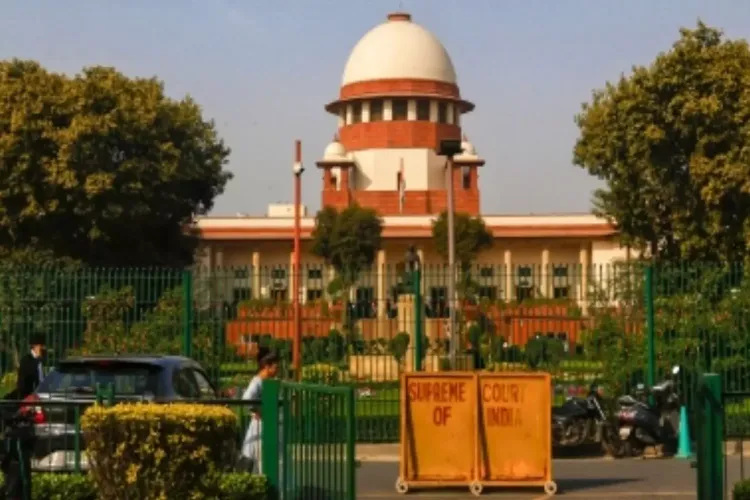
The Union Government has opposed a plea in the Supreme Court seeking income-based provision of benefits within the reserved categories, by contending that discrimination against Scheduled Castes (SCs), Scheduled Tribes (STs) and Other Backward Classes (OBCs)/Socially and Educationally Backward Classes (SEBCs) does not occur on the basis of economic conditions, but stems from historical and social disadvantage.
It has further contended that any exclusion of a "creamy layer" from the SC/ST lists cannot be undertaken by the State government or the courts, but only through legislation enacted by Parliament under Articles 341 and 342 of the Constitution.
In its counter response to the plea, the Centre has contended that the petition is misconceived as it overlooks settled law that the list of Scheduled Castes and Scheduled Tribes cannot be altered by any authority other than Parliament.
"In other words, any caste, tribe, or part of a caste or tribe can be included in or excluded from the SC/ST list only by Parliament through law, and not by State Governments, courts, tribunals, or any other authority", the reply says.
The Centre said the identification of SCs, STs and OBCs is founded on historical, social and educational backwardness rather than poverty alone. Referring to the Indra Sawhney judgment, it submitted that while the Constitution seeks to achieve equality by addressing historical discrimination, the same does not happen on the basis of income or economic backwardness.
"...keeping the broader concept of equality in view, discrimination with SC, ST and OBC/SEBC communities does not happen on the basis of economic conditions", the Centre's reply says.
The Centre also contended that the petition discloses no violation of fundamental rights, seeks a direction to frame policy in a particular manner and asks the Court to enter the executive's policy domain without any legislative mandate or empirical foundation.
The petition filed by one Ramashankar Prajapati and others seeks directions to the Union Government to frame a more equitable reservation policy by introducing income-based preferences within every reserved category, so that economically weaker candidates among SCs, STs and OBCs receive priority in the distribution of reservation benefits. It also seeks guidelines to treat economically weaker persons within each reserved category as a sub-class and accord them higher preference in admissions and public employment.
To support its stand opposing the plea, the Centre has relied upon several Constitution Bench decisions, including EV Chinnaiah v State of Andhra Pradesh (2005), where the Supreme Court held that any exclusion of a creamy layer from the SC category, if at all, would require Parliamentary legislation under Article 341(2).
READ MORE: Bisu Limbu of Assam studied under kerosene lamp to crack NEET
It has also cited Indra Sawhney v Union of India (1992) on the concept of the creamy layer in OBC reservations, M Nagaraj v Union of India, contending that the reference to the creamy layer therein was a general observation and not a declaration that the principle applies to SCs and STs, and Ashoka Kumar Thakur v Union of India (2008) to submit that the creamy layer principle has been applied in the context of OBC reservations, not SCs and STs.

_(1).jpg "Visitors gather at the Santosh Mitra Square Durga Puja pandal, themed on the 150th anniversary of Vande Mataram and its historic role in India's freedom movement, ahead of the festival, in Kolkata")

.jpg "Gujarat’s women entrepreneurs bring their craftsmanship to life during Navratri")






.webp "Bollywood actor Tiger Shroff")


.webp)