Mansooruddin Faridi
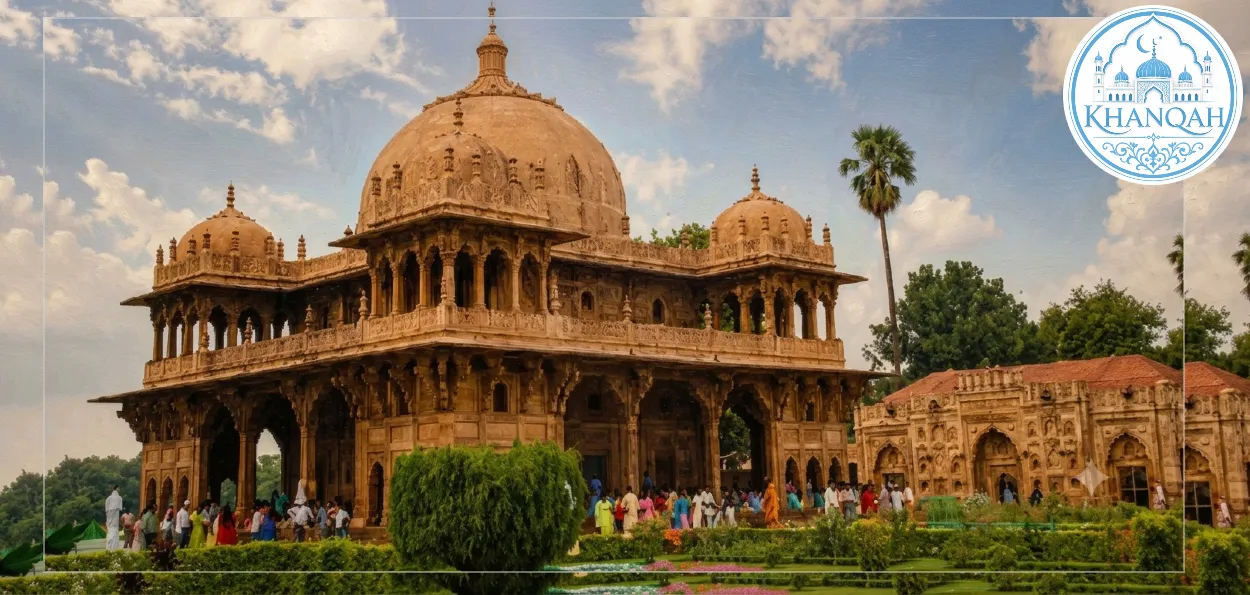
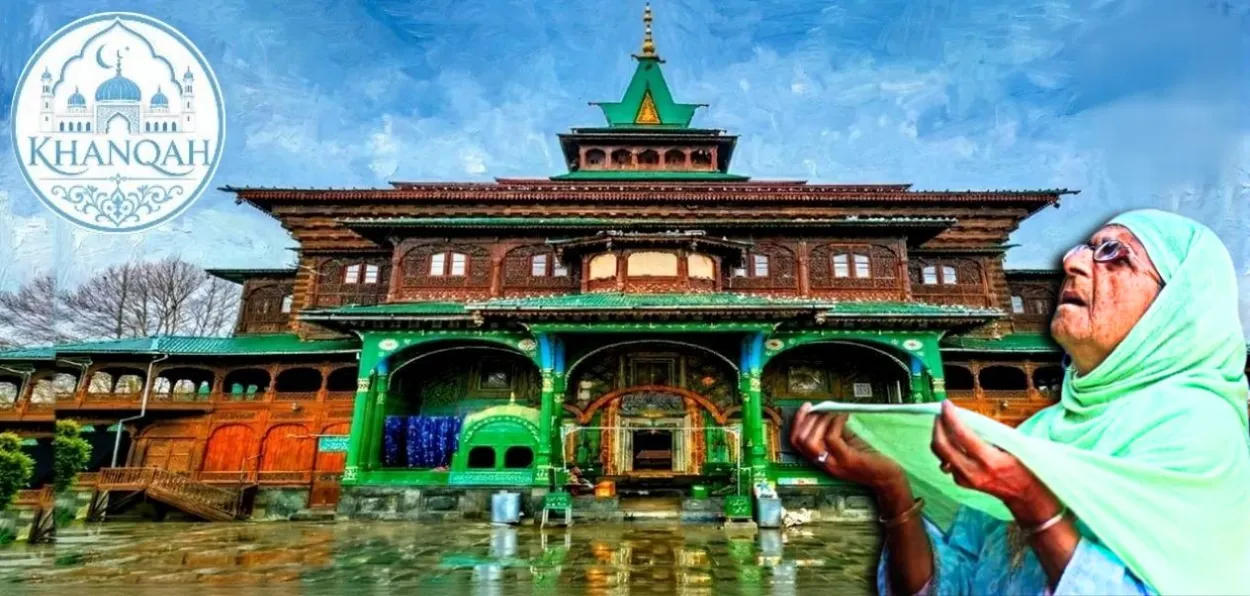
Khanqah Maner Sharif is one of the most prominent centres of the ancient spiritual tradition of the Indian subcontinent, where history, Sufism, scholarship, and social service come together. It is not merely a memorial to great saints but an institution that continues to meet the practical needs of society.
Along with religious education, its activities in modern education, research, library services, medical care, and the marriage of underprivileged girls reflect the multidimensional nature of its services.
At a time when young people are confronted with intellectual uncertainty, educational competition, and social challenges, institutions such as Khanqah Maner Sharif present a model that combines moderation, morality, service to humanity, and learning. The Khanqah conveys the message that spirituality is not confined to worship alone; rather, a better society can be built through education, research, social welfare, interfaith respect, national service, and character building. This is the aspect that gives it its greatest significance in the present era.

Khanqah Maner Sharif introduces a land that has long been regarded as a centre of Sufi saints and spiritual masters. Munir Sharif is a small town located near Patna in the Indian state of Bihar. It has had the honour of being the abode of numerous saints and Sufis. Drawn by its reputation, many Sufis, spiritual masters, scholars, and rulers visited the town, and many of them were eventually laid to rest in its soil.
According to tradition, it was from this very region that the light of Islam first illuminated the land of Bihar. The first Muslim to set foot on the soil of Bihar was Makhdoom Arif Momin. In 576 AH, Makhdoom Arif Momin came to Bihar for travel and trade and settled in the town of Munir.
For centuries, Munir Sharif has remained a centre of learning, spirituality, and mysticism. Two magnificent shrines located here, popularly known as the Bari Dargah (Great Shrine) and the Chhoti Dargah (Small Shrine), continue to attract devotees from far and wide.
The shrine of the eminent Sufi saint Makhdoom Yahya Maneri is known as the Bari Dargah, while the shrine of Makhdoom Shah Daulat is commonly referred to as the Chhoti Dargah.
Munir Sharif is not merely a historical site; it is the custodian of a glorious spiritual legacy of knowledge, love, and humanity that has attracted millions of hearts for centuries.

Khanqah Munir: A Centre of Social and Educational Activities
The Khanqah is not only a centre of spirituality but also an institution dedicated to social welfare, education, and public service. While devotees find spiritual peace here, people facing social and personal difficulties also receive assistance in resolving their problems. Researchers benefit from its library, while others receive support in matters such as the marriage of daughters or educational guidance.
Syed Shah Tariq Inayatullah Ferdousi Maneri, the Sajjada Nashin, Mutawalli, and Diwan of Dargah and Khanqah Maner Sharif, says that their constant endeavour is to ensure that everyone who visits the Khanqah returns with relief from their difficulties.
This is why the Khanqah regularly organises free medical camps and arranges marriages for underprivileged girls. Significantly, it also houses a library that is frequently used by candidates preparing for the Civil Services Examination. Accommodation and meals are provided for students coming from outside the region, as the library contains numerous rare books, including valuable manuscripts.
 Grave of Hazrat Syedna Makhdoom Shah Daulat Maneri
In the sixth century AH, Imam Taj Faqih migrated from his homeland, Jerusalem (Bayt al-Maqdis), along with his family and arrived in Munir Sharif. After residing there for a considerable period, he left his family behind and returned to his homeland.
During this period, Imam Taj Faqih also laid the foundation of a centre of learning, which today exists in a new form as Jamia Imam Taj al-Fuqaha.
His valuable collection of books was later expanded and renamed the Makhdoom Shah Daulat Maneri Library.
The tradition of authorship, scholarship, research, and intellectual inquiry initiated by Imam Taj Faqih (RA) has been carried forward through an institution now known as the Makhdoom Yahya Maneri Research Centre.
According to the Sajjada Nashin, Hazrat Syed Shah Tariq Inayatullah Ferdousi, Khanqah Maner Sharif is a historic and spiritual complex. At the main entrance of the Khanqah is the Hujra (prayer chamber) of Hazrat Syedna Makhdoom Shah Daulat Maneri as he prayed and meditated there.
Within the Khanqah complex stands an approximately 400-year-old haveli, which has traditionally served as the residence of the Sajjada Nashins and their family members. Inside this haveli, a two-storeyed mud-built house and several old rooms remain preserved.
The original structure was built in the style of a Baradari (twelve-doored pavilion). After that building collapsed, a much larger three-storeyed structure was constructed in its place.

One half of this building has been designated for male visitors, while the other half provides comfortable accommodation for women.The building has been constructed above the Sama Khana, a spacious hall that can accommodate nearly one thousand people at a time.
One of its most remarkable architectural features is that the hall has no supporting pillar in the middle, providing a vast uninterrupted interior space.This impressive structure was also constructed during the tenure of the present Sajjada Nashin, Hazrat Syed Shah Tariq Inayatullah Ferdousi, as part of the continued expansion and development of Khanqah Maner Sharif.
Makhdoom Yahya Maneri Research Centre
According to the Sajjada Nashin, Hazrat Syed Shah Tariq Inayatullah Ferdousi, the tradition of authorship, scholarship, research, and intellectual inquiry initiated by Hazrat Syedna Imam Muhammad ibn Abu Bakr Hashimi has been continued through an institution named the Makhdoom Yahya Maneri Research Centre.
The Centre is actively engaged in research and scholarly work. Within a short span of one year, it has published several important publications. Among the most notable are: Tazkirah Makhdooman-e-Munir (Urdu and Hindi), Nasab Nama Makhdooman-e-Munir (translated from Arabic and Persian into Urdu and Hindi), Shajarah Makhdooman-e-Munir (Urdu and Hindi). Some of these are Tabarrukaat Makhdooman-e-Munir (Urdu and Hindi), Durood Makhdooman-e-Munir (Urdu and Hindi), Hikayaat Makhdooman-e-Munir (Urdu and Hindi).
Makhdoom Shah Daulat Maneri Library
This library houses a valuable collection of books left by the founder of the Khanqah. It has an extensive collection of both classical and contemporary works. Of particular importance are its rare manuscripts.
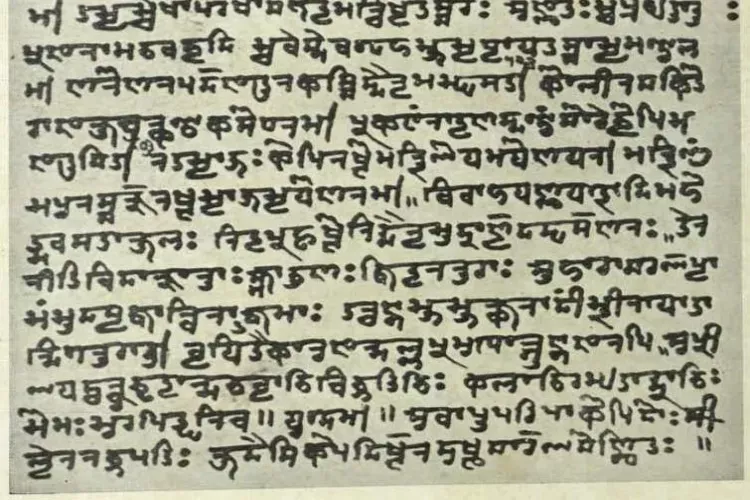
Among the valuable works preserved in the library are Padmavat by Malik Muhammad Jayasi, Chandayan by Mulla Muhammad Daud, the Maktubat and Malfuzat of Makhdoom Sharafuddin Yahya Maneri, and Hidayat al-Qawa'id by Makhdoom Hidayatullah Maneri. These manuscripts and books make the library one of the most significant repositories of Islamic, literary, and historical scholarship in the region.
Makhdoom Jalil Maneri Publishing Academy
The Makhdoom Jalil Maneri Publishing Academy serves as the official publishing wing of Khanqah Maner Sharif. It is responsible for publishing the books prepared by the Khanqah's Research Centre. Among its notable publications is Tazkirah Makhdooman-e-Munir (Hindi), which has already been published and made available to both scholars and the general public.
ALSO READ: Ajit Doval motivates youth, keeps spotlight off himself
Several other books are currently in different stages of publication and are expected to further enrich the scholarly and literary heritage of Khanqah Maner Sharif.

_(1)_(1).webp "Jagannath Rath Yatra")






.webp)