Amir Suhail Wani
Rising above Srinagar's old city, Hari Parbat, also known as Koh-i-Maran, has for centuries stood as a powerful symbol of Kashmir's inclusive religious, cultural and spiritual traditions. While its imposing fortifications and commanding location made it a strategic landmark, its deeper significance lies in being a shared sacred space where diverse faiths coexist in harmony.
Few places in South Asia embody religious diversity as vividly as Hari Parbat. It demonstrates that different traditions can flourish side by side without compromising their distinct identities. More than a monument of Kashmir's past, the hill remains a living testament to the Valley's civilizational ethos of coexistence, mutual respect and spiritual fellowship.
The sanctity of Hari Parbat has never belonged to a single community. For Kashmiri Pandits, it is the revered abode of Sharika Bhagwati, the presiding deity of Kashmir. The temple atop the hill has drawn pilgrims for centuries. According to tradition, the hill itself is regarded as a manifestation of the Divine Mother, who subdued the forces of chaos and transformed the Valley into a place fit for human habitation.
For Kashmiri Muslims, the hill derives its sanctity from the shrine of Hazrat Shaykh Hamza Makhdoom, one of Kashmir's most revered Sufi saints. His teachings of humility, compassion and devotion continue to inspire countless devotees. Hari Parbat is also associated with the renowned Qadiri mystic Mullah Shah Badakhshi, spiritual guide to Prince Dara Shikoh, whose quest for universal spiritual wisdom reflected Kashmir's long tradition of intellectual openness.
Adding another dimension to this sacred landscape is Gurdwara Chatti Padshahi, which commemorates the visit of Guru Hargobind Sahib. The presence of these revered places of worship on the same hill is not an accident of history but the outcome of a civilizational culture that recognised the sanctity of another's faith without perceiving it as a threat to one's own.
Author's mother speaking about the mutal respect Hindus and Muslims in Kashmir had for each other's places of worship around Hari Parbat:
What makes Hari Parbat exceptional is that its sacred spaces have historically been defined not by contestation but by coexistence. While many sacred landscapes across the world have become sites of rivalry and exclusion, Hari Parbat offers a different narrative. For generations, pilgrims of different faiths climbed the same pathways, offering prayers according to their own traditions while respecting the devotion of others.
Hari (meaning Mynnah in Kashmiri) Parbat derives its name from a legend when Sharika, the presiding deity of Srinagar, killed demon Jalobhava in Satisar in d form of a bird.She dropped a pebble on his head which is Hari Parbat.
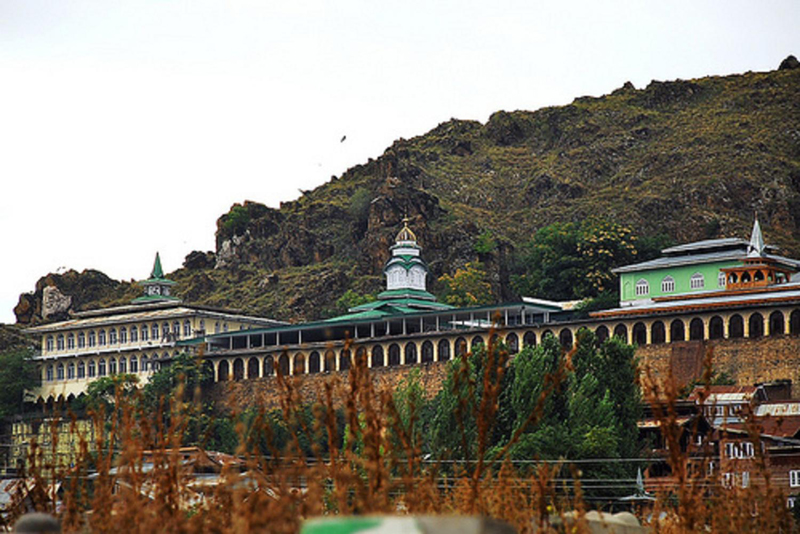
The footsteps of Pandits carrying offerings to Sharika Bhagwati (Shakti) mingled with those of Muslim devotees visiting Makhdoom Sahib, while Sikh pilgrims paid homage at Gurdwara Chatti Padshahi. They were not isolated communities living in parallel worlds but neighbours sharing the same city, cultural environment and, often, the same moral values. The hill became a common spiritual landscape where every shrine added to the dignity of the whole, reminding visitors that devotion to one's own faith could coexist with respect for another's.
Long before modern theories of interfaith dialogue emerged, Kashmir had evolved a social order in which neighbours participated in one another's lives, artisans helped build and maintain places of worship across communities, and shared customs reinforced social harmony. Hari Parbat became the most visible expression of this ethos, embodying the possibility of preserving religious diversity within a shared civilizational framework.
The moral foundations of this composite culture were strengthened by Kashmir's celebrated Rishi-Sufi tradition. Mystics such as Lal Ded and Sheikh Noor-ud-Din Noorani (Nund Rishi) preached humility, compassion, self-purification and the direct experience of the Divine in a language that resonated across religious boundaries. Their teachings encouraged inward transformation rather than outward rivalry, fostering a culture in which spirituality was measured by moral conduct rather than sectarian identity.
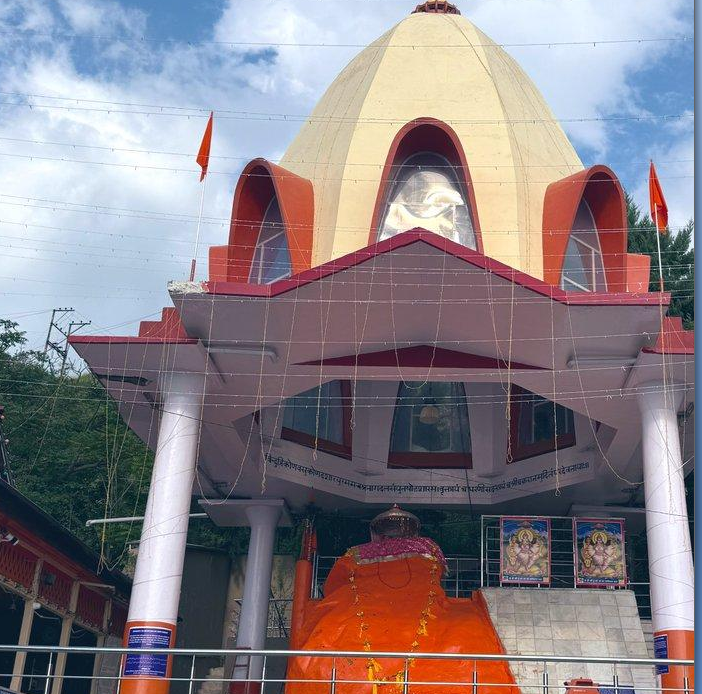 Chakreshwari Temple at Hari Parbat
Shaykh Hamza Makhdoom carried this tradition forward by emphasising service to humanity as an expression of devotion to God. Such teachings nurtured an atmosphere in which respecting another's sacred space was viewed not as a compromise but as an ethical responsibility rooted in the recognition of the Divine dignity of every human being.
The architecture of Hari Parbat reflects the convergence of Kashmiri craftsmanship with Persian, Central Asian, Mughal and Afghan influences. The markets surrounding the hill became vibrant spaces where commerce encouraged social interaction, while festivals and local customs often brought communities together. This continuous exchange did not erase religious distinctions; instead, it enriched the Valley's cultural life. Hari Parbat's composite culture emerged not through theological fusion but through sustained human interaction, neighbourly trust and mutual respect.
Despite political upheavals and changing rulers, the sacred character of the hill endured. Empires rose and fell, and the structures around it evolved, yet the temple of Sharika Bhagwati continued to welcome pilgrims, the shrine of Makhdoom Sahib remained a centre of spiritual devotion, and the Sikh association with the hill endured.
Hari Parbat also challenges simplistic notions of religious harmony. Its history does not suggest that communities abandoned their beliefs or erased theological differences. Hindus remained devoted to their traditions, Muslims faithfully practised Islam, and Sikhs preserved their distinct heritage. What emerged instead was a culture of spiritual confidence in which deeply rooted religious identities coexisted with genuine respect for others.
ALSO READ: L/N Nazir Ahmed Wani laid down his life for Kashmir's peace
In an age when religious differences are too often exploited to sow conflict and suspicion, Hari Parbat offers a lesson of enduring relevance. It reminds us that sacred spaces can unite rather than divide, that cultural diversity is a source of strength, and that preserving heritage means safeguarding not only monuments of stone but also the traditions of respect, hospitality and coexistence that give them their true meaning.

.webp "Representational Image")










.webp)