New Delhi
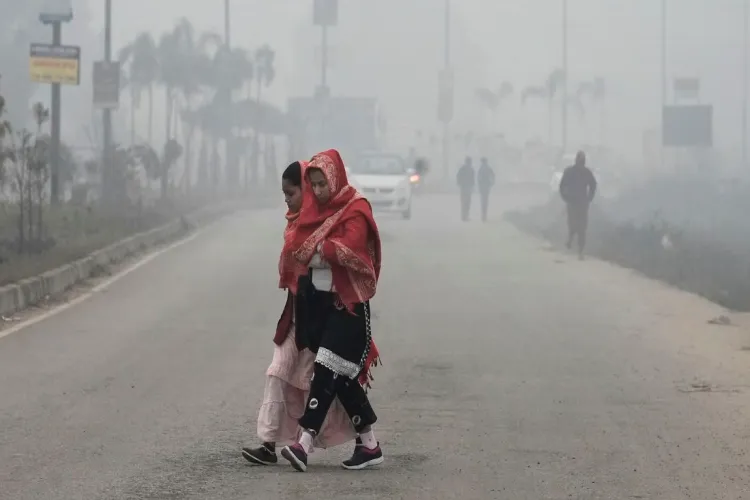
In view of the prevailing cold and foggy weather conditions, the District Education Office of the Union Territory of Chandigarh has extended the revised school timings and winter vacation for all government, government-aided and recognised private schools across the UT till January 17, 2026, an official order said.
According to an official order issued by the District Education Officer, the extension is in continuation of earlier orders dated January 3 and January 9, 2026.
The order stated that the same schedule and instructions as mentioned in the January 3 directive will remain in force during the extended period.
The decision has been taken keeping in mind the ongoing severe winter conditions affecting the region. All heads of Government and Government-Aided schools in Chandigarh have been directed to ensure strict compliance with the order.
The order was issued on January 12, 2026, and signed by the District Education Officer, UT Chandigarh.
The India Meteorological Department (IMD) on Tuesday reported minimum temperatures of 5 degrees Celsius or below at 0830 hours IST in several parts of northern India.
According to IMD, Patiala recorded a low of 3 degrees Celsius, while Ballowal Saunkri saw temperatures dipping to 0 degrees Celsius.
The weather agency further forecasted that dense to very dense fog conditions are very likely to prevail during morning hours in some parts of Haryana, Chandigarh, Delhi, and Punjab until January 15. Dense fog is also expected in isolated pockets across these regions until January 20, 2026.
Additionally, light to moderate scattered to fairly widespread rainfall/snowfall is likely over Jammu-Kashmir-Ladakh-Gilgit-Baltistan-Muzaffarabad, Himachal Pradesh, and Uttarakhand from January 16 to 19.
ALSO READ: Yunus regime is supporting radicals in Bangladesh: Rokeya Prachi
Isolated rainfall is anticipated over Punjab, Haryana, Chandigarh, and West Uttar Pradesh on January 18 and 19.
IMD advised residents to exercise caution amid the foggy conditions and potential disruptions due to precipitation in the hilly areas.

















_(1).webp)