New Delhi
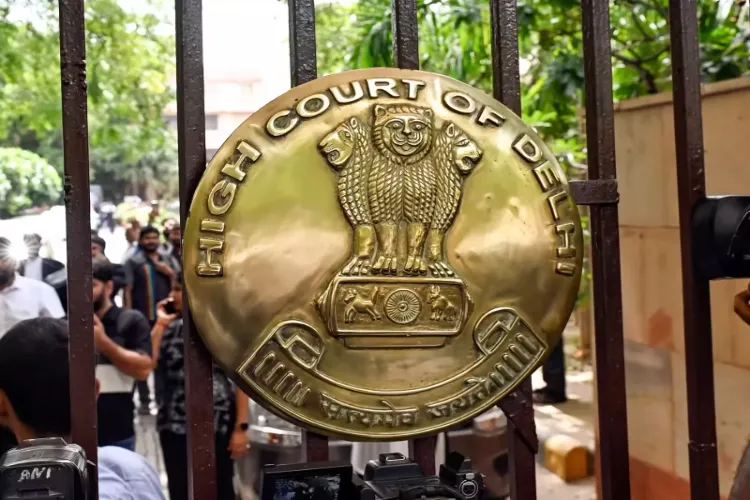
The Delhi High Court on Wednesday upheld the Central Government's decision rejecting Vedanta Limited's request for a 10-year extension of its Production Sharing Contract (PSC) for the CB/OS-2 offshore oil and gas block off the Gujarat coast.
The Court held that Vedanta became ineligible for an extension after it unilaterally deducted the Government's share of Profit Petroleum to recover the Special Additional Excise Duty, which it was itself liable to pay.
Justice Purushaindra Kumar Kaurav dismissed Vedanta's petition challenging the Ministry of Petroleum and Natural Gas's (MoPNG) order dated September 19, 2025, which rejected its extension request and directed ONGC to take over the block's assets and operations. The Court held that the Ministry's decision was legal and in line with the 2017 Extension Policy.
The Court clarified that although Vedanta had the right to have its application considered under the Extension Policy, it did not have an automatic or vested right to receive an extension.
It further held that while deciding extension requests, the Government is not limited to checking only the technical eligibility conditions mentioned in the policy. It can also examine the conduct of the applicant, especially because oil and gas are public natural resources held by the Government in trust for the people under the Public Trust Doctrine.
Rejecting Vedanta's argument that the policy listed the only grounds on which an application could be rejected, the Court held that the Government has wider powers to refuse an extension if there are valid reasons. According to the Court, restricting the Government to only technical parameters while ignoring an applicant's conduct would defeat the Public Trust Doctrine.
The High Court also rejected the Centre's argument that such decisions were beyond judicial review. It held that decisions relating to natural resources can always be examined by constitutional courts to ensure they are fair, transparent and not arbitrary under Article 14 of the Constitution.
The Court further ruled that the timelines mentioned in the 2017 Extension Policy do not result in an automatic extension if the Government fails to decide an application within the prescribed period. At best, the applicant can seek a direction for an early decision, but cannot claim that the contract stands automatically renewed.
The dispute arose after Vedanta challenged the Ministry's rejection of its June 28, 2021 application seeking a 10-year extension of the PSC beyond June 29, 2023. The company argued that its application was not decided within the time prescribed under the Extension Policy and that the Government could not rely on grounds outside the policy to reject it.
READ MORE: Zakia Soman has reshaped narrative on Muslim women's rights
The High Court, however, found no illegality in the Ministry's decision and concluded that the rejection of Vedanta's application was lawful, reasonable and did not require any interference.









.webp "Congress MP Jairam Ramesh")
.webp "The Supreme Court of India")
.webp "BJP MP Bansuri Swaraj")

_(1)_(1).webp)
.webp)



_(2).webp)