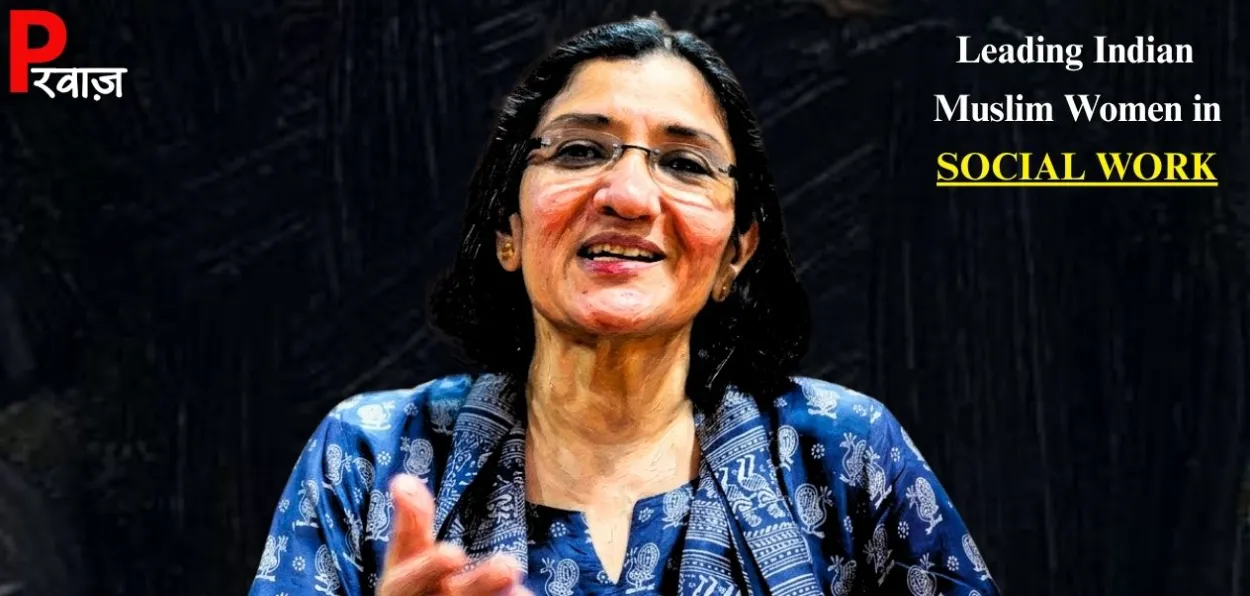
Mrudgandha Dixit/Pune
Zakia Soman has lived upto the principle of "Personal is Political". Rejecting the convenient, patriarchal interpretations of religion, she formulated a new narrative of equality based on both the Quran and the Constitution.
Here is a look at the life of the co-founder of the Bharatiya Muslim Mahila Andolan (BMMA), who played a lion's share in liberating Muslim women from the shackles of Triple Talaq.
It is not a new narrative to see a storm arrive in a woman's life and utterly destroy her. But to turn that very storm into one's strength, and to step onto the battlefield with the intention of dispelling the darkness in the lives of thousands of women, is no easy task. Zakia Soman is the daring personality who has achieved exactly this. Working as the co-founder of the 'Bharatiya Muslim Mahila Andolan' (BMMA), she is actively rewriting the definition of Muslim women's rights in the country.
Zakia Soman originally hails from Gujarat. She was born into a highly educated and progressive family. Her father was the principal of a college, while her mother was a high school teacher. Notably, her grandmother was the first woman in their taluka to pass her matriculation exams back in the day, and she too served as a school headmistress.
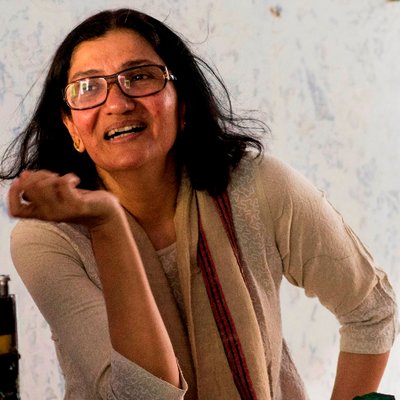 Zakia Soman
Raised in such a forward-thinking environment, Zakia had a love marriage at the age of twenty-one. Her husband was also highly educated. However, she soon realized after marriage that education does not necessarily equate to being cultured or civil. On one hand, she became a professor of English at a college under Gujarat University. On the other hand, within the walls of her home, she faced physical, mental, and financial abuse.
But because it was a love marriage, she felt the pressure that the responsibility of making it work fell solely on her shoulders. Under this immense pressure, she endured the abuse for sixteen long years. Her 14-year-old son also suffered through this ordeal.
.webp) Zakia Soman
Zakia Soman
The real turning point in Zakia's life arrived during the 2002 Gujarat riots. Until then, she had not been active in any social movement. She began visiting a relief camp in Ahmedabad to help those scorched by the riots. The conditions there shook her to the core. Homes were burnt down, families were scattered, and there was no certainty of the future. Yet, the sheer resilience with which the Muslim women stood back up in such an environment forced Zakia to look inward.
It was there that Zakia realized how vulnerable Muslims are, especially when they are poor. Watching ordinary women in the relief camps—many of whom had only studied up to the seventh or eighth grade—courageously rebuilding their shattered lives, Zakia began to feel that the abuse in her own life was even more unjust.
She started to think, "I have education, I have financial independence, so why am I continuing to tolerate this violence?" The women in the camp inadvertently gave Zakia immense inspiration and courage. Shortly after, in 2003, she took the bold decision to walk out of that violent and abusive relationship.
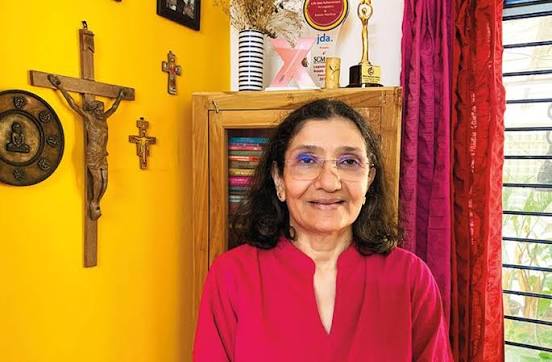 Zakia Soman
Having been tested and refined by the fire of her own experiences, Zakia decided to dedicate the rest of her life to the rights of Muslim women. Moving forward, Mumbai became the primary ground for her work. In January 2007, she, along with Noorjehan Safia Niaz, founded the 'Bharatiya Muslim Mahila Andolan' (BMMA). In this way, the feminist principle of 'Personal is Political' literally manifested in her life.
Zakia firmly believes that "Muslim women want justice, and to achieve it, they do not need to leave their religion." She began framing their rights on the dual platforms of the Quran and the Constitution.
Today, BMMA has spread to more than fifteen states across the country. Furthermore, over a hundred thousand Muslim women are connected to this movement. "I didn't learn what injustice is, what poverty is, and how to stand up against discrimination in a university; I learned it while working with these women at the age of forty," Zakia reflects.
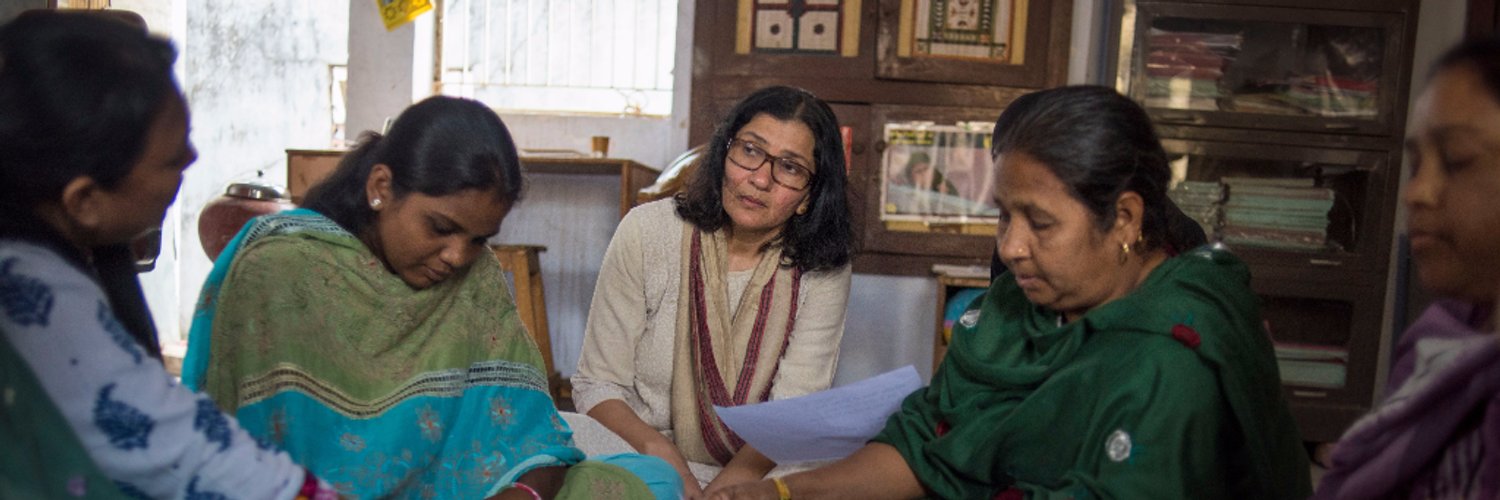 Zakia Soman with her team
The golden page in BMMA's history is the battle fought against 'Instant Triple Talaq' (Zubani Talaq). They demonstrated that the practice of Triple Talaq is not only anti-Quranic but also a blatant violation of human rights.
Through this struggle, they boldly declared to the world that Muslim women are also equal citizens of this country. BMMA's stance—"We want justice, and we want it in the light of both the Quran and the Constitution"—resonated widely. They collected the signatures of 50,000 women and approached the Supreme Court. In 2017, the Supreme Court declared Instant Triple Talaq illegal. It has now been almost ten years since that landmark verdict. Based on her fieldwork experience, Zakia notes that the practice of verbal Triple Talaq has almost been eradicated in India today.
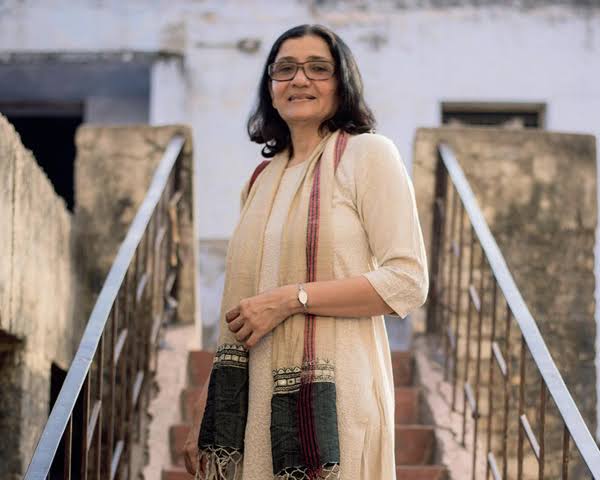 Zakia Soman
Today, Zakia Soman is also very happy in her personal life. She remarried a top-ranking corporate executive, Mr. Soman. Zakia has the unwavering support of her entire family in her work—her husband, her son, her daughter-in-law, and her step-daughter.
Just as Zakia Soman's experience in social work is extensive, her study of the Quran and religion is equally profound.
She argues that if the interpretation of Islam is done exclusively by men with a patriarchal mindset and a male-dominated socio-political background, the resulting accepted meanings will naturally favor men. However, she believes that when we read Quranic interpretations sensitive to gender equality, it becomes crystal clear that Allah created both men and women as equals.
She explains with context: "Justice and equality form the very core of Islam, but for centuries, men interpreted religion according to their own convenience. Allah created Adam and Hawa (Eve) at the same time, with equal rights." She passionately points out that the concept of 'Zauj' (meaning pair) used in the Quran for the creation of humans denotes absolute equality; they were created together, as a pair.
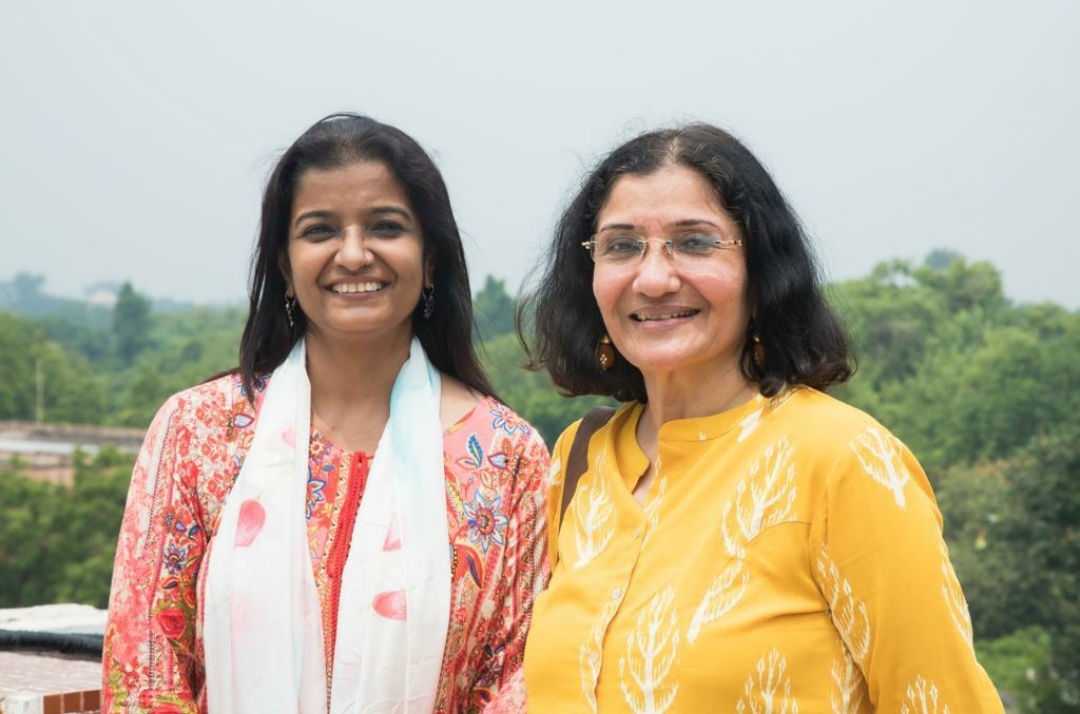 Zakia Soman with Noorjahan Safia Niyaz
In addition to working on cases of injustice and atrocities against women, she also takes up several other crucial issues. Her organization fought a significant battle to secure women's entry into the 'Haji Ali Dargah', and she also actively works to train women to become 'Qazis'. She strongly advocates for reforms in the 'Muslim Family Law'. She and her organization are fighting a two-front war—waging legal battles while simultaneously creating social awareness.
She believes that a person's identity is not limited to their religion alone. "I am a Muslim, but along with that, I am a mother, a woman; perhaps I am also a painter or a yoga practitioner." This broad, inclusive vision is vividly reflected in her work.
READ MORE: Sufi Sufiyan runs Kashmir-Kanyakumari in 68 days, sets world record
She speaks with deep concern about the rising politics of hate and the questioning of its diversity. In conclusion, she says, "Our country has a history spanning thousands of years. It is precisely because of our composite culture that this country has stood firm until today. Diversity is the greatest strength of Indian democracy. Today's politics is attempting to destroy this very diversity, and this is an extremely unfortunate and foolish thing."

_(1).jpg "Visitors gather at the Santosh Mitra Square Durga Puja pandal, themed on the 150th anniversary of Vande Mataram and its historic role in India's freedom movement, ahead of the festival, in Kolkata")
.jpg "Gujarat’s women entrepreneurs bring their craftsmanship to life during Navratri")







_(2).webp)