New Delhi
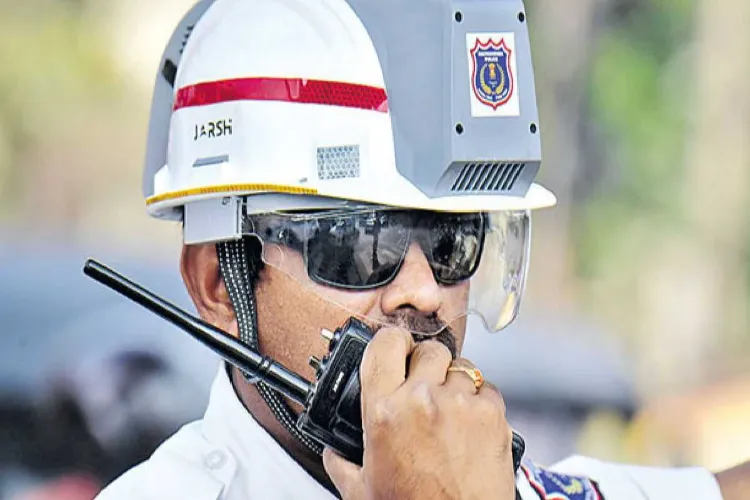
With temperatures in parts of the Delhi-NCR crossing 45 degrees Celsius, the Delhi Traffic Police has launched a pilot project deploying wearable cooling devices, including solar-assisted AC helmets, to protect personnel posted for long hours at busy intersections from extreme heat conditions.
Under the initiative, traffic personnel deployed at high-congestion points such as the Teen Murti roundabout and other major crossings have been equipped with specialised cooling helmets, portable fans and emergency hydration support as authorities grapple with intense heatwave conditions sweeping Delhi and adjoining areas.
The pilot project has been introduced as part of a broader heat-mitigation strategy aimed at reducing the risk of heatstroke and dehydration among on-duty personnel managing traffic under direct sunlight for prolonged periods, a senior police officer said.
The key feature of the initiative is the newly introduced cooling helmet fitted with a battery-operated temperature-regulation mechanism. According to technical specifications shared by police logistics units, the helmet is capable of lowering the temperature around the head region by 8 to 12 degrees Celsius compared to the outside environment.
Police said the head remains among the most heat-sensitive parts of the body, particularly for personnel wearing uniforms and protective gear that limit ventilation during peak summer conditions. The cooling helmets have therefore been designed to provide targeted relief during long outdoor deployments.
Apart from the helmets, traffic personnel have also been provided with battery-operated handheld fans, collar fans and portable table ventilators to help reduce heat stress at traffic booths and roundabouts.
Medical and hydration support has also been strengthened under the trial programme. Chilled drinking water and Oral Rehydration Salts (ORS) are being supplied at designated traffic points to prevent dehydration and exhaustion among field staff, the officer said.
In addition, temporary tin sheds have been erected at several traffic intersections to provide shade for personnel and offer protection against sudden dust storms and possible electrical hazards during adverse weather conditions.
READ MORE: Hajj 2026: When pilgrims braved disease, heat, and bandits' attacks for faith
The measures are currently being implemented on a pilot basis, and their effectiveness will be reviewed before any wider rollout across the city.
Delhi and several parts of the NCR have been reeling under severe heatwave conditions over the past few days, with temperatures remaining significantly above normal and outdoor exposure becoming increasingly hazardous during afternoon hours.












.webp "Karnataka Minister Priyank Kharge")