Sri Vijaya Puram
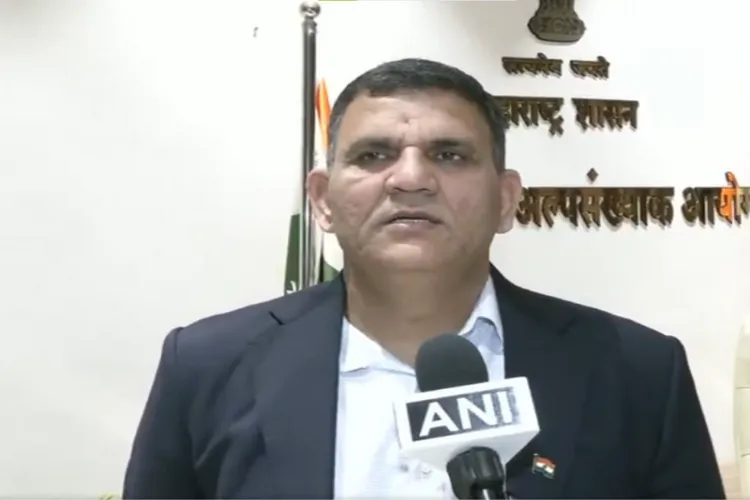
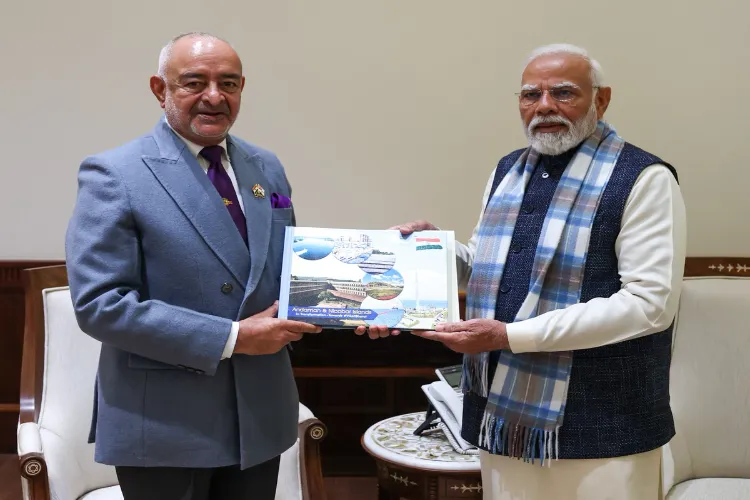
Offshore oil and gas exploration in the Andaman and Nicobar Islands has gathered pace after decades of limited activity, with initial findings indicating encouraging hydrocarbon potential in the region, Lieutenant Governor D K Joshi said on Monday.
In an interview, Joshi said recent exploratory drilling in the Andaman Basin has generated optimism about the region’s long-term energy prospects.
“At the Sri Vijaya Puram-2 exploratory well, drilling carried out by Oil India Limited has indicated the presence of gas with nearly 87 per cent methane content. Another zone has also shown a high probability of crude oil reserves. Validation of the data and assessments regarding commercial viability are currently in progress,” he said.
The lieutenant governor noted that the Andaman Basin has started attracting considerable attention ahead of upcoming oil block auctions. According to him, several international energy companies are in discussions with Oil and Natural Gas Corporation and Oil India Limited for possible joint ventures.
“These partnerships are expected to bring not only investments but also advanced technologies and specialised equipment needed for deep-sea exploration activities in the region,” Joshi said.
Highlighting the largely untapped nature of the basin, he said the Andaman and Nicobar Islands account for nearly one-third of India’s Exclusive Economic Zone and over one-fourth of its coastline. Despite this, offshore exploration remained minimal for nearly six to seven decades after Independence because the surrounding waters had been categorised as “no-go zones”.
He said the issue was later taken up through the Islands Development Agency, which helped pave the way for exploration initiatives.
Joshi added that there is growing confidence regarding the basin’s future potential, with some estimates comparing it to major global hydrocarbon discoveries, making it an important area in India’s emerging energy landscape.
Speaking about tourism and infrastructure development, the lieutenant governor said the administration has awarded four major hospitality projects under the public-private partnership (PPP) model.
“The response from investors has been highly encouraging, and interest in upcoming projects is even stronger,” he said.
To improve inter-island connectivity, the administration is also expanding helicopter services. Along with increasing the fleet of Pawan Hans, the administration has invited private operators to run licensed routes, which has received strong industry interest, he said.
“With 836 pristine islands, tourism potential here is immense. Improving connectivity remains a priority,” Joshi said.
He added that seaplane operations have successfully completed trial runs and, in the initial phase, will connect Sri Vijaya Puram with Long Island, Swaraj Dweep, Shaheed Dweep and Little Andaman.
“The administration aims to develop the islands into a major seaplane hub for the Indian Ocean and eventually for the wider Indo-Pacific region,” he said.
The lieutenant governor also highlighted the region’s potential for scuba diving and underwater tourism, saying efforts are underway to establish the Andaman and Nicobar Islands as a premier diving destination in the Indo-Pacific.
On the energy front, Joshi said the islands are steadily transitioning toward cleaner and more sustainable power generation.
“About a decade ago, nearly 90 per cent of electricity generation in the islands depended on diesel, while renewable sources such as solar and limited hydropower contributed only around 10 per cent. Over the last ten years, diesel dependence has come down to nearly 70 per cent, while solar energy’s share has increased to around 25 per cent,” he said.
The administration now plans to reduce diesel dependence to nearly 8 per cent within the next three years. Solar power is expected to account for around 70 per cent of electricity generation, while nearly 18 per cent of the energy requirement is proposed to be met through LNG-based power generation, he added.
Joshi said proposals are also being examined for a high-voltage direct current (HVDC) undersea cable linking the islands to the mainland power grid to improve energy stability and reliability.
He further revealed that the administration has suggested exploring small modular nuclear reactors for high-demand areas such as Great Nicobar, where several major infrastructure projects are planned.
Describing the archipelago as one of India’s most strategically important territories, Joshi said the islands hold immense geopolitical significance despite their relatively small population.
READ MORE: Hajj 2026: When pilgrims braved disease, heat, and bandits' attacks for faith
“Although the population is limited, the landmass of the Andaman and Nicobar Islands is larger than that of several Indian states. In fact, the combined area of island nations such as the Maldives, Mauritius and Seychelles is smaller than the archipelago. The islands serve as India’s gateway to the Indo-Pacific region,” he said.