.webp "External Affairs Minister S. Jaishankar")
Pune
External Affairs Minister S. Jaishankar on Saturday underscored the importance of strategic decisiveness in India’s foreign policy, asserting that clarity of purpose and a structured approach are essential to navigate today’s increasingly complex global landscape.
Speaking at the Pune Book Festival, Jaishankar said diplomacy cannot be shaped by uncertainty or indecision, stressing that India must consciously identify and pursue pathways that best serve its long-term national interests.
“Foreign policy demands clarity. Choices have to be made, and a clear game plan is essential. One must identify the positives and ensure they work in the country’s favour,” he remarked.
Reflecting on intellectual influences, the External Affairs Minister expressed dissatisfaction with Western-centric academic narratives, arguing that they often undermine India’s long-standing traditions of strategy and statecraft. He said India possesses a rich civilisational and strategic heritage that must be articulated in its own voice.
“Most textbooks are written from a Western perspective. I grew tired of repeatedly reading that India lacks a strategic tradition. We have our own beliefs, culture, and historical understanding, yet we rarely explain them in our own terms—or to the world,” Jaishankar said.
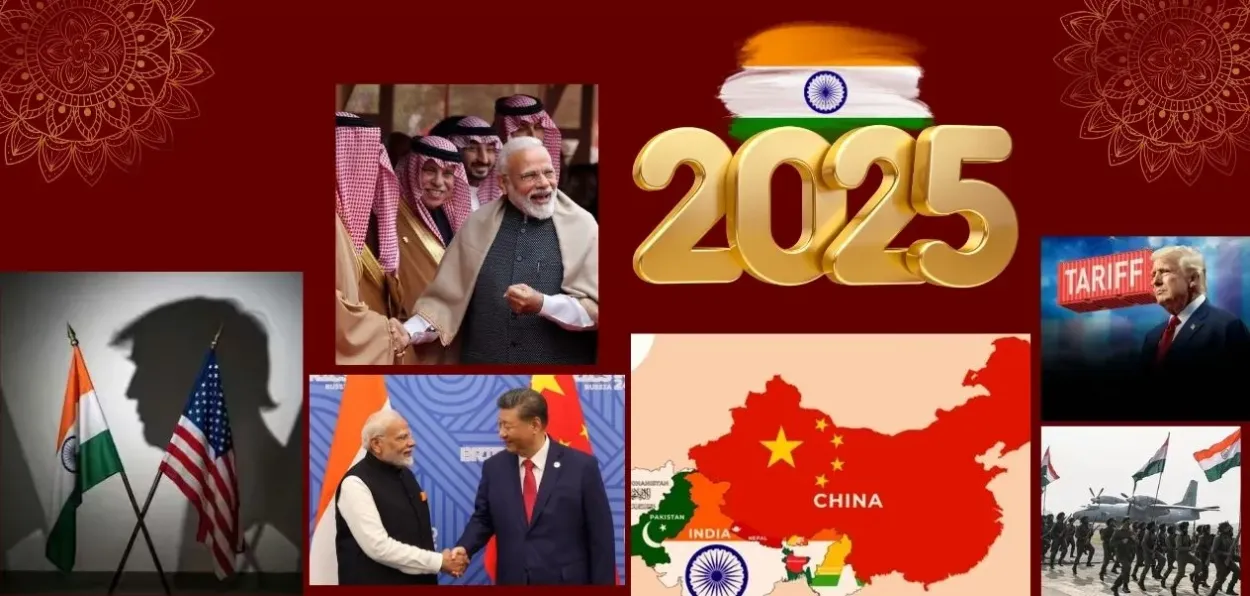
Turning to contemporary geopolitics, he acknowledged that India’s relationships with major global powers have become increasingly nuanced. Engagement with the United States, managing ties with China, and sustaining relations with Russia amid the Ukraine conflict now require careful balancing, he noted, while emphasising that Europe remains a vital partner deserving greater diplomatic attention.
“Engaging America is more complicated today. Managing China is challenging. Reassuring Russia has become difficult because of the Ukraine war and external pressures. Europe is an important partner where we need to invest more effort,” he said.
Jaishankar also highlighted the complexities of India’s neighbourhood diplomacy, noting that political fluctuations in neighbouring countries often affect bilateral ties. He stressed the importance of maintaining stability despite changing political moods.
“Relations go up and down. Sometimes neighbours praise us, sometimes they criticise us. India is often part of their domestic politics. The challenge is to keep relationships steady despite these shifts,” he explained.
Citing India’s conduct during crises as evidence of responsible diplomacy, Jaishankar referred to New Delhi’s swift assistance to Sri Lanka following Cyclone Ditwah, as well as India’s role during the COVID-19 pandemic and the Ukraine war, when it supplied vaccines, fuel, wheat and fertilisers amid global shortages.
Discussing historical connections, he spoke of India’s deep-rooted links with the Gulf region, Southeast Asia, and Central Asia, recalling Oman’s centuries-old maritime trade with India’s western coast and how geopolitical disruptions weakened these ties.
“Oman once had daily maritime exchanges with Maharashtra and Gujarat. Over time, disruptions created distance. The task now is to rebuild those connections—in the Gulf, Southeast Asia, and Central Asia,” he said.
Urging Indians to recognise the country’s civilisational influence abroad, Jaishankar said India’s cultural footprint is visible across regions, from the Gulf to Southeast Asia and Central Asia, citing Cambodia—home to the world’s largest Hindu temple—as a striking example.
READ MORE: Ashhar-Anil dosti: A bond that transcends religions
Concluding his address, the External Affairs Minister reiterated that India’s foreign policy must draw upon its full spectrum of strengths—strategic, cultural, historical, and economic—to effectively engage the world.


.png)





.webp "Representational image")
.webp "CEC Gyanesh Kumar")