Indore
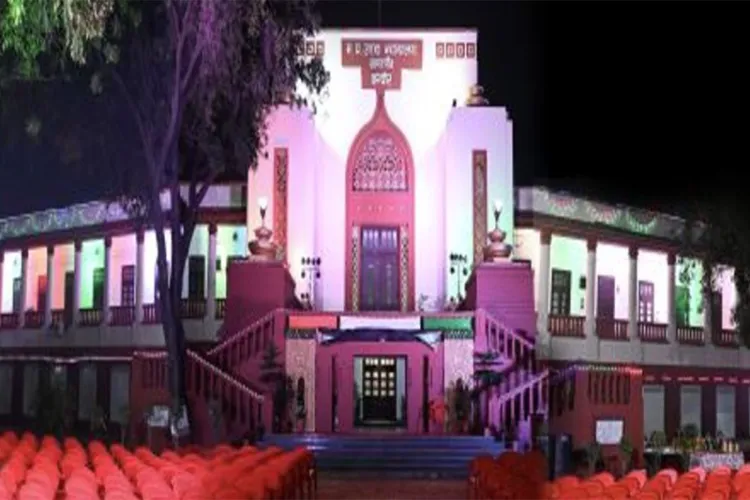
In a significant ruling on the long-standing Bhojshala-Kamal Maula dispute, the Indore bench of the Madhya Pradesh High Court on Friday held that the disputed Bhojshala complex in Dhar is a temple dedicated to Goddess Saraswati. The court also observed that members of the Muslim community may approach the state government for allotment of alternative land in the district for construction of a mosque.
Delivering its verdict in the Bhojshala Temple-Kamal Maula Mosque case, the bench noted that available historical and archaeological material indicated the existence of a temple dedicated to Goddess Saraswati, along with signs suggesting that the site once functioned as a Sanskrit learning centre.
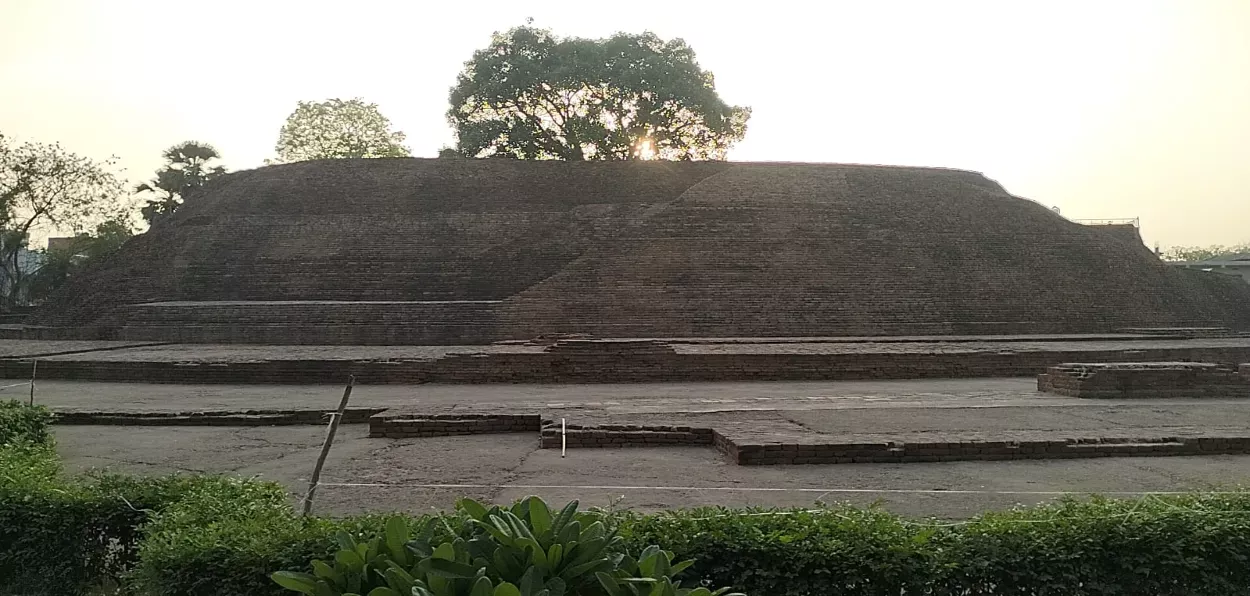
The dispute centres on the religious identity of the protected monument in Dhar district, currently under the care of the Archaeological Survey of India.
For years, the site has been claimed by multiple communities. The Hindu community regards Bhojshala as a shrine of Vagdevi, another name for Goddess Saraswati, while the Muslim community identifies it as the Kamal Maula Mosque. Petitioners from the Jain community have also asserted that the structure was originally a medieval Jain temple and gurukul.
Following tensions surrounding the site, the ASI issued an order on April 7, 2003, permitting Hindu worship at the complex every Tuesday and allowing Muslims to offer namaz there every Friday. The arrangement was later challenged in court by Hindu petitioners seeking exclusive worship rights.
The division bench comprising Justice Vijay Kumar Shukla and Justice Alok Awasthi had been hearing five petitions and one writ appeal related to the matter since April 6 this year. After extensive arguments from all parties and examination of thousands of pages of records, historical documents, and legal submissions, the court reserved its judgment on May 12.
During the proceedings, representatives of the Hindu, Muslim, and Jain communities each sought exclusive rights over the disputed monument.
A major part of the case revolved around the ASI’s scientific survey of the complex. In its report exceeding 2,000 pages, the ASI stated that a large structure dating back to the rule of the Parmar kings existed at the site before the construction of the mosque. The report further suggested that portions of the present structure were built using architectural elements from an earlier temple.
The Hindu petitioners argued that artefacts recovered during the survey, including coins, sculptures, and inscriptions, supported their claim that the site originally functioned as a temple.
The Muslim side, however, challenged the findings, alleging that the survey report was biased and prepared to strengthen the Hindu petitioners’ claims. Rejecting the allegation, the ASI informed the court that the scientific examination was carried out with assistance from experts, including three members from the Muslim community.
READ MORE: Naima Khatoon, AMU's first woman VC is injecting dynamism in varsity's culture
The High Court had directed the ASI on March 11, 2024, to conduct the scientific survey of the Bhojshala-Kamal Maula complex. The exercise began on March 22, continued for 98 days, and the final report was submitted to the court on July 15, 2024.










.webp "Karnataka Deputy Chief Minister D K Shivakumar")
_(4).webp)