Eman Sakina
In many modern discussions, the subject of women in Islam is often reduced to questions about dress, roles, or social expectations. Yet one of the most remarkable chapters of Islamic civilisation is frequently ignored: the powerful tradition of female scholarship.
Friday Musings
Muslim women were not merely passive listeners in the history of Islam. They were teachers, jurists, narrators of Hadith, poets, intellectuals, educators, and preservers of sacred knowledge.
Long before many societies recognised women as participants in intellectual life, Muslim women were teaching in mosques, correcting scholars, issuing legal opinions, and transmitting religious sciences across generations. Their contributions were not symbolic. They shaped the religious and intellectual foundation of the Muslim world.
Islam placed knowledge among the highest virtues from the very beginning. The first revelation commanded humanity to “Read,” establishing learning as a sacred pursuit. The Prophet Muhammad consistently emphasised the importance of seeking knowledge, without limiting this responsibility to men alone.
Women attended gatherings of learning during the Prophet’s time. They asked questions openly, discussed religious matters, and sought clarification on issues affecting both faith and daily life. In fact, there are narrations showing that women requested separate teaching sessions from the Prophet so they could learn more comfortably and thoroughly. This reflected not exclusion, but accommodation and encouragement.
The wives of the Prophet became among the earliest teachers of Islam. Their homes turned into centres of learning where companions came to seek guidance.
One of the greatest intellectual achievements in Islamic history is the science of Hadith preservation, and women have played a significant role in it. Over the centuries, thousands of female Hadith scholars lived in cities like Makkah, Madinah, Damascus, Baghdad, Cairo, and Cordoba.
Some of these ladies taught at large mosques and other establishments that both men and women frequented. Renowned academics travelled great distances to study under female instructors since their narrative chains were seen as prestigious and trustworthy.
One such individual was the esteemed Sahih al-Bukhari scholar Karima al-Marwaziyya. Because of her knowledge and accuracy, eminent male scholars studied under her. Fatima al-Samarqandi was another eminent academic who was renowned for her in-depth knowledge of legal reasoning and jurisprudence.
Women have issued formal ijazahs, according to historical documents.
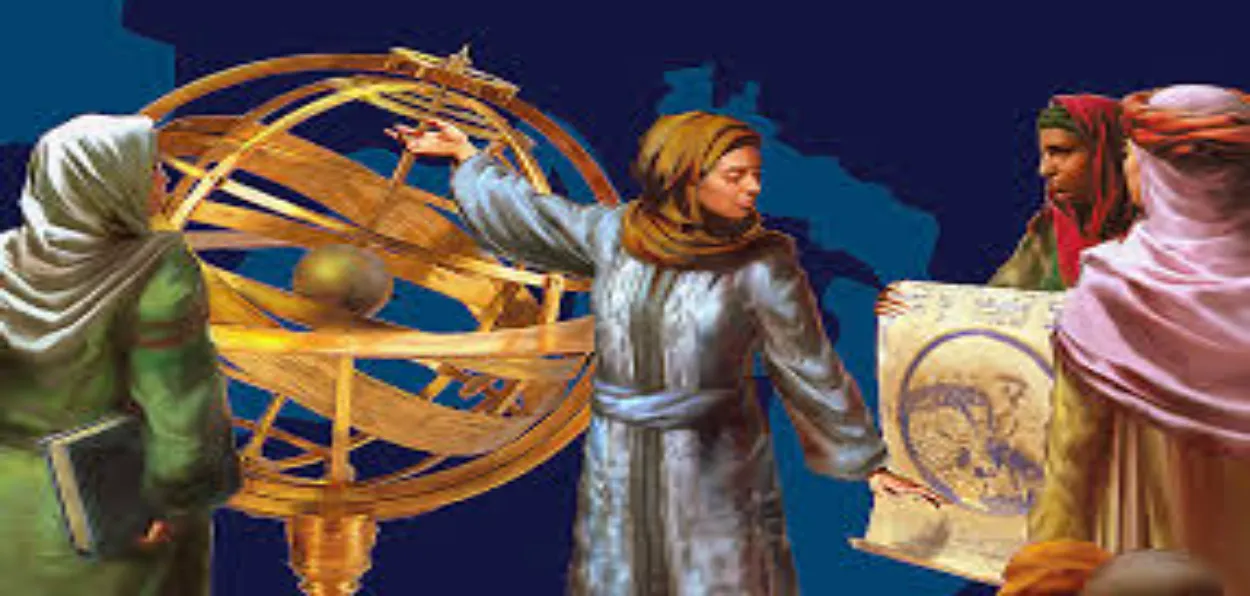 Muslim women in Science (Courtesy: 1001 Inventions)
Islamic civilisation historically valued scholarship as an act of worship. Libraries, learning circles, and institutions flourished because knowledge was seen as a path toward understanding Allah and serving society.
Women participated in this environment in meaningful ways. Some financed schools and universities, while others taught students directly. One of the most famous examples is Fatima al-Fihri, who founded the University of al-Qarawiyyin in Fez, often recognised as one of the world’s oldest continuously operating universities.
Her contribution reminds us that women in Islamic history were not absent from public intellectual life. They helped build its foundations.
In many cases, culture overshadowed religion. Traditions developed that treated advanced learning as primarily male territory, even though Islamic history itself contradicted this assumption.
This disconnect between authentic Islamic tradition and later social practices created the mistaken belief that women’s scholarship is something new or controversial.
Today, Muslim women across the world are reclaiming this intellectual heritage. Female scholars teach Qur’an, Hadith, Islamic law, Arabic, and ethics in universities, seminaries, online platforms, and local communities. Many are authors, researchers, counsellors, and educators guiding younger generations.
At a time when Muslims face confusion, misinformation, and identity struggles, educated women play a vital role in preserving a balanced understanding within families and society.
Women also contribute publicly through teaching, writing, academic research, social work, and intellectual leadership.
The Muslim world does not need to “allow” women to seek knowledge. Islam already honoured that path centuries ago.
The rediscovery of female scholarship is not about competing with men or rewriting religion to suit modern trends. It is about restoring balance and honesty to Islamic history.
Communities should encourage girls to pursue serious Islamic education alongside worldly education. Mosques and institutions should create respectful environments where women can study, teach, and contribute meaningfully. Families should recognise intellectual growth as a form of worship for daughters as much as sons.
ALSO READ: Dr. Benazeer Tamboli's work on empowering women is an inspirational story
A civilisation that once produced generations of female scholars should not act as though educated Muslim women are exceptions.