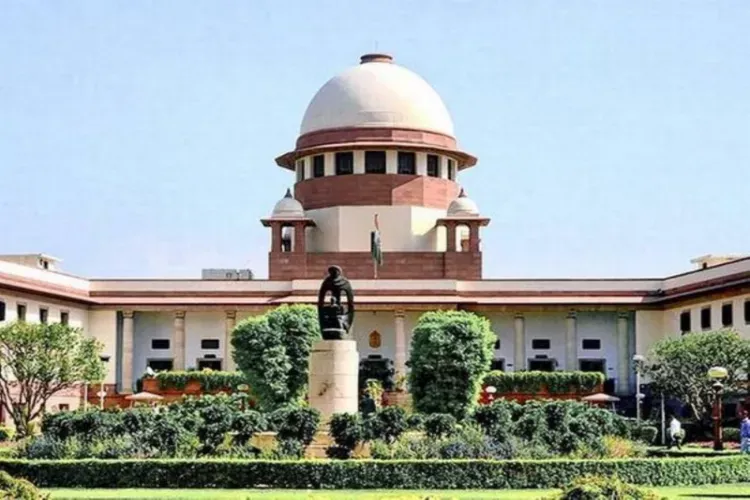
.webp "Supreme Court of India")
New Delhi
The Supreme Court of India on Wednesday observed that Hinduism is a way of life and that practising the faith does not require mandatory temple visits or the performance of rituals, remarking that even a simple act of devotion at home is sufficient to express one’s belief.
The observation came from a nine-judge Constitution bench headed by Chief Justice Surya Kant while hearing a batch of petitions concerning gender-based restrictions at religious institutions, including the Sabarimala Sree Ayyappa Temple, as well as broader questions relating to religious freedom across different faiths, including the Dawoodi Bohra community.
The bench also comprises Justices B. V. Nagarathna, M. M. Sundresh, Ahsanuddin Amanullah, Aravind Kumar, Augustine George Masih, Prasanna B. Varale, R. Mahadevan, and Joymalya Bagchi.
During the 15th day of hearings, senior advocate G. Mohan Gopal, appearing for one of the intervenors, argued that demands for social justice have increasingly emerged from within religious communities themselves. He questioned earlier judicial interpretations that linked Hindu identity to acceptance of the Vedas as the highest authority in religious and philosophical matters, asking whether such a definition truly reflected the beliefs of all those identified as Hindus today.
Responding to the submissions, Justice Nagarathna remarked that Hinduism has long been understood as a way of life and that a person need not necessarily visit a temple or perform rituals to remain a Hindu. She observed that faith is personal, and no one can obstruct an individual’s spiritual beliefs merely because they are not ritualistic in practice.
Chief Justice Surya Kant added that even lighting a lamp inside one’s home or hut is enough to demonstrate faith and religious belief.
The hearing in the matter is continuing.
The apex court had earlier observed that if every religious practice were to be challenged before constitutional courts, it could open the floodgates to litigation and potentially unsettle the internal practices of multiple faiths.
READ MORE: Abeda Inamdar left a cushy job to change lives through education, social reform
In September 2018, a five-judge Constitution bench of the Supreme Court, in a 4:1 majority verdict, struck down the centuries-old restriction that barred women between the ages of 10 and 50 from entering the Sabarimala temple, holding the practice to be unconstitutional.











_(1).webp)
.webp)