Indore
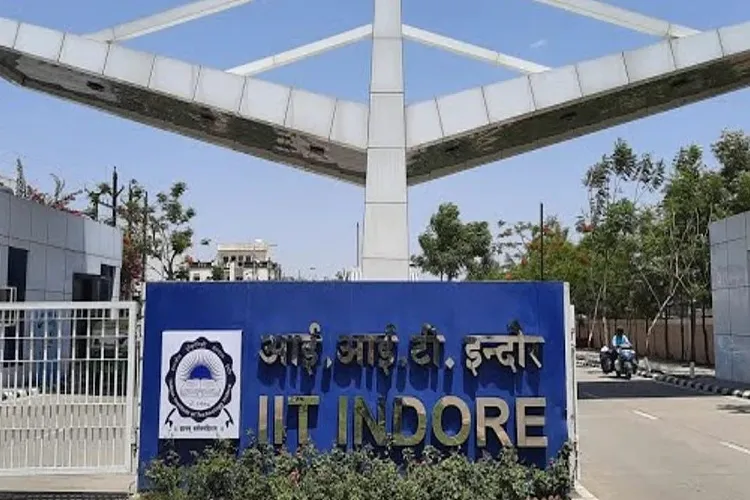
Researchers at the Indian Institute of Technology (IIT) Indore have developed a new artificial intelligence (AI) tool to identify differences in masculine and feminine genders when translating English sentences into Hindi, Marathi and Gujarati, and correct such errors.
Officials said on Tuesday that this tool has been named Hierarchical Gender Arbitration for Speech Translation (HGAST).
Associate Professor, Department of Computer Science and Engineering, IIT Dr Chandresh Kumar Maurya, under whose leadership the tool is developed, said it acts as a "correction layer" on top of the existing AI translation systems, rather than replacing them. It checks the translated results and makes necessary corrections.
Crucially, HGAST doesn't require the costly and time-consuming retraining of existing translation systems, and the tool can be easily integrated into these systems.
According to the researchers, AI translation systems are often trained on data that prioritises masculine verb forms.
When someone says in English, "I went to the market", the sentence remains the same for both the genders in that language. But in Hindi, it translates to "Main Market gaya tha" for a male speaker, and "Main Market gayi thi" for a female speaker.
The researchers said, "When a woman speaks in English and her words are translated into Hindi, Marathi, or Gujarati, AI often uses masculine verb forms. As a result, the true identity of the female speaker is obscured in the translation."
They explained that HGAST identifies masculine and feminine words by listening to the speaker's voice and, by analysing sentence structure, determines the gender of the verb.
He explained that after this process, each correction is double-checked to ensure there are no changes to the actual meaning, length, or grammar of the sentence.
Prof Suhas Joshi, Director of IIT Indore, said, "As more people across India rely on AI to translate speech, getting the basics right matters and correctly recognising who is speaking is about as basic as it gets. I'm glad to see our researchers tackling a problem that's easy to overlook but has a real impact on how fairly people are represented."
The researchers tested HGAST on English-to-Hindi, English-to-Marathi, and English-to-Gujarati translations, using three different existing translation systems.
According to the researchers, HGAST maintained 99 to 100 percent accuracy for male speakers, while accuracy improved significantly for female speakers.
READ MORE:Muslims must reflect on their role in strengthening democracy
For female speakers, accuracy increased from 83.15 per cent to 98.88 per cent in Hindi, from 73 to 76 per cent to 96 to 97 per cent in Gujarati, and from 90 to 93 per cent to 100 per cent in Marathi.








.webp "Bihar Public Service Commission (BPSC)")

.webp "Indian cricketer Rohit Sharma and Virat Kohli")