




 Md. Umar Ashraf
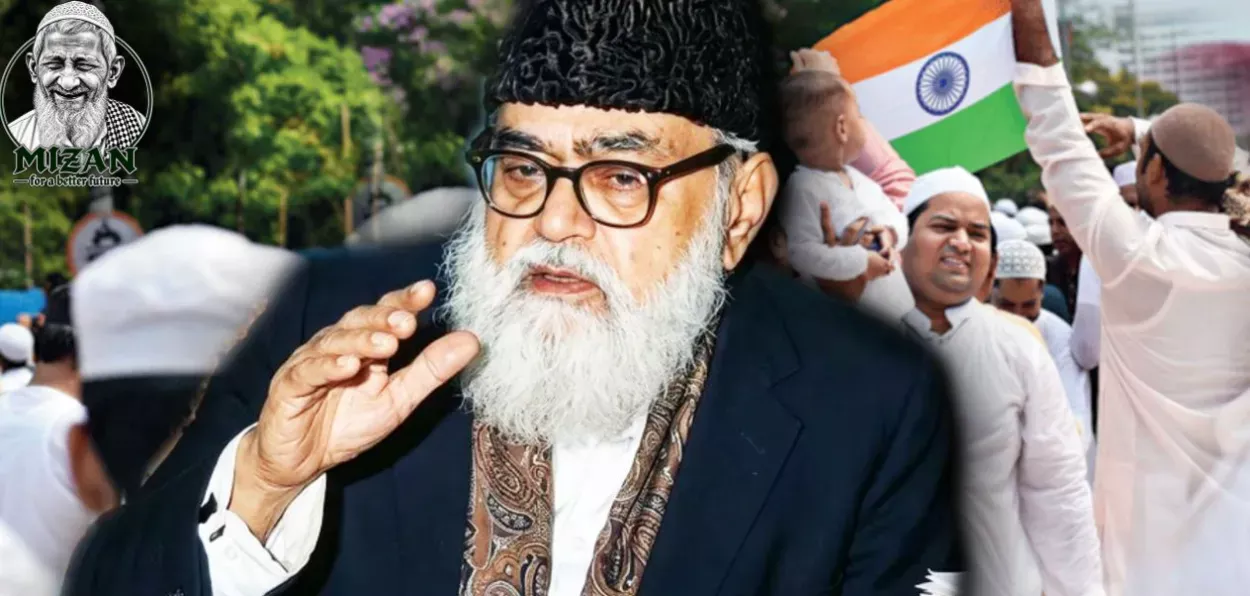
Religion was never the key to success for Muslim politicians who chose to remain in India after the Partition. The decisive factor in electoral politics was always the arithmetic of elections. India’s political history offers an interesting insight: the influence of Muslim organisations was never built primarily on religious identity.
It rested instead on political accommodation—MLC quotas, ministerial portfolios, political patronage and inherited electoral relationships. But the nature of Indian politics has changed, and so has the electoral arithmetic. In this new scenario, Muslim leaders will have to break out of the exclusionary trap. They will need to move beyond identity-based politics and think outside prevailing political frameworks.
Nothing is permanent in politics. Strategies must evolve with circumstances. History shows that politics rooted in ground-level issues can produce results and help Muslims win elections. A similar approach could work again—one that identifies local issues with traction among people across religious communities.
This may be easier said than done today. But when such experiments have worked in the past, there is reason to believe they can work again if the right foundations are laid.
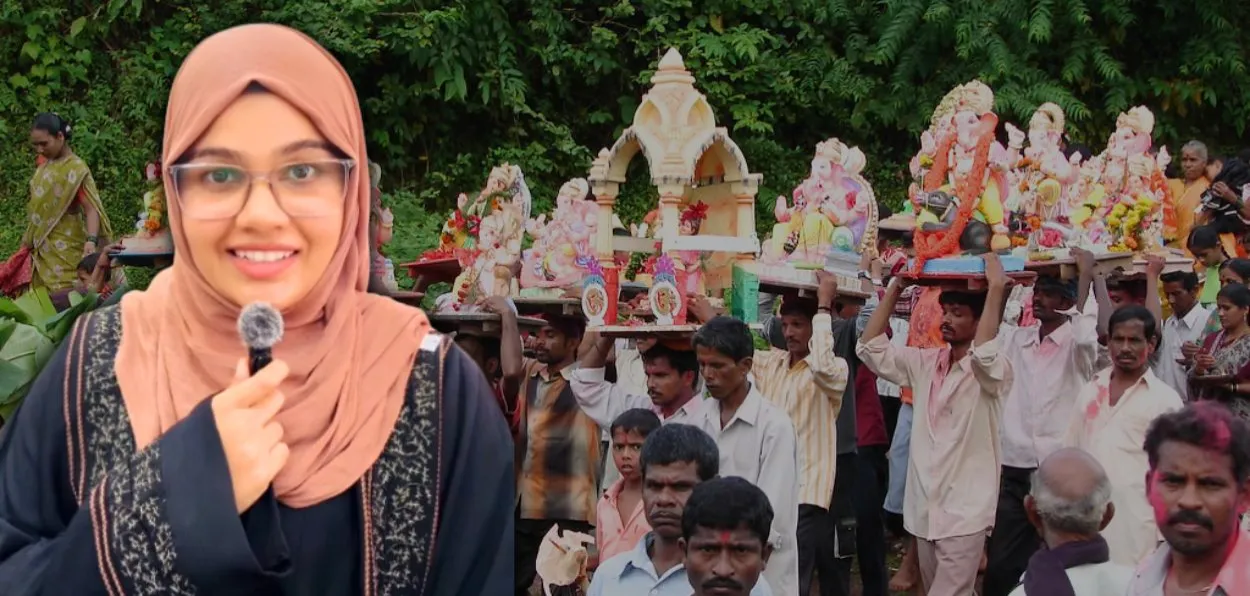
A Muslim leader should not project himself or herself as a leader of Muslims alone, but as someone who cares about everyone. Present Shamli MP Iqra Hassan has positioned herself well in this regard.
When we look at history, we find that in 1957 several Muslim leaders in Bihar—men who had spent decades fighting for independence alongside Gandhi and Nehru—returned their Gandhi topis in protest. They did not return them to a mosque or to an Islamic figurehead. They returned them to the leadership of the Indian National Congress.
The incident was documented by a committee headed by Morarji Desai, which was constituted to investigate the political episode in Bihar that year. The protest reveals much about the political outlook of these leaders.
Shah Wajihuddin Minhaji and Khizr, among others, were furious—not with Hindus or with the Indian Republic, but with the Congress over its political decisions. Their anger was directed at a political party. The protest did not employ an Islamic vocabulary.
It is often argued that the Jamiat Ulema-e-Hind, Imarat-e-Sharia and Momin Conference represented—and have always represented—the political aspirations of Muslims as a religious community. Their politics, it is argued, was defined by deen (religion) or by a theological conception of Muslim identity in a Hindu-majority nation.
The historical record, however, tells a more complicated story.

From Independence onwards, these organisations functioned as democratic political actors within the structures of competitive electoral politics. Islam was an important marker of identity, but their actual politics was often transactional, pragmatic and firmly rooted in the realities of electoral democracy.
The Jamiat Ulema-e-Hind, Imarat-e-Sharia and Jamaat-e-Islami were all pre-Partition organisations that chose to remain in India rather than move to Pakistan. After the 1937 elections, their relationship with the Congress was premised not on ideological or theological affinity but on the idea of secular nationalist politics.
This distinction is important. Their support for Congress did not arise from a shared theological vision. They allied with the Congress because it advocated a secular, democratic India—an idea they too endorsed.
By the 1946 elections, Imarat-e-Sharia had its own political wing, the Muslim Independent Party, while the Jamiat Ulema-e-Hind contested seats independently. The two organisations maintained a practical understanding: where one contested, the other would step aside. Neither organisation itself won a major victory, but Dr Syed Mahmood succeeded with the support of an alliance involving these groups.
The Momin Conference also won five seats in coalition. These were not religious victories. They were political victories, achieved through the mechanics of democratic coalition-building.
After Independence, a faction of the Muslim League that had chosen to remain in India—including wealthy and politically ambitious leaders who had supported Partition but ultimately preferred to stay—merged with the Congress.
The Congress accommodated them and gave many of them positions. Nationalist Muslims who had spent their lives opposing the Muslim League were enraged. In 1957, many of them protested against this by removing their Gandhi caps.
The Momin Conference, Jamiat and Imarat-e-Sharia continued to receive their political share. What emerged in Bihar was essentially five overlapping factions operating under the Congress umbrella: former Muslim Leaguers who had merged with Congress, hereditary Congress Muslims, the Jamiat-e-Ulema, Imarat-e-Sharia and the Momin Conference.
Each received ministries, seats in the Legislative Council, political favours and community concessions. In return, each delivered votes. It was a form of political and social engineering with little theological content.
Interestingly, the same names and families recur across generations. Within Imarat-e-Sharia, the Rahmani family held MLC positions for decades under the Congress system. After the death of Nurullah Rahmani, Maulana Wali Rahmani, who would later head Imarat-e-Sharia, also served several terms in the Legislative Council.
The Momin Conference’s Abdul Qayyum Ansari became an MLA, MLC, minister and Rajya Sabha member in the 1970s. His son, Khalid Anwar Ansari, became a Congress MLA and Cabinet Minister in 1985.

Maulana Anisur Rahman Qasmi of the Jamiat Ulema-e-Hind was a two-term MP from Kishanganj and widely regarded as the first prominent Surjapuri political voice in Parliament.
Shah Uzair Munimi of Imarat-e-Sharia served as a minister after winning his first elections in 1946. The pattern remained broadly the same: heredity, identity and organisational networks translated into political representation and concessions.
Of course, this was an imperfect system. The distribution of political posts along religious-community lines was transactional politics, with barely any pretence of ideology. Yet it gave Muslim organisations a stake in governance and political power.
The important point is that this form of Muslim politics was anchored not in Islamic law but in electoral arithmetic.
Congress began to weaken during the 1970s and 1980s, and the old understandings gradually disappeared. There had been a working relationship between Indira Gandhi and the leaders of these organisations that their successors did not share. By the late 1970s, the system through which Muslim political organisations operated within the Congress framework had begun to crack from within.
Communal violence increased, while public— and particularly Muslim— trust in institutions eroded. In the early 1990s, the Mandal Commission and the demolition of the Babri Masjid transformed the political arithmetic.
This was the era of regional politics. In Bihar, Lalu Prasad Yadav and Nitish Kumar rose to power; in Uttar Pradesh, Mulayam Singh Yadav and Mayawati reshaped the political map. These leaders inherited some of the old patterns of political accommodation, but not the old relationships.
Lalu Prasad Yadav appointed Abdul Qayyum Ansari’s son as an MLC. Nitish Kumar appointed Khalid Anwar as an MLC for two terms, a move widely understood as representing the Imarat-e-Sharia quota. On paper, the organisations continued to receive political representation. But the underlying politics had changed.
Today, the ruling dispensation at the Centre is widely perceived as projecting an anti-Muslim posture. Whether or not this perception fully captures the reality, it serves a clear political purpose and helps consolidate a broad majority vote.
This has created a crisis for Muslim organisations with no easy way out.
If any of them attempts to establish a working relationship with the current government, sections of the Muslim public may immediately turn against them, interpreting such an accommodation as capitulation. If they remain in opposition, they have little access to the patronage networks that sustained their political influence for decades.
Either way, they lose.
Social media has made this predicament even harder to escape. The quiet negotiations that once resolved contradictions behind closed doors are now played out in public. Every accommodation is condemned. Every compromise is amplified. The political space for discreet bargaining has consequently narrowed.
A reading of this history suggests that the political influence of Muslim organisations in independent India was never built primarily on religious authority. It was built on the Congress system of political accommodation—on MLC quotas, ministerial portfolios, patronage and inherited electoral relationships.
The moment that system collapsed, much of their political influence disappeared with it.
What is often described today as a crisis of Muslim identity in Indian democracy is, at its core, also a crisis of a particular political architecture—one that functioned for nearly seven decades and has now largely been dismantled.
The organisations that built their standing on access to Congress now find themselves without Congress, without the old channels of access and without a comparable successor arrangement. Religion was never the foundation; Politics was. And politics has moved on without them.
What Can Muslim Politics Learn from History?
History offers several examples worth examining.
The first is Ghulam Sarwar's politics in Bihar. He engaged in the politics of Urdu. His political appeal centred on the language and extended to a large population of Urdu speakers. Although a substantial proportion of them were Muslims, Urdu politics was not necessarily framed as exclusively Muslim politics, particularly at a time when language could serve as a broader cultural and political constituency.
Sarwar became an MLC and an MLA and went on to serve as Speaker and Deputy Speaker of the Assembly, among other positions. His political alliances were largely with socialist forces.
.png)
The second example is Abdul Ghafoor, who served as Chief Minister of Bihar. He initially operated within Congress politics rather than pursuing an exclusionary Muslim political agenda. He remained an MLA for several terms and eventually became Chief Minister.
Later, he became the founding president of the Samata Party alongside political leaders who had once opposed him. In the 1995 election, the Samata Party projected two official faces for the Chief Minister’s post: Nitish Kumar and Abdul Ghafoor.
His political journey demonstrates an important principle: nothing is permanent in politics. Alliances change, circumstances change, and political strategies must change with them.
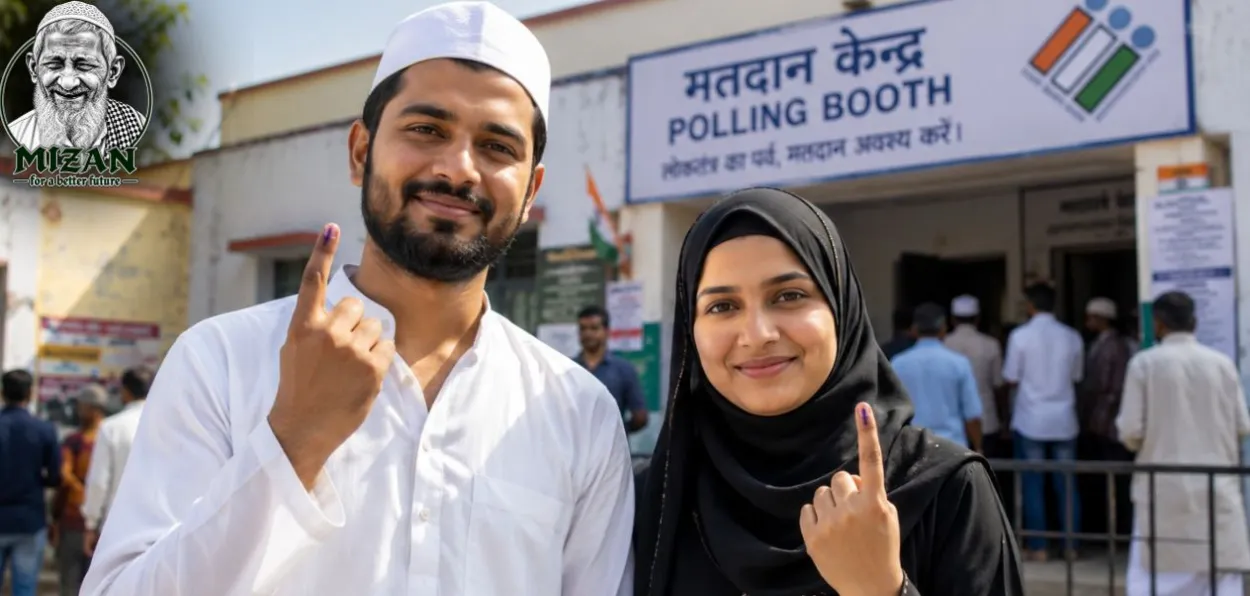
The third example comes from Govindpur Assembly constituency in Nawada, where Muslims constitute around 10 per cent of the electorate. In 2020, Mohammad Kamran won the seat on an RJD ticket, defeating a major local leader by a respectable margin despite the latter having an apparently favourable caste combination.
Kamran’s victory was built on sustained grassroots work. He had spent nearly 15 years working among people and maintaining a continuous connection with the constituency.
The lesson is clear: politics rooted in ground-level issues can win elections, including in constituencies where Muslims are not numerically dominant. Muslim politics, therefore, is not dead. Nor is effective political mobilisation impossible. But it requires a return to the ground. There are two major factors.
First, strategy. Political mobilisation has to be carefully planned and executed on the ground. Identity alone cannot substitute for organisation, alliances, constituency work and a clear understanding of local issues.
Second, finances. Money is an important factor in sustaining political activity. Financial resources enable political workers to remain connected to people, respond to local needs and build organisations capable of surviving beyond a single election.
This makes economic and political empowerment inseparable. Muslim organisations and leaders need to focus not only on electoral politics but also on financial stability, entrepreneurship and other avenues of economic advancement.
If political movements are to be sustained over the long term, they require resources. Where leaders do not possess those resources themselves, they need sponsors—typically people with financial means who are willing to support political activity.
The challenge for Muslim organisations is not to abandon politics, but to understand that the old political architecture has disappeared. The future will belong to those who can build new alliances, engage without hesitation with issues beyond religious identity, develop strong grassroots networks and create the economic foundations necessary to sustain political influence.
ALSO READ: Why Maulana Maududi's political Islam is not relevant in twenty-first-century India
The history of Muslim politics in India suggests that political influence was never guaranteed by religious authority. It was earned through organisation, negotiation, alliances and electoral relevance.Those fundamentals have not disappeared. Only the political landscape has changed.
The author is a researcher and founder of digital platforms - Heritage Times, Lost Muslim Heritage of Bihar and Bihar Digital Archive









.webp)