Bhakti Chalak
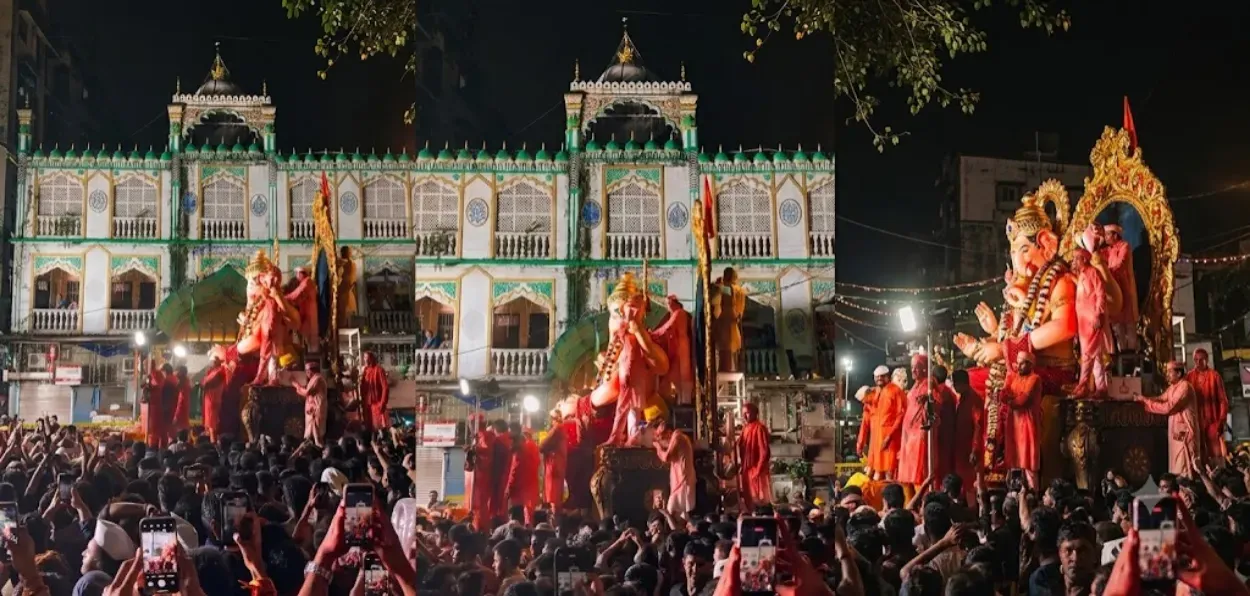
The Dhol-Tasha troupes that lead Ganeshotsav processions bring an infectious energy to the festival. Their powerful rhythms can make even the most reluctant spectator get up and dance. Among these traditions, the Nashik Dhol has become popular not only across Maharashtra but throughout India, including in Bollywood.
But few may know that the man credited with creating the distinctive Nashik Dhol tradition is a Muslim. At 85, Gulab Khan still plays the dhol with the same enthusiasm and energy. In an interaction with Awaz-The-Voice, he recalled his remarkable journey with the instrument and the evolution of the Nashik Dhol.
Gulab Khan was only eight when he began making music with tin cans. His rhythms soon attracted the attention of people around him. In Nashik, members of the Ansari community traditionally played the dhol during Muharram processions. Gulab studied their performances closely and absorbed the nuances of their rhythms.
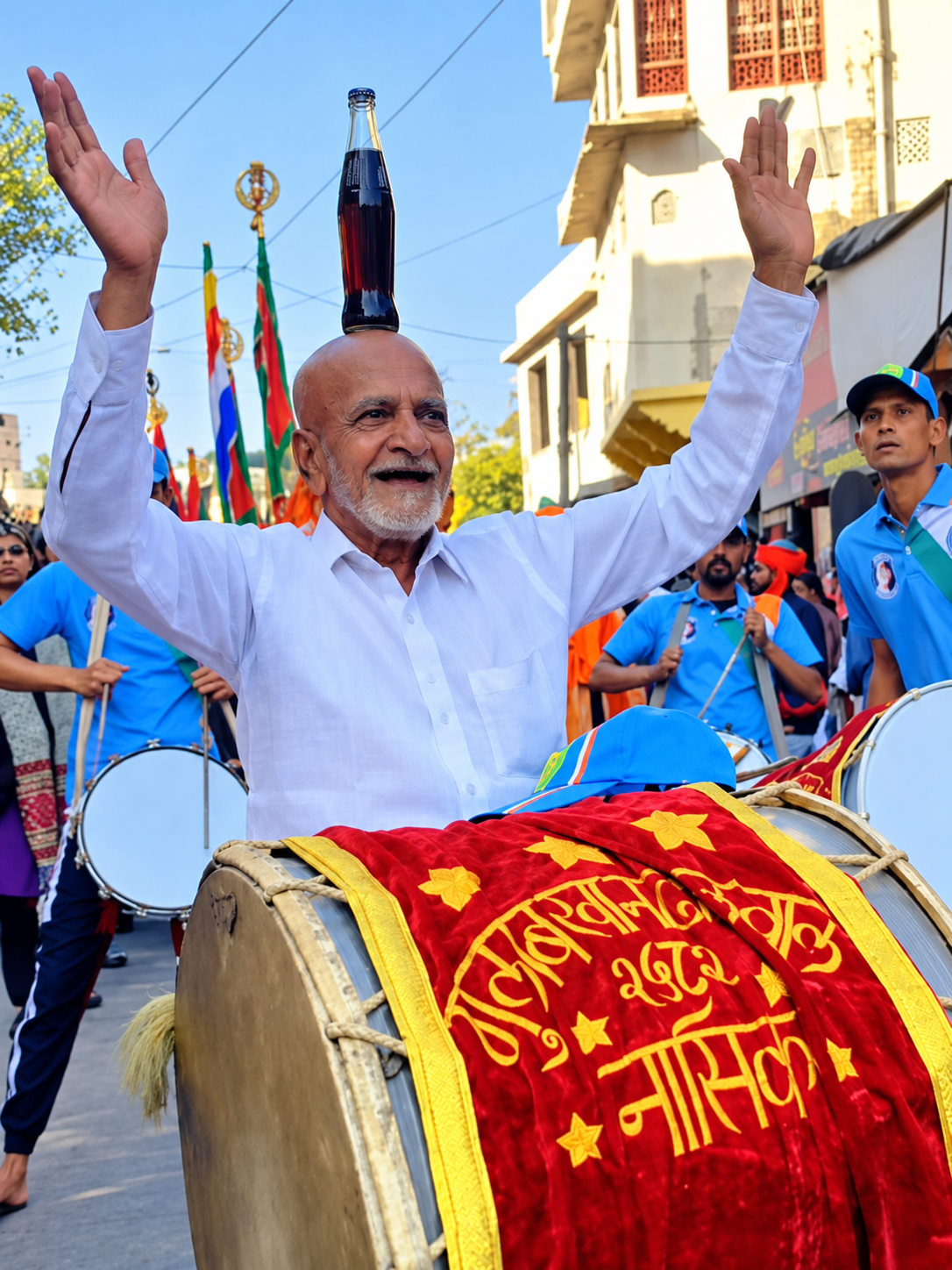 Gulab Khan leading Dhol Tasha procession
As he played in Muharram processions, his distinctive beats travelled to Saraf Bazaar, Nashik's jewellery market. People there began inviting him to perform at their events. This marked the beginning of his journey towards creating what came to be known as the Nashik Dhol.
In his early years, Gulab earned a living by driving a tanga, or horse-drawn carriage. Alongside his livelihood, however, he continued to nurture his passion for the dhol. He brought together a group of friends and began performing at different events.
The troupe, initially formed around the 10 days of Muharram, gradually began incorporating rhythms from different cultural traditions. By learning the beats of Gujarati, Sindhi, Marwadi and Punjabi folk music, the group gave the Nashik Dhol a distinctly multicultural character.
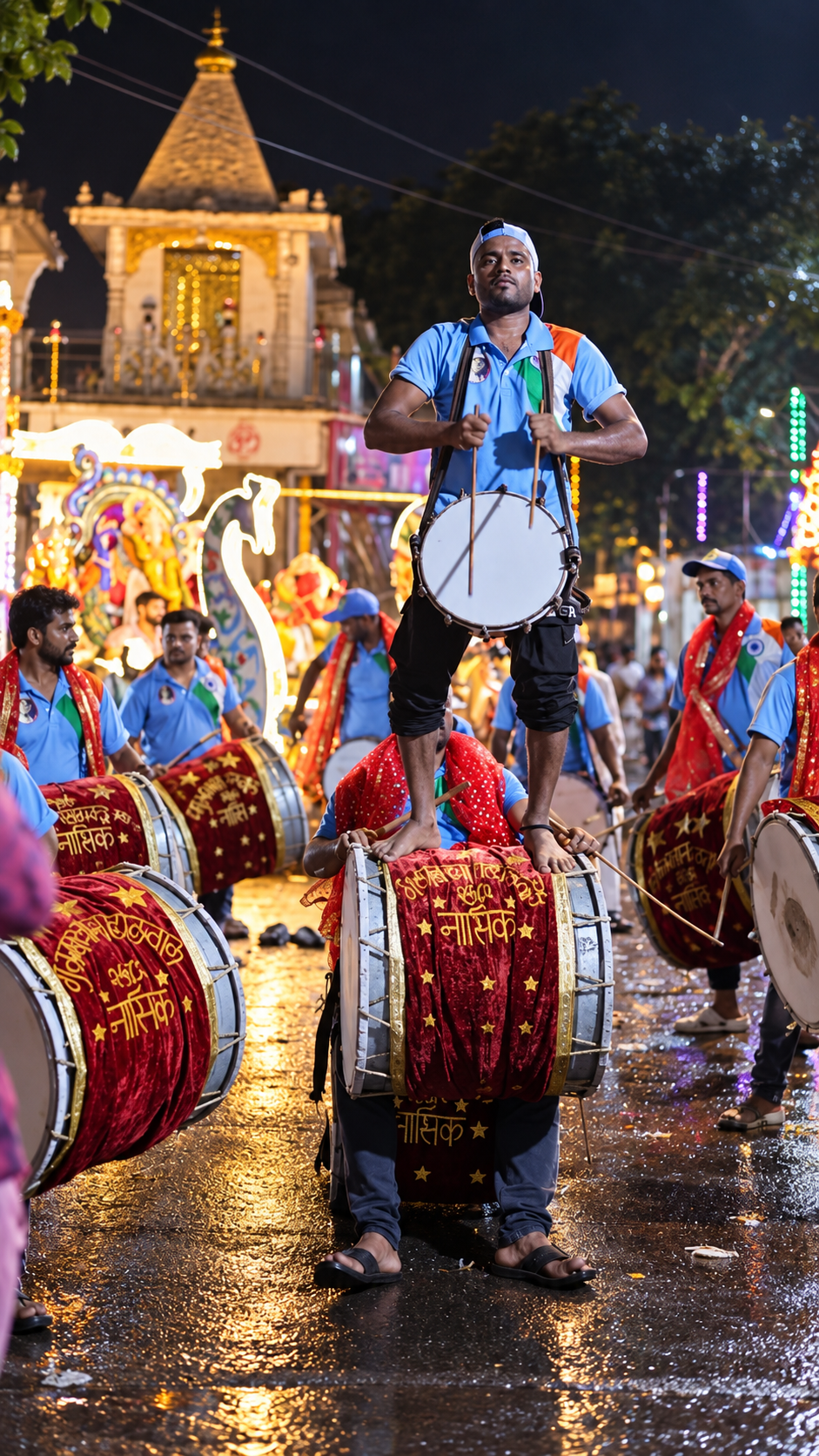 Nashik Dhol Tasha playing
The troupe later travelled across Mumbai, Gujarat and Rajasthan, gaining recognition beyond Nashik. Between 1960 and 1965, its distinctive sound reached the film industry. The 1979 film Auliya Islam was among its first cinematic ventures, followed by an appearance in Sunil Dutt's Kaale Dhande Goray Log.
The dhol beats used in a song from Anil Kapoor's blockbuster Ram Lakhan also came from Gulab Khan's troupe and were later incorporated into the film's music. The troupe was also invited to play during Ganpati celebrations at Sunil Dutt's residence.
Reflecting on his long career and his association with people from different communities, Gulab Khan says: “Music and art have no caste or religion. We have always played the dhol at the festivals of every religion solely to win people's hearts.”
The story of how the Nashik Dhol became part of Ganeshotsav is equally interesting.
While Gulab was playing the dhol on the first day of Ganpati celebrations at Mumbai's Zaveri Bazaar, a prominent businessman from Chembur noticed his performance and invited the troupe to participate in the immersion procession.
Today, Gulab Khan's third generation continues to play the dhol at the Shri Ganesh Balmitra Mandal and the Sindhi community's Jhulelal Temple in Chembur. According to the family, the association has continued for around 65 years.
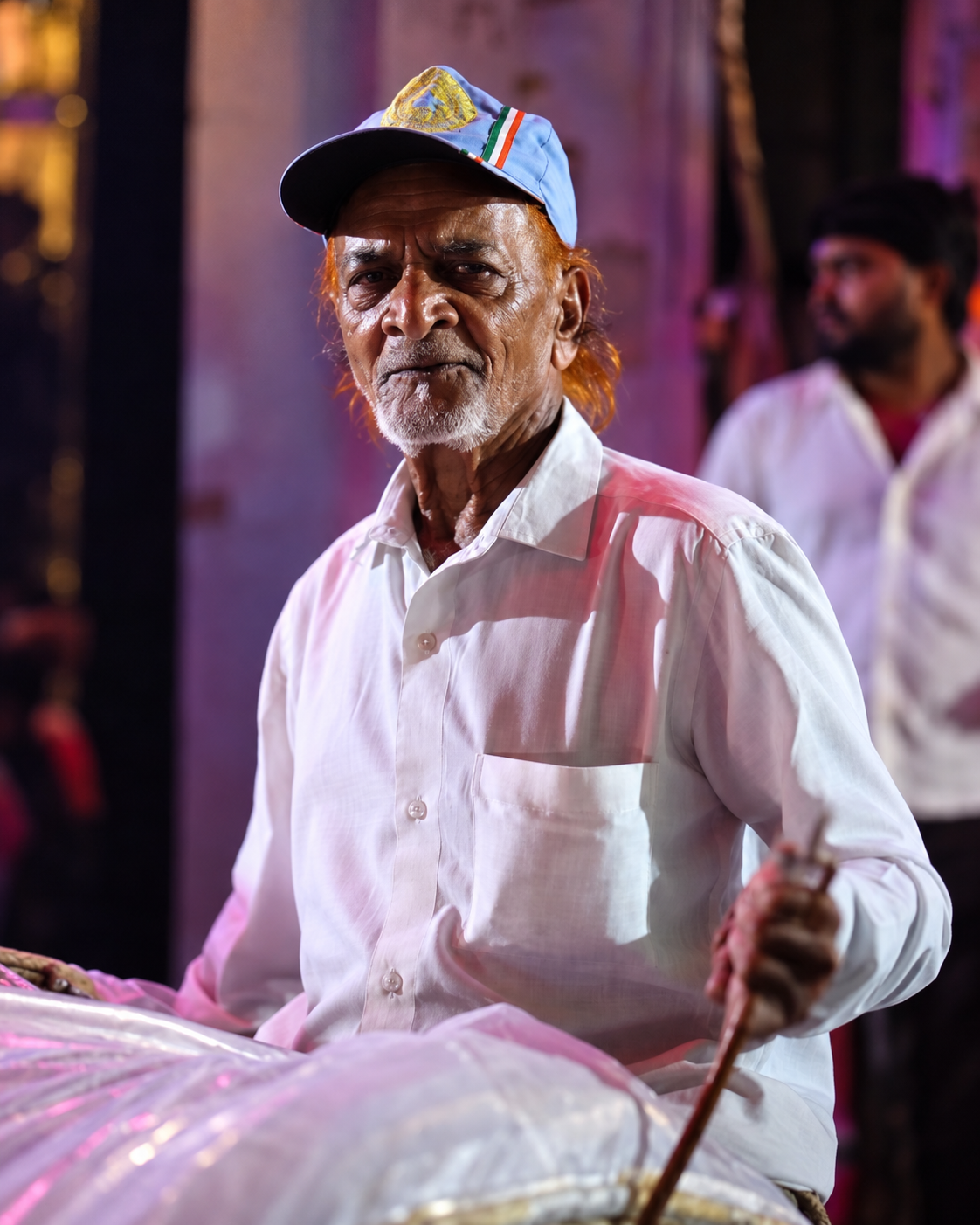 Gulab Khan
Speaking about the troupe's diverse repertoire, Gulab says: “Our dhol plays rhythms suited to every language—Sindhi, Gujarati, Marwadi, Punjabi, Rajasthani, Hyderabadi, and Marathi. We play for everyone, and that brings us the greatest joy.”
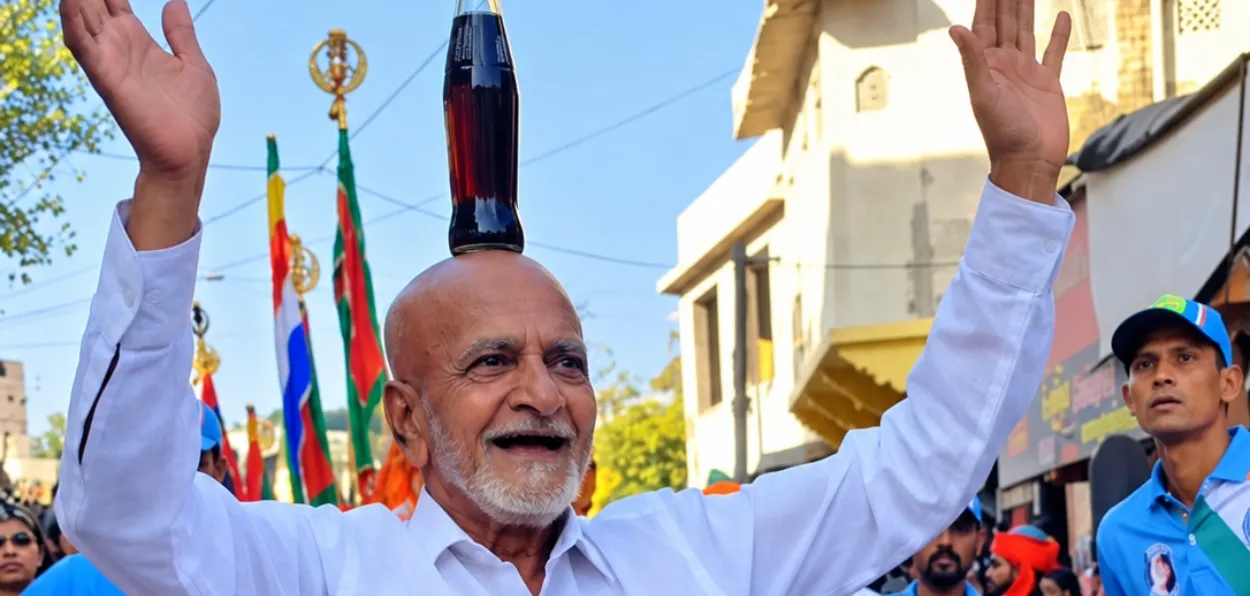
One of the distinctive features of Gulab Khan's Nashik Dhol is the combination of music with acrobatic performances. His troupe continues to perform difficult stunts, including dancing while balancing a glass bottle on the head and formations in which two or three performers stand on a person lying down while holding a dhol.
Gulab draws a sharp distinction between his troupe's traditional repertoire and what he describes as imitations of the Nashik Dhol.
“The duplicate dhol players only know 3-4 beats. But we have a treasure trove of rhythms. Our stunts are our trump cards, which no one else can replicate.”
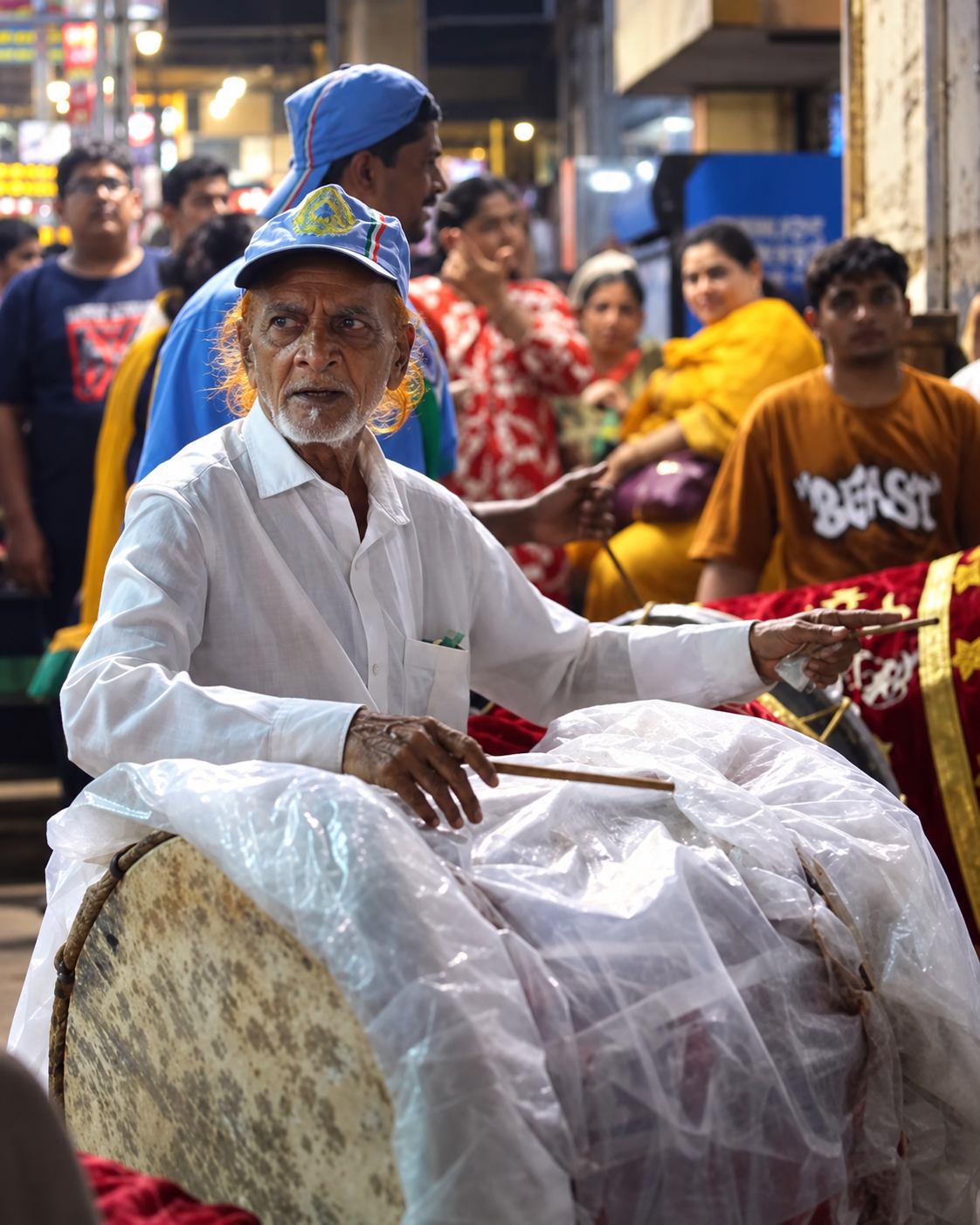 Gulab Khan
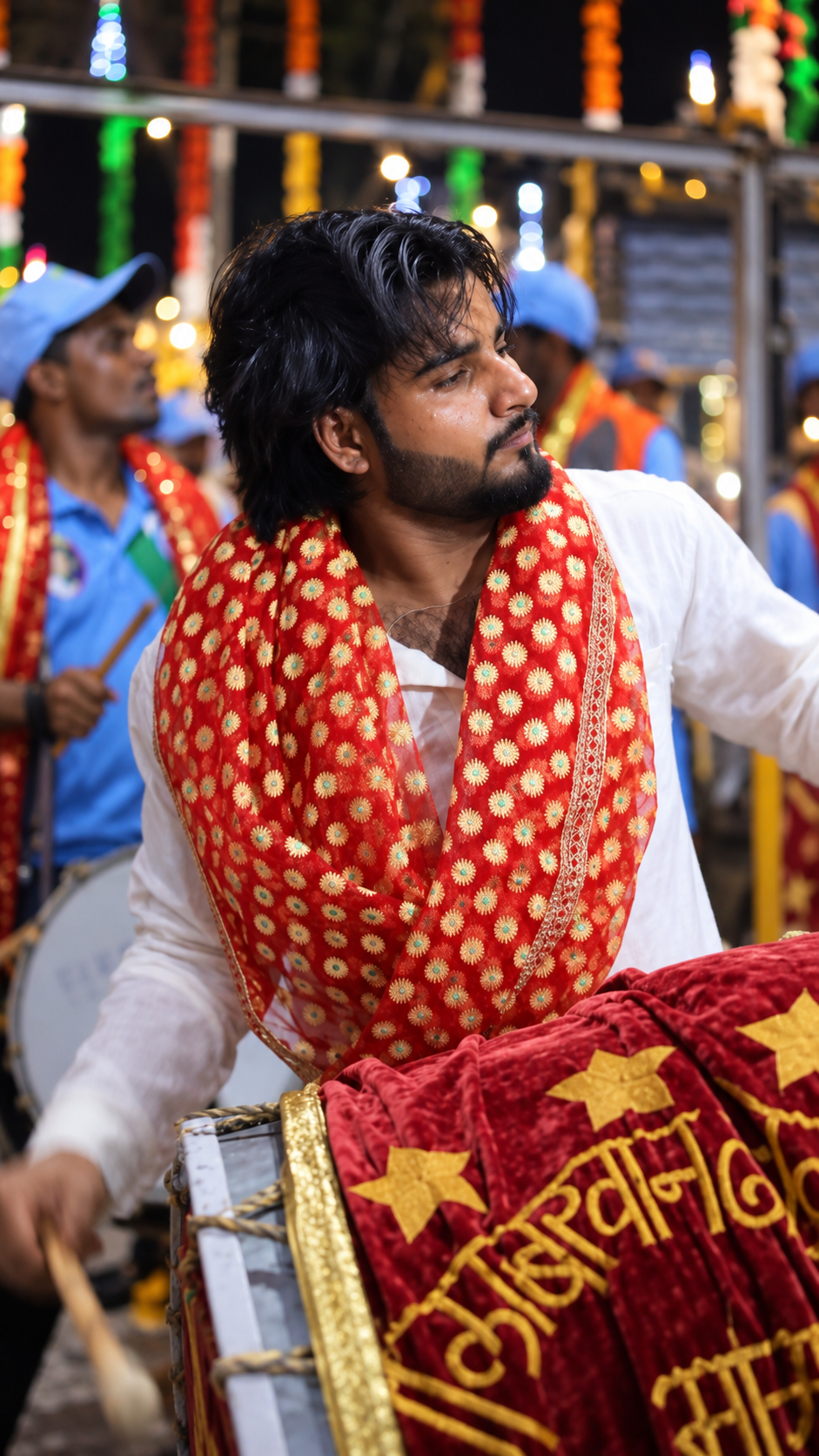
Today, Gulab Khan's troupe has around 150 artists, including 20 to 30 women. About 40 per cent of its members are non-Muslims. Among the women performers, he says, 30 are non-Muslim and 10 are Muslim.
Gulab particularly prefers to give opportunities to men and women from economically disadvantaged backgrounds. The troupe now includes members from three generations of dhol players. Its performances are sought after for corporate events, weddings, naming ceremonies and temple festivals.
Gulab Khan's son, Kadir Khan, says his father comes from a reputed family with a military background.
According to him, at the time of India's independence, their ancestors fought a major battle to reclaim land occupied by the British. After independence, his grandfather donated the prime property—which had generated rent from the British—to the Indian government for use free of cost as a medical camp and police outpost.
The family still preserves rent receipts and copper plates (Tamrapatra) from that period.
The emergence of Puneri Pathaks—dhol-tasha troupes from Pune—in later years may have reduced the demand for the Nashik Dhol in some parts of Maharashtra. Yet Gulab Khan's troupe continues to be popular in Mumbai, Gujarat, Karnataka and Hyderabad.
At 85, Gulab Khan still plays the dhol with undiminished enthusiasm. Alongside him, three generations of performers continue the tradition he helped shape.
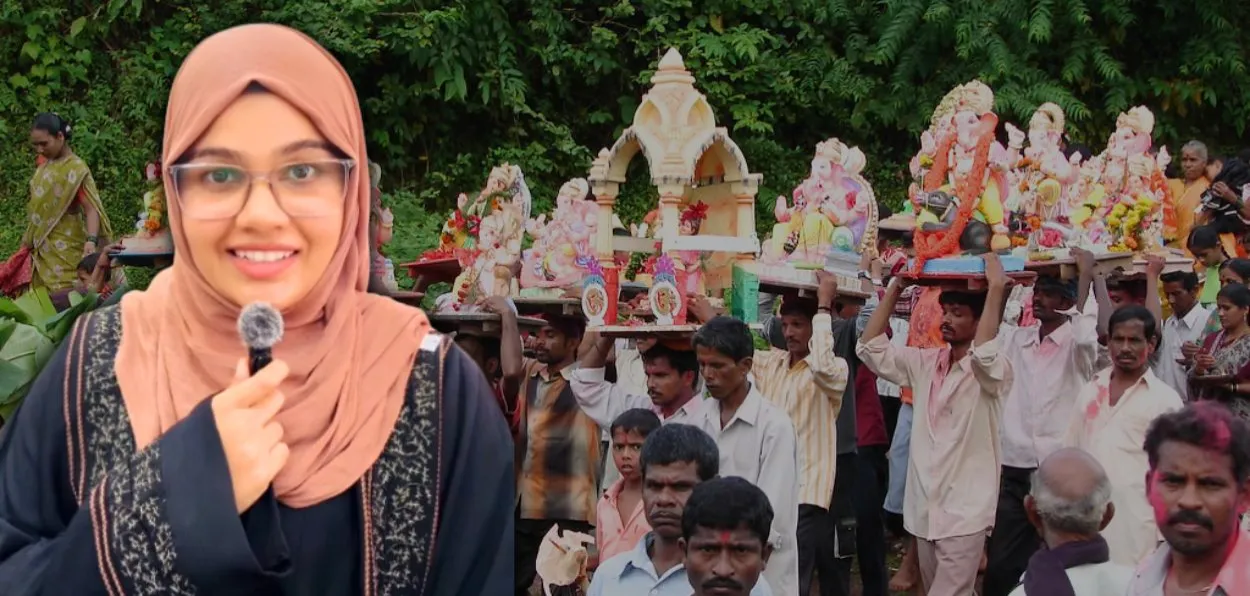
ALSO READ: Digital creator Khadija Naik relives memories of Konkan's Ganeshotsav
In an age dominated by DJs and amplified music, the thunderous beats of the Nashik Dhol continue to hold a special place in Ganeshotsav processions. Behind those beats is a story of musical tradition, cultural exchange and a Muslim maestro whose rhythms have crossed religious and regional boundaries.







.webp)