New Delhi
The Income Tax Department disposed of over 2.22 lakh appeals in the last financial year, marking a nearly 29 per cent increase compared to the previous fiscal, as part of efforts to reduce litigation and improve taxpayer services, according to Central Board of Direct Taxes (CBDT).
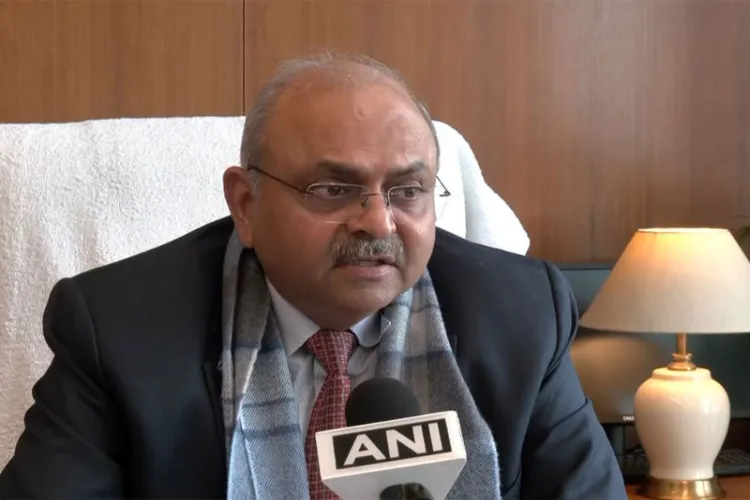
CBDT Chairman Ravi Agrawal, in a fiscal-end communication to officials, highlighted the department’s push towards a “fair and efficient” tax system, driven by data analytics and proportionate enforcement.
The department disposed of 2,22,540 appeals in FY 2025-26, up from 1,72,361 in FY 2024-25, reflecting a 29.11 per cent rise. A significant portion of legacy cases was also cleared, with 50,654 appeals resolved through a special drive, reducing pendency by over 33 per cent.
Agrawal noted that the department has strengthened its use of data intelligence to identify risks and guide enforcement, including “theme-based” investigations into issues such as incorrect deduction claims and suppression of business receipts.
Apart from appeals, the department handled a substantial volume of taxpayer services. During the fiscal, 72,933 grievances were resolved with an average turnaround time of 47 days, while 1,32,125 rectification applications were processed.
Additionally, 5,68,621 orders giving effect (OGEs) were issued, contributing to the disposal of over 10.26 lakh cases across categories. These efforts led to a reduction of Rs 12.33 lakh crore in outstanding tax demand.
The CBDT also reported progress in bringing charitable institutions into the digital system, with about 1.56 lakh trusts granted registrations or re-registrations during the year.
In the area of international taxation, the department signed 219 Advance Pricing Agreements (APAs), a 25.86 per cent increase over the previous fiscal. APAs are aimed at providing certainty in transfer pricing matters for taxpayers.
READ MORE: Rajasthan: Gaurakshaks silence hatemonger with assertion of Hindu-Muslim unity
Looking ahead, Agrawal emphasised that FY 2026-27 would be significant with the rollout of the new Income Tax Act, 2025 and Income Tax Rules, 2026, which are expected to enhance ease of compliance while promoting a non-intrusive, technology-driven tax administration.
















.webp)