New Delhi
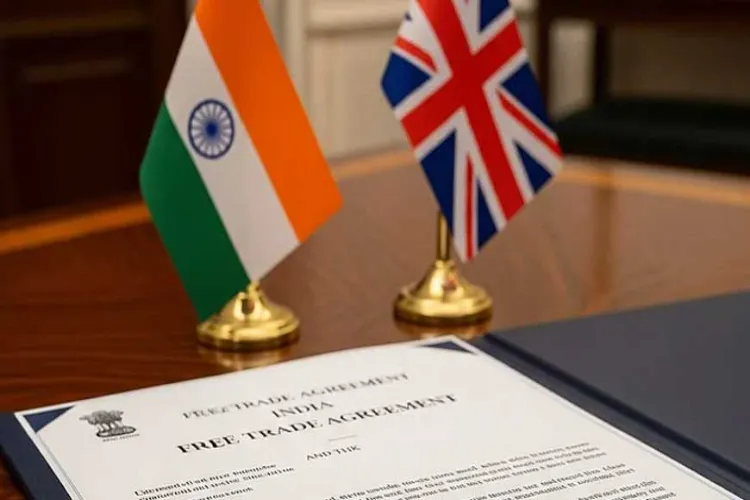
The India-UK free trade agreement opens market access but does not automatically translate into higher exports, and the country must strengthen standards, certification, logistics and buyer linkages to realise its full benefits, economic think tank GTRI said on Saturday.
The India-UK Comprehensive Economic and Trade Agreement (CETA) will come into force from July 15.
"Without parallel work on standards, certification, logistics, regulatory approvals and buyer networks, much of the opportunity will remain on paper. The agreement opens the door; India must now convert access into exports," the Global Trade Research Initiative (GTRI) said.
Citing example, GTRI Founder Ajay Srivastava said while food exporters need better testing, traceability and compliance with UK sanitary and phytosanitary rules;machinery and electronics firms need certification, technology and stronger buyer links.
Similarly automobile exporters must meet rules-of-origin and technical requirements; and the garment, leather and footwear producers should move quickly to turn tariff savings into orders before competitors adjust.
"The biggest gains are likely where three conditions come together: India has strong export capacity, the UK has substantial demand and CETA removes a meaningful tariff disadvantage. That points most clearly to garments, textiles, leather, footwear, processed foods, seafood and selected farm products," he said.
According to the think tank's analysis, the strongest prospects are in labour-intensive goods, processed foods, seafood, automobiles and selected manufactures. Steel, petroleum and alcohol are less likely to gain significantly.
In 2025, the UK imported USD 928.9 billion of goods from the world but only USD 15.2 billion from India.
India's share of UK imports was just 1.6 per cent. Britain, meanwhile, bought only 3.4 per cent of India's USD 445 billion global exports.
He said that low market share alone does not signal a big opportunity.
Export potential depends on four factors - UK demand, India's export capacity, its current UK market presence and the tariff advantage created by CETA.
"Standards, food-safety rules, safeguards, certification and supply-chain constraints can matter as much as tariffs," Srivastava said.
Sectors where Indian strength meets UK demand include garments; textiles; leather and footwear; processed foods; cereals, vegetables, fruits and spices; fish, and meat; automobiles, motorcycles and parts; and machinery, electronics and fabricated metal products.
India exported USD 16.3 billion of garments globally in 2025, while the UK imported USD 21.3 billion. India supplied USD 1.3 billion, or 6.1 per cent of UK imports. The UK already buys 8 per cent of India's global garment exports, showing established buyer relationships.
The UK imported processed foods worth USD 33.4 billion last year but only USD 354 million from India, giving India a market share of 1.1 per cent only. India's global exports were USD 10 billion.
"Large UK demand, low Indian penetration and tariff cuts create strong potential in ready-to-eat foods, bakery and confectionery products, sauces and ethnic foods. Food safety, labelling and traceability will remain critical," it said.
Similarly, the UK imported USD 92.2 billion worth of goods from the auto sector but only USD 325 million from India, giving India a negligible 0.4 per cent share.
India's global exports were USD 25.1 billion. CETA tariff cuts can support vehicles, motorcycles and components, though rules of origin and technical standards will be decisive.
The GTRI added that chemicals and pharmaceuticals have strong Indian supply capacity but limited CETA-led gains.
India exported USD 40 billion of chemicals globally but supplied only USD 908 million of a USD 35.2 billion UK market.
On the other hand in pharmaceuticals, India exported USD 25.8 billion globally but supplied only USD 1 billion, or 3.2 per cent, of UK imports.
"The opportunity is real, but regulation, quality compliance, environmental rules and procurement matter more than tariffs," it said.
It added that iron and steel products show why a trade pact does not automatically guarantee market access.
India exported USD 20.5 billion globally and supplied USD 959 million to the UK, giving it a 5.2 per cent share.
"Yet the UK's tighter steel safeguard regime, reduced quotas and high above-quota tariffs can overwhelm CETA preferences. Trade remedies and future carbon costs add further risks," the GTRI said.
It added that alcohol and wines face a different problem. The UK imported USD 10.9 billion globally but only USD 7 million from India. India's own global exports were just USD 456 million.
READ MORE: Maharashtra: Ashadhi Wari pilgrimage begins with worship at dargah, sufi shrine
It said that the gap reflects weak export scale, limited brand presence and strong global competition rather than tariffs.











.webp "Representational Image")

.webp "Ram Temple Construction Committee Chairman Nripendra Mishra")