New Delhi
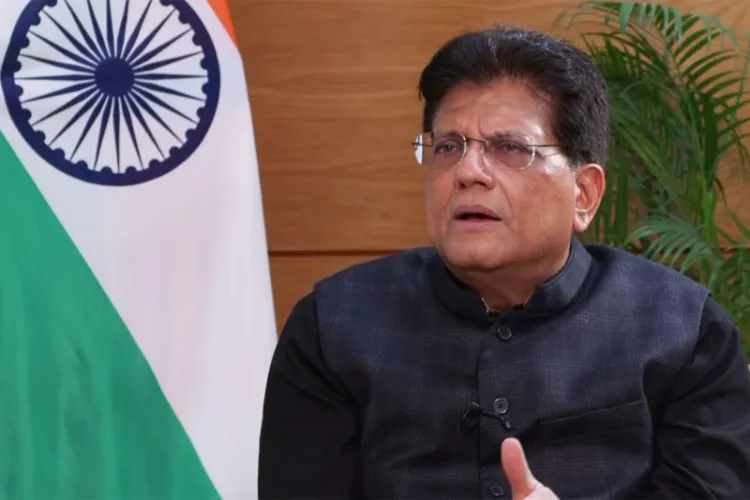
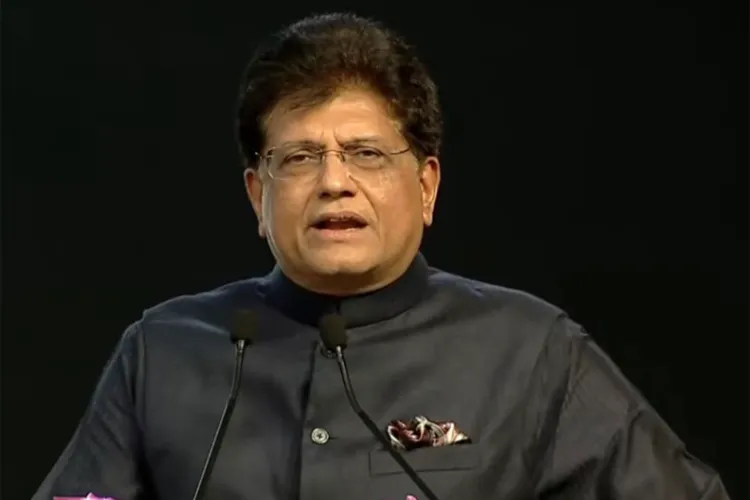
Union Commerce and Industry Minister Piyush Goyal on Saturday welcomed the framework announced for the India–US trade agreement, stating that it would significantly benefit Indian farmers, micro, small and medium enterprises (MSMEs), artisans and labour-intensive sectors.
Addressing a press conference on the India–US Joint Statement, Goyal said the framework ensures zero-duty access for agricultural products from India entering the United States, while making it clear that no tariff concessions have been extended to agricultural imports from the US into India.
He also underlined that the agreement explicitly bars the entry of genetically modified (GM) food into the Indian market, safeguarding domestic agricultural interests.
The minister said the trade framework marked a positive turning point for India’s growth trajectory, noting that reciprocal tariffs, earlier pegged at 50 per cent, have now been reduced to 18 per cent—lower than those imposed on several neighbouring countries.
“This reduction will provide substantial relief to Indian exporters and open up new opportunities in India’s growth story,” Goyal said.
He asserted that the agreement would not harm Indian farmers or MSMEs, but instead would expand their access to the US market. According to the minister, sectors employing large numbers of women and youth, particularly MSMEs and labour-intensive industries, stand to gain significantly.
“With exports from sectors such as textiles and apparel, leather and footwear, toys, and gems and jewellery set to expand in the US market, the framework is expected to generate lakhs of new jobs while strengthening domestic manufacturing,” he added.
Goyal further explained that tariffs on a wide range of Indian goods would be reduced to zero, enhancing export competitiveness and reinforcing the ‘Make in India’ initiative. These include generic pharmaceuticals, gems and diamonds, aircraft parts and several other key products.
He said India would also receive exemptions under Section 232 for aircraft parts, tariff rate quotas on auto components, and negotiated outcomes for generic pharmaceuticals, translating into tangible export gains.
In addition, zero-duty access would extend to several agricultural and food products such as spices, tea, coffee, coconut oil, cashew nuts, and a variety of fruits and vegetables, including avocado, banana, mango, pineapple and mushrooms, along with select bakery items.
Describing the announcement as historic, Goyal said the day would be remembered as a landmark moment in India–US trade relations.
He noted that discussions between Prime Minister Narendra Modi and US President Donald Trump, which began in February 2025, had culminated in a breakthrough that opened the doors of a USD 30 trillion economy wider for Indian exporters.
“This joint statement brings renewed hope, fresh enthusiasm and confidence to every Indian stakeholder,” the minister said.
Earlier, India and the US announced through a joint statement that they had reached a framework for an Interim Agreement on reciprocal and mutually beneficial trade and had agreed on its terms.
The framework follows a phone conversation on February 2 between Prime Minister Modi and President Trump, which paved the way for the conclusion of negotiations on the long-awaited trade deal.
READ MORE: Muslims must prioritise education for girls: Ex-Maha minister Anees Majeed Ahmed
The Bilateral Trade Agreement (BTA), first proposed in February 2025, aims to more than double bilateral trade from the current USD 191 billion to USD 500 billion by 2030.