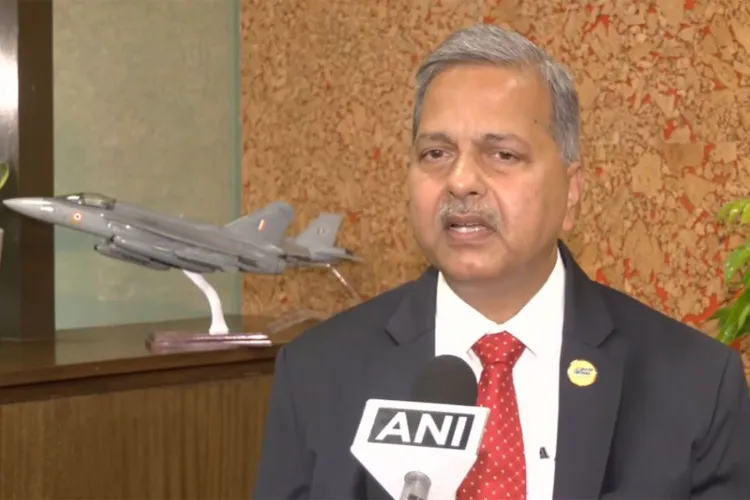
.webp "External Affairs Minister S Jaishankar")
New Delhi
External Affairs Minister S Jaishankar on Monday described the newly concluded India–New Zealand Free Trade Agreement (FTA) as a landmark step that will significantly boost trade, investment and economic collaboration between the two countries.
In a post on X, Jaishankar said the agreement marked a new phase in bilateral ties.
“A landmark in India–New Zealand ties. The India–NZ FTA, concluded in record time under the guidance of PM Narendra Modi and PM Christopher Luxon, places our partnership on an accelerated growth trajectory. It will surely boost trade, investment and economic collaboration across sectors,” he wrote.
Earlier in the day, Prime Minister Narendra Modi held a telephone conversation with his New Zealand counterpart Christopher Luxon, during which the two leaders jointly announced the conclusion of the landmark FTA.
In a post on X, PM Modi said, “My friend PM Christopher Luxon and I had a very good conversation a short while ago following the conclusion of the landmark India–New Zealand Free Trade Agreement. Concluded in just nine months, this historic milestone reflects strong political will and a shared ambition to deepen economic ties between our two countries.”
The leaders noted that negotiations for the FTA were initiated during PM Luxon’s visit to India in March 2025 and agreed that its conclusion in a record nine months reflected the shared resolve to strengthen bilateral relations.
The agreement is expected to significantly deepen economic engagement, enhance market access, promote investment flows and strengthen strategic cooperation, while opening new opportunities for farmers, MSMEs, entrepreneurs, innovators, students and youth in both countries.
Both leaders expressed confidence that bilateral trade would double over the next five years, with New Zealand committing investments worth USD 20 billion in India over the next 15 years.
New Zealand Prime Minister Christopher Luxon said in a post on X that the FTA would reduce or remove tariffs on 95 per cent of New Zealand’s exports to India and could increase exports by USD 1.1–1.3 billion annually over the next two decades.
READ MORE: Young bride Mrs Yasim taught me differences can be celebrated
The agreement will also deepen cooperation across services, mobility, goods, investment and trade facilitation, broadly following the European Free Trade Association (EFTA) model.