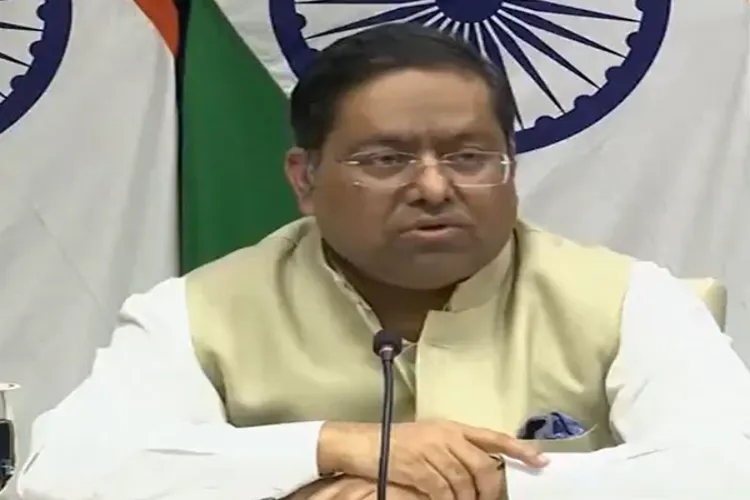
New Delhi
India on Thursday urged Canada to take firm action against “anti-India extremist elements” operating from its territory, following a recent Canadian intelligence report that identified Khalistani extremist activities as a national security concern.
Responding to questions during the weekly media briefing, External Affairs Ministry spokesperson Randhir Jaiswal said India has repeatedly raised concerns with the Canadian government regarding extremist and separatist groups allegedly using Canadian soil to target Indian interests.
His remarks came after the 2025 annual report released by the Canadian Security Intelligence Service (CSIS) noted that Canada-based Khalistani extremist groups continue to engage in violent extremist activities and pose a threat to Canada’s national security.
Jaiswal said India has consistently asked Canadian authorities to address issues such as the glorification of violence, threats against Indian diplomats and leaders, attacks on places of worship, and efforts to promote separatism through unofficial “referendums.”
According to him, the CSIS report itself acknowledged the presence of supporters of the Khalistan movement in Canada and recognised that such groups pose security challenges not only for India but also for Canada.
He further stated that the report highlighted concerns over the alleged misuse of democratic freedoms and institutions by extremist groups to spread radical ideologies and raise funds linked to violent activities.
Responding to another question regarding the CSIS report naming India alongside countries such as China, Russia, Iran, and Pakistan as alleged sources of foreign interference and espionage in Canada, Jaiswal rejected the allegations.
READ MORE: West Bengal Polls: BJP makes dent in TMC stronghold of Muslim-majority districts
He said India has consistently dismissed such claims as baseless and reiterated that the country respects international norms and the sovereignty of other nations. Jaiswal added that any concerns between the two countries should be handled through established diplomatic mechanisms rather than through public or politicised narratives.










.webp "Supreme Court of India")


_(2).webp)