New Delhi
Performing ablution five times a day not only keeps the body clean but also instils a sense of discipline and responsibility. A person who maintains personal hygiene is more likely to take responsibility for keeping their surroundings—and ultimately the country—clean.
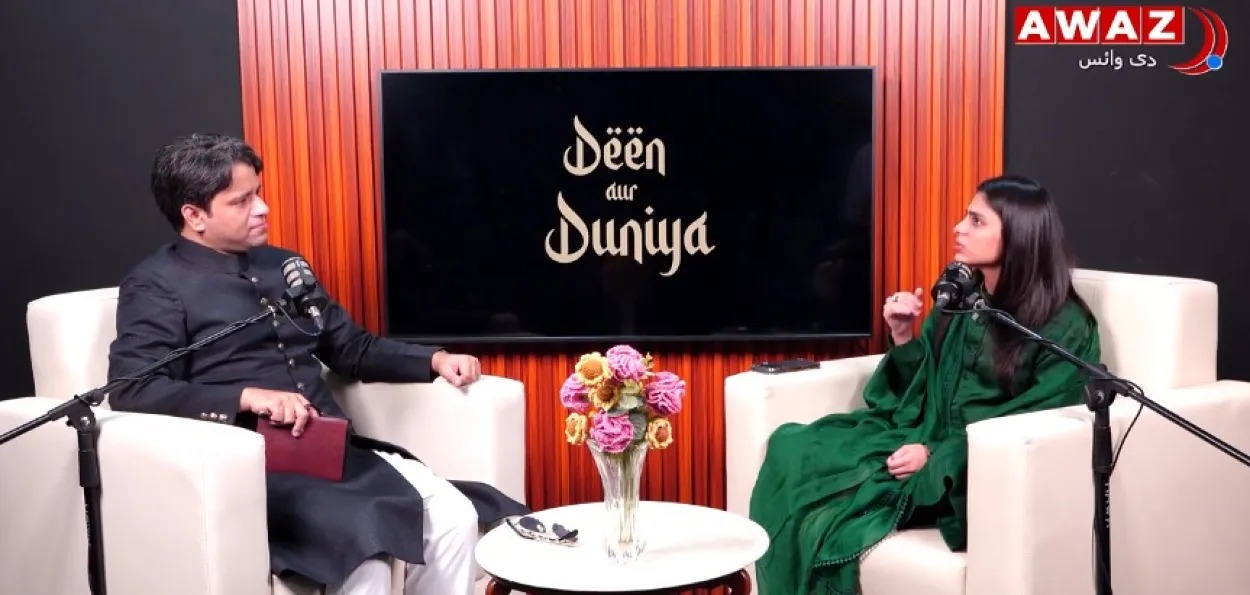
In a special interview for Awaz-The Voice’s podcast Deen Aur Duniya, Mumbai-bassed social activist Saher Bhamla shared these views. Actively engaged in environmental work, she focuses on cleanliness drives, reducing plastic use, and raising public awareness through the Bhamla Foundation. In addition, she contributes to initiatives supporting the poor and the underprivileged.
The conversation with Saquib Salim ranged across religion, cleanliness, education, social behaviour, and welfare. While environmental protection remains her core area, Bhamla is equally involved in broader efforts toward social betterment.
Saher Bhamla, Director of Bhamla Foundation, said her interest in environmental work was shaped at home. The Bhamla Foundation, founded nearly 30 years ago by her father, Asif Bhamla, began as a small initiative to improve their immediate surroundings but has since grown into a significant organisation. “My father continues to work with the same dedication, and I learn a great deal from him,” she said.
During her formative years, she was exposed to public service firsthand. While other children spent time on sports or extracurricular activities, she often accompanied her father to his office. “Initially, I simply observed, but gradually I developed an interest in interacting with people. I realised that even listening to someone’s problems can be meaningful, even if you cannot solve every issue,” she noted.
Why the environment?
Reflecting on her choice of field, Bhamla acknowledged that many forms of social work exist—helping patients, supporting accident victims, or working for animal welfare. “For me, it was an internal connection,” she said. “Over time, the work became engaging. We would go to the beach in groups, and it turned into a meaningful activity rather than a chore. I enjoy being with people, and that drew me further into this work.”
.webp)
This realisation shifted the focus toward awareness. “The real goal is for children and volunteers to see and understand that the items we use briefly—plastic bags, straws—eventually become a serious environmental problem,” she said.
Reducing plastic use
Bhamla emphasised the importance of small, practical changes in daily life. “If you make simple adjustments that are not difficult, you can protect both the environment and your health,” she said, cautioning against the use of plastic bottles due to their harmful effects.
At the same time, she acknowledged practical challenges. “For someone who is constantly on the move for work, buying an expensive glass bottle may not be feasible. People often choose cheaper plastic bottles for convenience. While I encourage carrying water from home—since most offices have filters—it is not realistic to expect everyone to invest in costly alternatives.”
Despite these constraints, she stressed that reducing plastic use is essential. “We hear every day that plastic is present in soil, air, and even inside our bodies. It is contributing to various health issues. Today, even young children are affected by conditions like thyroid disorders and diabetes. There are also growing concerns about chemicals in food and adulteration in essentials like milk,” she pointed out.
.webp) Saher Bhamla
Saher BhamlaDrawing from religious teachings, Bhamla cited the example of Prophet Muhammad (peace be upon him), noting that he was not only a spiritual leader but also a respected and successful वbusinessman known for his honesty and integrity. “His character and ethical conduct earned him respect even before prophethood,” she said.
She emphasised that Islam does not advocate withdrawing from worldly responsibilities. “A person must provide for their family. If one is engaged only in worship, how will those responsibilities be fulfilled? Maintaining a balance between religious duties and worldly obligations is essential.”
Bhamla also addressed misconceptions about religious practice. “Worship is often portrayed as difficult, but in reality, offering prayers five times a day and reciting the Quran take only a small portion of one’s time. It is a practical and manageable way of life adopted by people across societies,” she said.
ALSO READ: Mamata failed to live up to 'Ma Mati Manush' slogan: Author Manjit Thakur
“It is neither necessary nor correct to abandon worldly duties in the name of religion. The key is to fulfil one’s responsibilities while remaining devoted to faith. That balance defines the right path,” she concluded.

_(1)_(1).webp "Khanqah Emadia Qalandaria, Patna, Bihar")