Music is an important source of spirituality: Nasir Abdullah
Story by ATV | Posted by Aasha Khosa | Date 11-04-2026
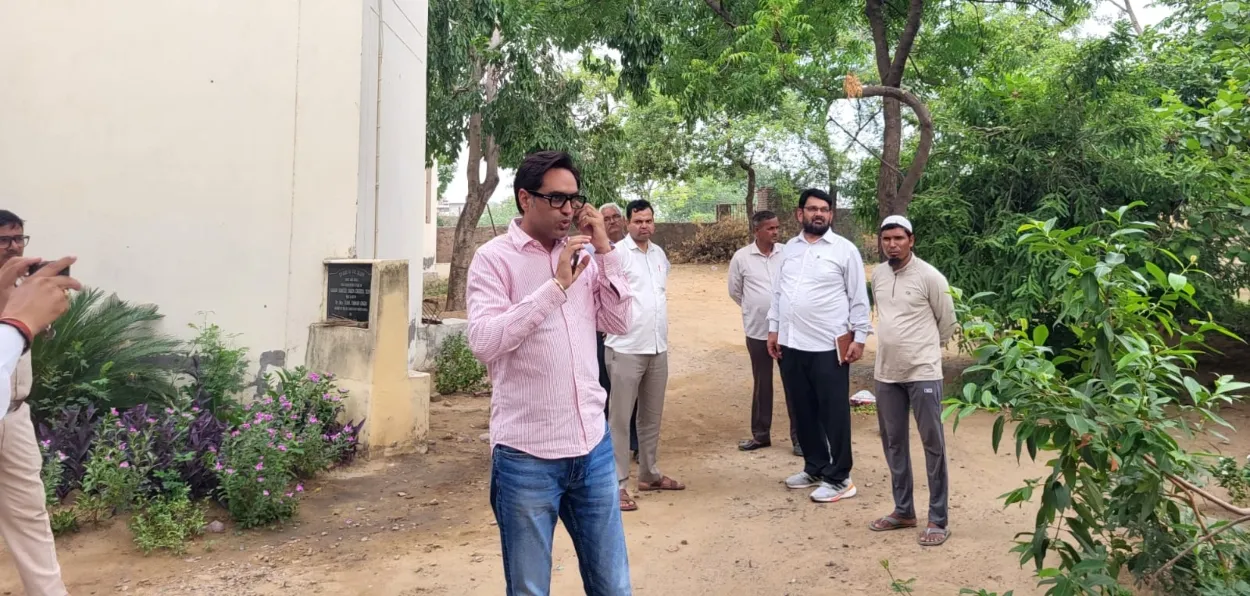
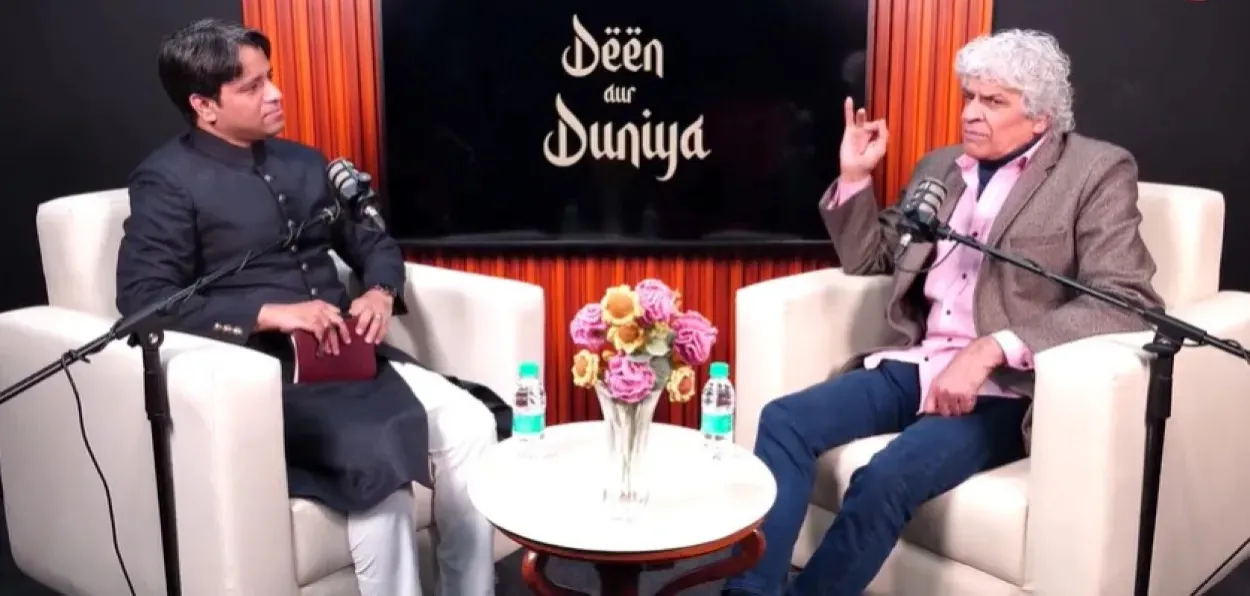
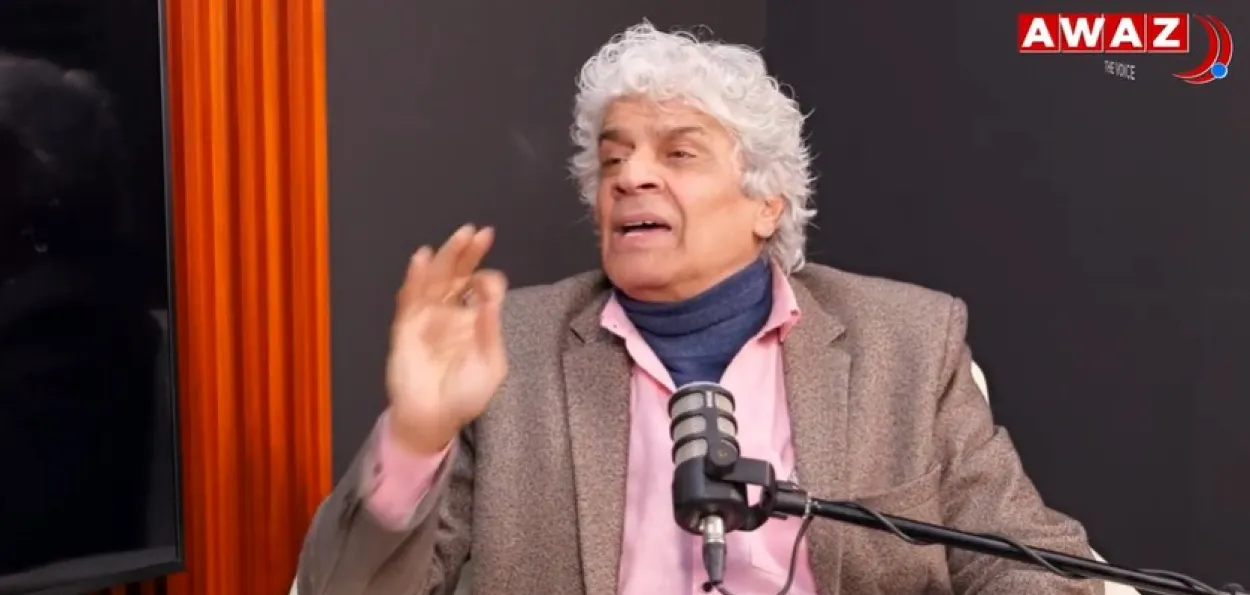
Nasir Abdullah with Saquib Salim
New Delhi
Success in the film industry is related to talent and hard work, not to religion. If there were any difficulties, they were due to their own technical weaknesses and not to any religious or social discrimination. The important thing is that the Ganga-Jamuni culture of Delhi showed me the path of tolerance and harmony.
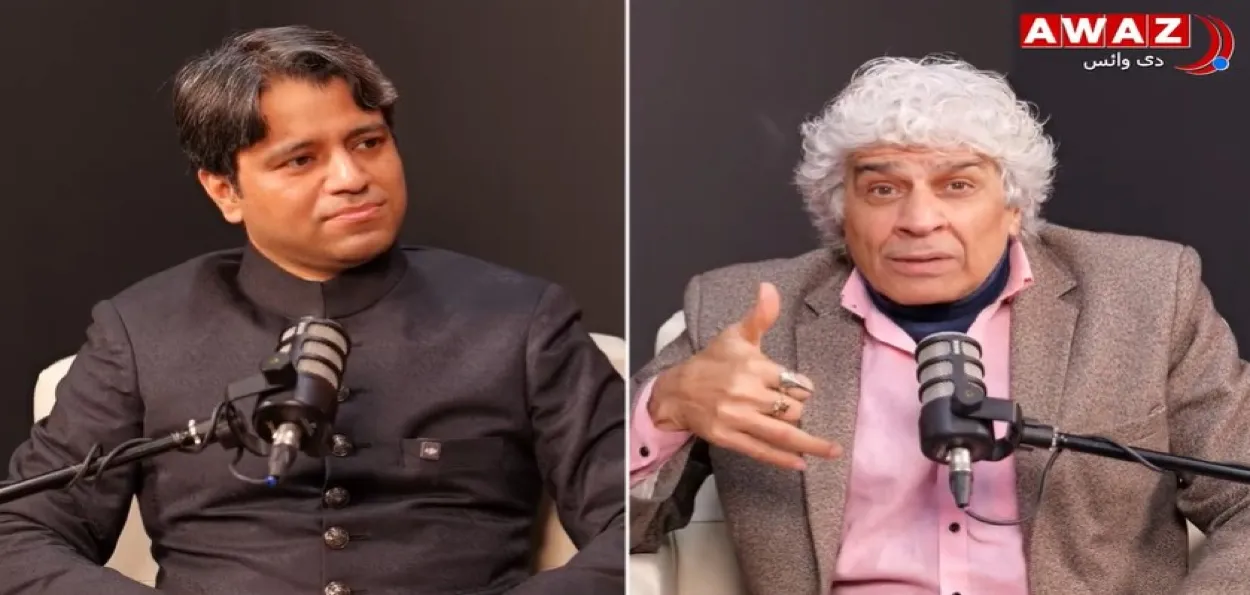
In Awaz-The Voice’s podcast ‘Deen Aur duniya’, renowned model and actor Nasir Abdullah shared his memories and anecdotes from his life. In this conversation with Saqib Saleem, he shed light on various aspects of his life.
He spoke in detail about the balance between religion and the world, industry experiences, questions of religion and identity, and the journey of spirituality.
Nasir Abdullah was born in the Bali Maran area of Old Delhi. This area is located near Chandni Chowk and is known for its traditional streets and cultural atmosphere.
He led a simple life as a child, with sports and neighbourhood activities a part of everyday life. In 1964, his family moved to the Nizamuddin area of New Delhi.
The environment here was relatively open, and historical sites like Humayun's Tomb and other archaeological sites influenced his personality. He says that the Ganga Jamuni culture of Delhi promoted tolerance and harmony.
Nasir Abdullah said that he studied at Delhi Public School and later joined St. Stephen's College. He started his practical life with the costume jewellery export business, where he worked as a production supervisor.
Later, he also managed a restaurant but soon realised that he wanted to try his skills in another field.
"My sister lived in Mumbai. She told me that you should come here and see for yourself, if you get an advertising job, it is fine, otherwise, go back. At that time, my work in Delhi was not going well, so I went to Mumbai to try my luck," he told Saquib Salim.
He had to start from scratch in Mumbai. "I submitted my pictures to different agencies. After a few days, they told me that they would use me in different projects. This was a ray of hope for me. Then an opportunity came that changed the course of my life.
"In 1985, I got the opportunity to work in the place of Raj Babbar in a Red and White advertisement. This was a turning point in my career. I was young, and the camera was kind to me, and then gradually people also started liking me.
"After that, I started getting work continuously. I did thumbs-up ads, cola ads, sometimes I appeared in the desert as a cowboy, sometimes as a journalist carrying a camera, and sometimes as Jess Bunny. Thus, I worked in countless advertising films one after the other and continued my journey.
"I reached Mumbai in 1987. At that time, there was a strange impression in our area. People used to say that Mumbai is like PoK, no one gets opportunities without a recommendation.
"I had zero recommendation; Zero really means zero, no acquaintance, no support. But after going there, I understood that if you have something special, some quality, some talent, the director and cameraman recognise it. They present you in such a way that your qualities become prominent. The real game is what you bring with you. In the end, you realise that a person tries, works hard, but the real decision comes from somewhere else. If the one above wants it, then the paths open up, and if he does not want it, then nothing happens even though everything is happening."
Nasir Abdullah shed light on his life's struggle and said that although he was successful in modelling, he faced difficulties in films. It was especially difficult for him to deliver long dialogues. These difficulties were due to his own technical weaknesses and not due to any religious or social discrimination.
According to him, in the field a if one has the ability, he will definitely grow. Succees in the industry is related to talent and hard work, not religion. However, sometimes there are ups and downs in the careers of artists, which are wrongly linked to religion.
Nasir Abdullah said hurdles came from his family. His mother had reservations about his entering the field of modelling, while his father was relatively liberal.
He narrated an incident in which his sister's advertisement was objected to by the community. Although there was nothing unusual in the advertisement. This incident shows that social attitudes were more different during that era.
In the podcast, Nasir Abdullah said that he studied not only Islam but also other religions and spiritual traditions. He visited different ashrams and experienced peace and spirituality there.
According to him, there are many paths to reach God, and the main thing is a person's intention. He says that God looks at the heart of a person and not the outward methods.
On religion, Nasir Abdullah says he considers music to be an important source of spirituality. He plays the flute and is interested in classical music. He called Ek Bangla Bane Nayara as a beautiful and charming song.
He says he realises the change due to social media, and influencers. But one thing has not changed -- the importance of hard work and patience.
"Many young people today want to get into modeling and acting. I tell them that there is no guarantee in this field. Sometimes you will get one job in a month, sometimes two, and sometimes you will not get anything for several months. Therefore, it is important that you have an alternative path. Be sure to have your education, your job or any skill with you. At the same time, if you have a passion, audition, practice, and if possible, connect with theater. Theater refines a person, increases confidence, and strengthens the foundation of acting. I myself believe that if I had done theater in the beginning, it would have been better.
"As far as the balance between religion and the world is concerned, I see it this way: man makes his own effort, but not everything happens through effort alone. Destiny also plays a role. We bring our own karma with us, and paths open up accordingly. But that does not mean that everything is fixed. We are also given the power to improve our lives. That is why various prophets and spiritual leaders came into the world—such as Jesus, Muhammad, Gautam Buddha, Zoroaster, and Ramakrishna—to show man the way. The message is the same: remember God and maintain a relationship with Him.
"In my own life, I start the day with silence, meditation, a little solitude, and then remembering Allah. After that, the rest of the day seems easy. Sometimes a person becomes lazy, gets lost, but then we remember that real peace lies in remembering our Lord.
"In the end, I will say that a person should both try and trust in their Lord. This is the real balance between religion and the world."















.webp)
.webp)