Aasha Khosa
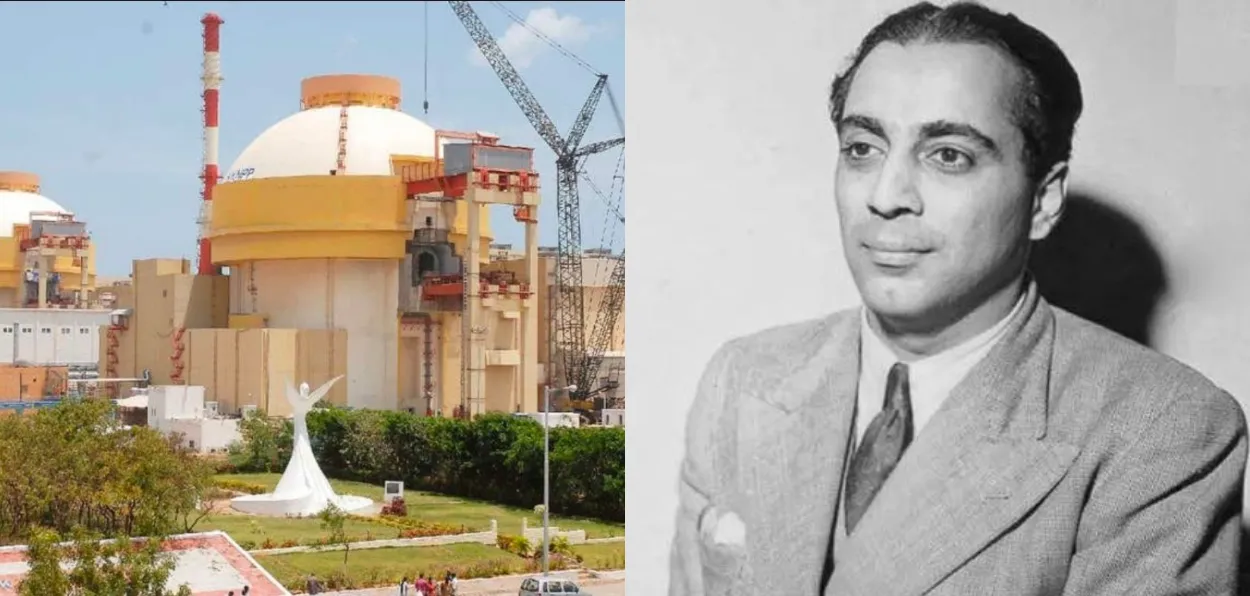
Thanks to the OTT boom, many Indians today are familiar with Homi Jehangir Bhabha and his pioneering role in founding India’s nuclear programme at a time when the newly independent nation was still grappling with hunger, poverty, and basic survival.
As depicted in the series Rocket Boys, Bhabha foresaw that energy would shape the trajectory of development and national autonomy in the modern world. He believed India must invest in nuclear and space programmes despite its limited resources—a vision that, decades later, stands remarkably vindicated.
Seven decades on, as the world confronts yet another energy crisis triggered by ongoing geopolitical tensions, India has quietly achieved a major milestone in realising Bhabha’s dream. On April 6, the country’s most advanced nuclear reactor at Kalpakkam attained criticality.
 Rocket Boys Poster
For the common citizen, this breakthrough signifies something profound: India is moving towards self-sufficiency in nuclear fuel. The dependence on large-scale uranium imports for clean energy production is set to diminish significantly.
Following the path laid out by Bhabha, Indian scientists have achieved what once seemed almost magical. The Kalpakkam reactor has reached a stage where it can produce more fuel than it consumes—marking a crucial step towards a sustainable nuclear future.
Even more significant is India’s progress in utilising thorium, an element of which the country holds nearly 25 per cent of the world’s reserves. This could potentially provide India with nuclear fuel for centuries, ensuring long-term energy security.
Today, India takes a defining step in its civil nuclear journey, advancing the second stage of its nuclear programme.
— Narendra Modi (@narendramodi) April 6, 2026
The indigenously designed and built Prototype Fast Breeder Reactor at Kalpakkam has attained criticality.
This advanced reactor, capable of producing more fuel…
The achievement at Kalpakkam is a true “Incredible India” moment—not just for the nation, but for the world. India has joined an elite group of nations mastering advanced nuclear technology, marking a milestone worthy of recognition and celebration.
Beyond national pride, this development carries global significance. As the world struggles to combat climate change, India’s growing self-reliance in nuclear energy will accelerate its journey towards achieving net-zero emissions by 2070.
🚨🇮🇳 BIG: India becomes 2nd country in the world (after Russia) to operate a commercial-scale Fast Breeder Reactor
— Sputnik India (@Sputnik_India) April 7, 2026
This indigenous reactor:
◾️Breeds more fuel than it consumes
◾️Marks Stage 2 of India’s 3-stage nuclear programme
◾️Paves the way for thorium-based energy… pic.twitter.com/CYaeGM10qE
India has already made notable progress. It has exceeded key 2030 climate targets, including reducing emissions intensity of GDP by 45 percent from 2005 levels, achieving 50 percent cumulative electric power capacity from non-fossil fuel sources, and creating a carbon sink of 2.5–3 billion tonnes of CO₂ equivalent. These achievements have been acknowledged by the United Nations Framework Convention on Climate Change.
As the world took note of India’s silent revolution in energy, Indian must revisit the story of Dr Homi Jahangir Bhabha, whose ancestors the Zoroastrians (Parsis) came from iran to India to escape religious persecution.
India’s most advanced nuclear reactor has reached a self-sustaining stage that marks a major leap for the country’s atomic energy programme.
— Al Jazeera English (@AJEnglish) April 7, 2026
So, what's a fast breeder reactor, and why does this latest advance matter – for India and the world? https://t.co/931eVkw1Ti pic.twitter.com/wBb8DF15IM
He laid the foundation of India’s nuclear programme in 1950, and favoured a three-stage nuclear programme, designed to achieve energy independence by utilising India's vast thorium reserves rather than relying on limited domestic uranium.
Established in the 1950s, this strategy focused on creating a closed fuel cycle—moving from uranium to plutonium and finally to thorium—to ensure long-term energy sustainability.
Dr Anand Ranganathan, a scientist who is active on social media, termed the development an achievement as “Perhaps one of the most heartening announcements to have come out in recent times.” He said, “A push for developed India is incomplete without a push for nuclear.
He said India's goal of 500 GW clean power cannot be realised without it. A single nuclear plant powers 700,000 homes while emitting less CO₂ than a hybrid car.
ALSO READ: Memons always take pride in being loyal to their country: Yusuf Abrahani
Many countries have already switched over to nuclear to produce green energy, like France (58): 71.7%, Sweden (8): 40.3%, Switzerland (5): 37.7%, USA (99): 19.3% Russia (37): 17.9% India (22): 3.0%. 3.0% is pitiful. We must make it 15% by 2030.

_(1).jpg "Visitors gather at the Santosh Mitra Square Durga Puja pandal, themed on the 150th anniversary of Vande Mataram and its historic role in India's freedom movement, ahead of the festival, in Kolkata")

.jpg "Gujarat’s women entrepreneurs bring their craftsmanship to life during Navratri")






.webp "President Droupadi Murmu")
.webp "West Bengal Chief Minister Suvendu Adhikari")
_(2).webp)