





Amir Suhail Wani/Srinagar
In Kashmir, years are not just numbers; they are endured, remembered, and felt. Here, time does not move in straight lines; it curves like the Jhelum—sometimes restless, sometimes still, always carrying memory. And when Kashmiris speak of 2025, many will not recall it as a year of spectacle or slogans, but as a year marked by something far rarer and more profound: the return of breath despite the Pahalgam terrorist strike and a follow-up Operation Sindoor.
Despite all this, one thing that did not change in the Valley is the peaceful environment. Peace did not arrive with ceremony or proclamation. It did not announce itself. It came quietly, almost hesitantly, the way snow melts into soil or almond blossoms open without applause. It revealed itself in ordinary moments that had once felt impossible—children walking to school without looking over their shoulders, shopkeepers closing their shops for the day without fear, families planning weddings months with the simple confidence that tomorrow would come as promised.
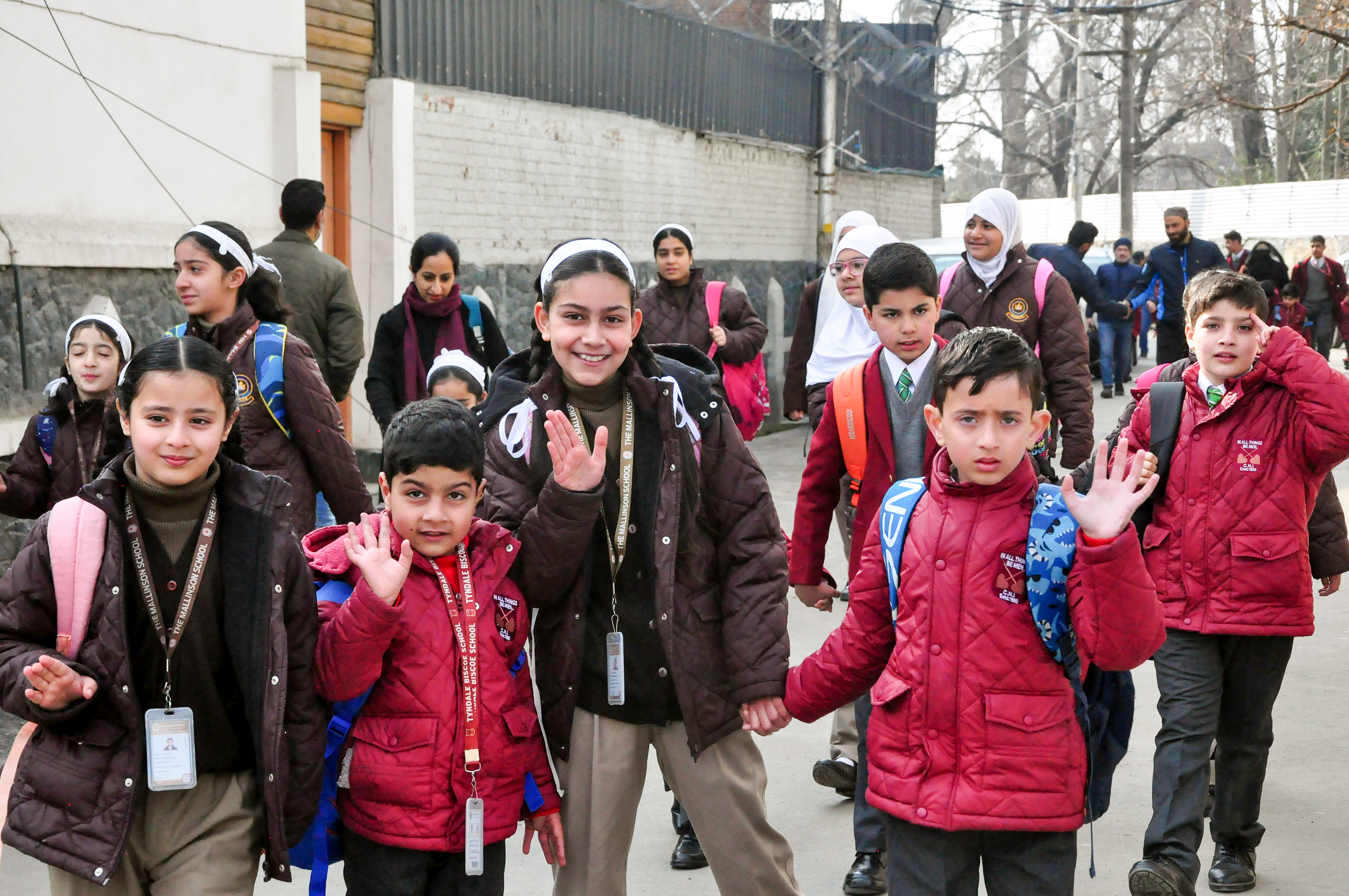 In Srinagar, young children are going to school
These moments were not trivial; they held profound meaning for politics as people lived. In a region long suspended between uncertainty and interruption, the ability to trust time again was revolutionary.
Development, long discussed in the abstract, became tangible in 2025. It was felt not in grand announcements but in daily movement. Railway connectivity between Delhi and Kashmir was the development of the century. The links not only facilitated the movement of people to and from the landlocked Kashmir but also patched the emotional disconnect. Besides, the increased road connectivity did not merely link places, but people and opportunities.
Digital connectivity reduced the isolation that had long defined both rural life and young ambition. A student in a remote hamlet could attend online classes without interruption; a young entrepreneur could sell Kashmiri crafts to customers far beyond the Valley without relying on middlemen. Development, when it works, does not demand applause. It simply integrates itself into routine.
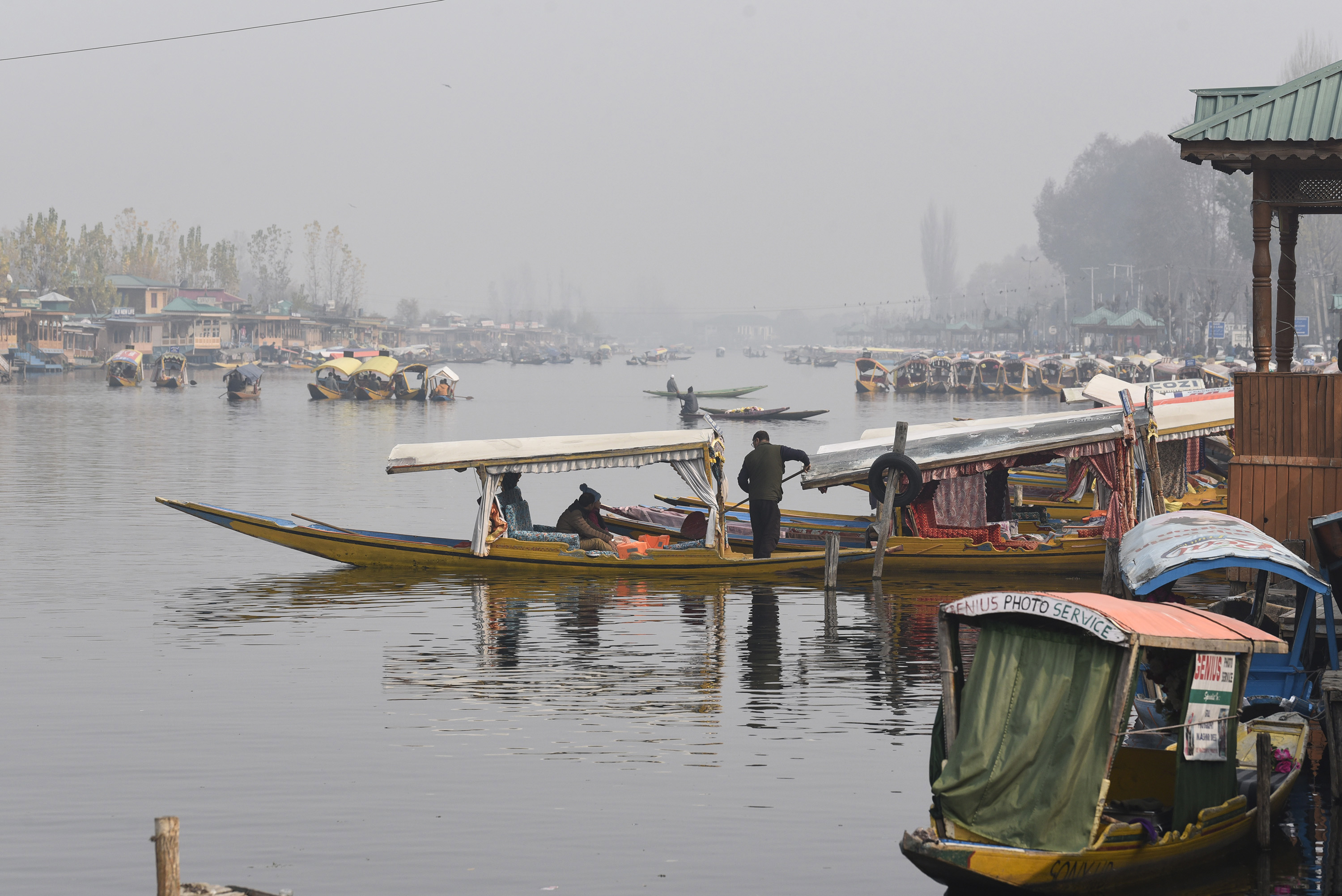 Shikara owners in Dal Lake
Healthcare, too, moved closer to the people. Upgraded hospitals, mobile medical units, and telemedicine reduced the exhausting journeys families once undertook for basic treatment. For many, progress was measured not in policy documents but in relief—in time saved, anxiety reduced, dignity preserved. These changes did not erase suffering, but they altered how people lived with it.
Perhaps the most consequential shift of 2025 unfolded quietly in the minds of Kashmir’s youth. For years, young people had grown up fluent in uncertainty, inheriting conflict without explanation and anxiety without consent.
In 2025, many began learning a different language—the language of possibility. Skill development centres, startups, sports academies, and academic coaching hubs became spaces of orientation rather than frustration. Football fields echoed again with laughter and the spirit of competition. Libraries filled. Ambition began to replace despair, not loudly, but decisively. The future, once abstract and distant, became something one could prepare for.
.jpg) School children on a picnic in Gulmarg
School children on a picnic in Gulmarg
Tourism, too, found a more balanced rhythm. It returned not as an intrusion, but as a dialogue. Visitors came to witness the beauty of the land, but also to listen to it. Homestays flourished, creating livelihoods while preserving dignity. Local guides reclaimed their role as narrators of history, culture, and resilience—not as spectacle, but as lived truth. Tourism in 2025 felt less extractive and more participatory, an exchange grounded in respect rather than consumption.
Security was less intrusive and almost invisible, yet effective. Its success lay not in presence, but in absence—in the absence of disruption, in the ability of daily life to unfold uninterrupted. Stability created a rare luxury: the ability to plan, to imagine futures beyond the immediate.
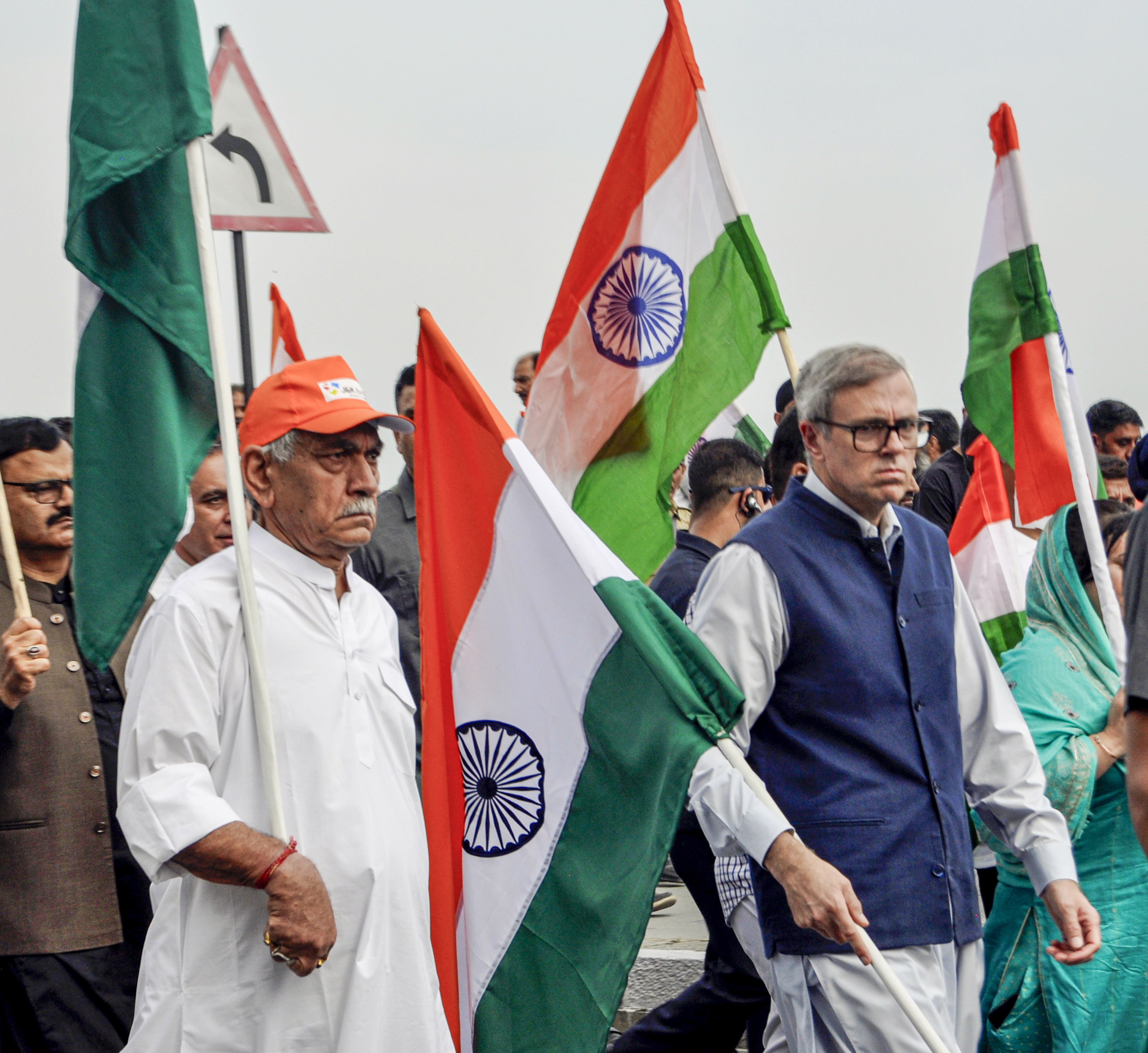 J&K Chief Minister Omar Abdullah and LG Manoj Sinha participate in the Tiranga rally in Srinagar
Kashmir did not forget its wounds in 2025. It did something more difficult—it chose not to live inside them. Farmers planted orchards with confidence that they would harvest. Parents invested in the education of their daughters, believing doors would open. Small businesses expanded, artists created, students dreamed. Hope in Kashmir has never been naive. It is cautious, weathered, and resilient. In 2025, it reasserted itself not as illusion, but as intention.
ALSO READ: Debate and reasoning are intrinsic to Islam
And like the almond blossoms that return each spring, Kashmir in 2025 reminded itself—and the world—that it still knows how to bloom.

.jpg "Gujarat’s women entrepreneurs bring their craftsmanship to life during Navratri")







.jpg "Representational image")

.webp)