Bengaluru (Karnataka)
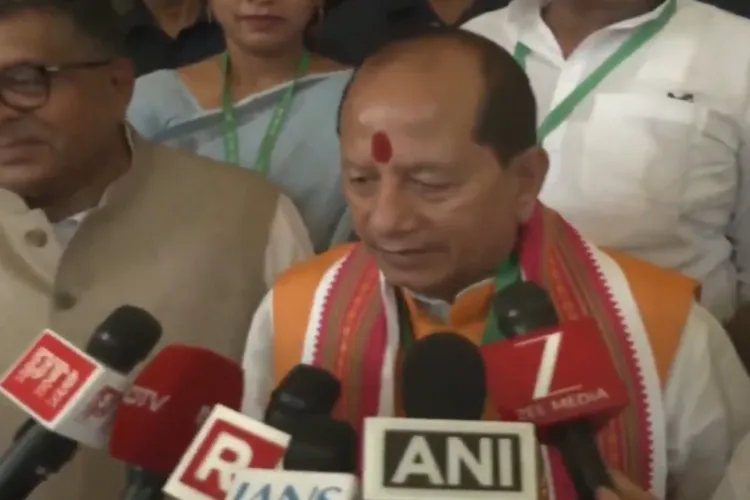
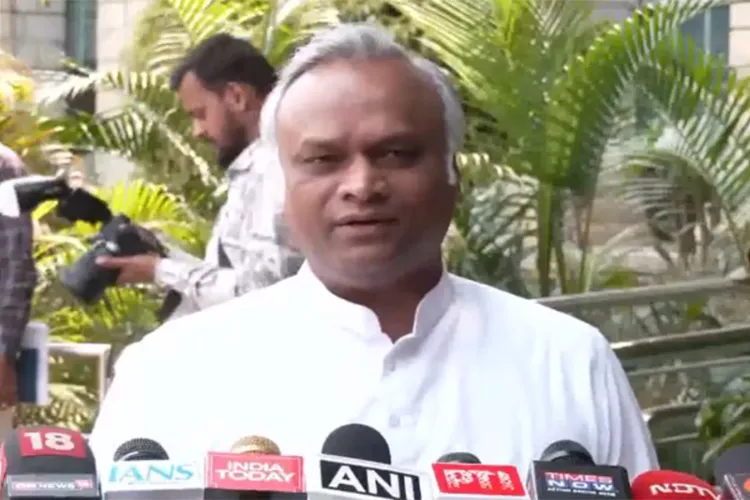
Following the Election Commission of India's announcement of the 2026 Assembly election schedule, Karnataka Minister Priyank Kharge launched a sharp attack on the Election Commission (EC) and Prime Minister Narendra Modi on Monday, alleging that the poll body is functioning under the influence of the Bharatiya Janata Party (BJP).
Speaking to the media, Kharge claimed that the current election schedule appears strategically structured to favour the BJP's preparedness rather than ensuring a level playing field, criticising Prime Minister Modi's campaigning across poll-bound states, accusing him of prioritizing election rallies over pressing national issues.
"It looks like the election commission looks for advice from the BJP to call the shots. So it is very clear that the way the election is structured is for the election preparedness of the BJP. In the last week or 10 days, the prime minister has been busy going around Tamil Nadu, Assam, and other places where there are elections. But he is least bothered about the current LPG crisis or the crisis that is prevalent in the country. He has turned a blind eye," he said.
Furthermore, Kharge questioned the Prime Minister's understanding of his constitutional responsibilities. "His only job is to ensure that he speaks at election rallies. I don't think the Prime Minister knows his responsibilities towards his people," he said.
This comes after the Election Commission of India (ECI) on Sunday announced the schedule for Assembly elections in four states--West Bengal, Kerala, Tamil Nadu, and Assam--along with the Union Territory of Puducherry.
According to the schedule, polling in West Bengal will be conducted in two phases on April 23 and April 29. Kerala and Assam will vote in a single phase on April 9, while Tamil Nadu will go to the polls on April 23. Voting in Puducherry will also take place on April 9. The counting of votes for all four states and Puducherry will be held on May 4, the ECI announced.
In addition to the Assembly polls, the Commission also announced by-elections for six seats across six states--Goa, Gujarat, Karnataka, Maharashtra, Nagaland, and Tripura--which will be conducted in two phases.
READ MORE: An officer can't afford to go wrong, says top cop Ajeetha Begum
Overall, the elections will cover 824 Assembly constituencies with a total electorate of about 17.4 crore voters. Nearly 2.19 lakh polling stations will be set up, and around 25 lakh personnel will be deployed to conduct the elections.
The terms of the current assemblies are set to end on different dates: May 7 in West Bengal, May 10 in Tamil Nadu, May 20 in Assam, May 23 in Kerala, and June 15 in Puducherry.