Ghulam Rasool Dehlvi
During the crisis involving Iran, several Indian Muslim scholars, peace activists, and religious leaders expressed solidarity with the country. Delegations representing diverse Islamic traditions—including Sunni, Shia, Sufi, Deobandi, and Ahl-e-Hadith circles—visited the Iranian embassy in New Delhi to convey condolences and express sympathy with the Iranian leadership.
At first glance, such gestures might appear to be merely political reactions to international events. Yet they reflect something deeper - a long historical memory that connects Islam in the Indian subcontinent to the Persian world. To understand this sentiment, one must revisit the civilizational roots of Indian Islam.
While the foundational texts of Islam are Arabic, the intellectual and cultural expression of Islam in South Asia developed largely within a Persianate world of scholarship, spirituality, and literature. For centuries, scholars, jurists, and Sufi saints from Persia and Central Asia shaped Islamic learning across the region. Their ideas, institutions, and spiritual networks profoundly influenced the development of Muslim society in the subcontinent.
One of the earliest and most influential pillars of this intellectual heritage was the jurisprudence of Abu Hanifa, founder of the Hanafi school of Islamic law. Though he lived and taught in Kufa, Abu Hanifa was of Persian origin, and his legal methodology eventually became the dominant framework of Islamic jurisprudence across South Asia. Under the Mughal Empire and earlier Muslim dynasties, Hanafi law became the foundation of judicial administration, shaping the religious life of millions of Muslims in the region.
Yet the spread of Islam in India was not driven by theologians and jurists alone. Even more influential were the Sufi saints who travelled from Persia and Central Asia to the Indian subcontinent, carrying a message of unconditional love and devotion to God.
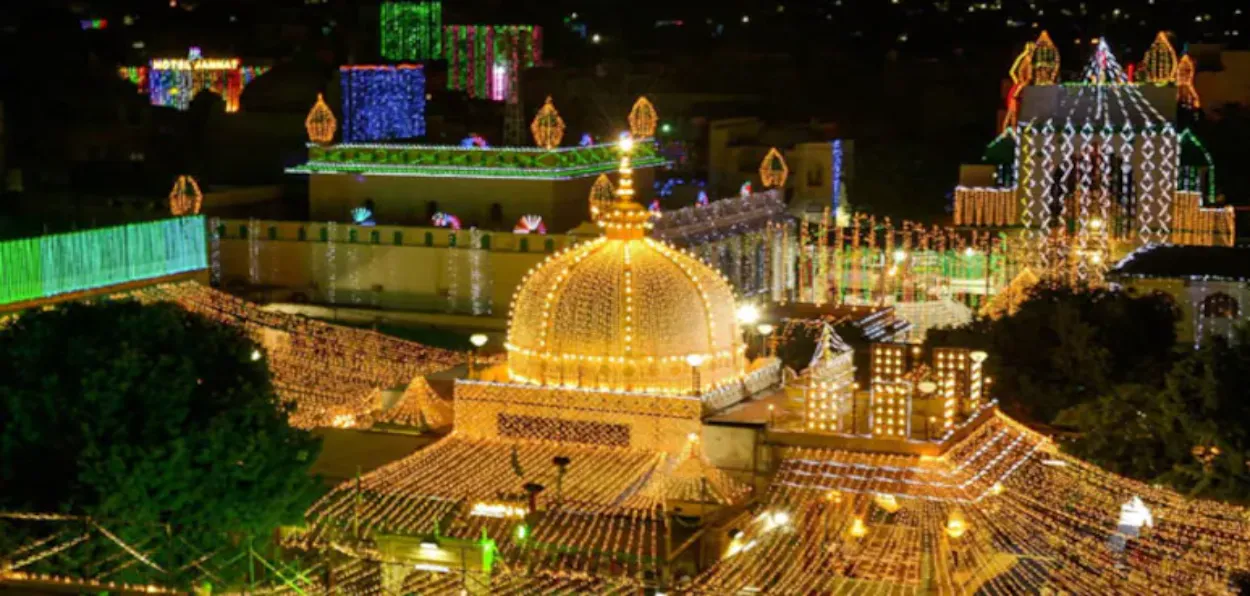
One of the most revered figures was Khwaja Moinuddin Chishty, widely known as Gharib Nawaz. Born in the Persian cultural sphere, he travelled to India in the 12th century and settled in Ajmer. His shrine at Ajmer Sharif Dargah remains one of the most visited spiritual centres in South Asia by people from across religious communities. Khwaja Gharib Nawaz preached compassion, humility, and service to the poor, laying the foundations of a powerful Sufi tradition in India.
His spiritual lineage continued through celebrated figures such as Qutbuddin Bakhtiyar Kaki and Nizamuddin Auliya in Delhi, whose khanqahs became centres of spiritual guidance and social service. Later, Syed Muhammad Gesu Daraz carried the Chishti tradition from Delhi to the Deccan, spreading Sufi teachings across southern India.
Another prominent link between Iran and India was Ashraf Jahangir Semnani (1287–1386), a Persian-born Sufi saint who left his homeland in Simnan and settled in India. Associated with both the Chishti and Qadiri Sufi orders, he played a key role in spreading mystical Islam in northern India. His shrine at Kichaucha Sharif in Ambedkar Nagar, Uttar Pradesh, is a major centre of spiritual devotion.
In Kashmir, the Persian saint Mir Sayyid Ali Hamadani— known as Shah-e-Hamadan—played a transformative role in introducing Islamic institutions and scholarship while embedding Persian cultural traditions into the intellectual life of the region. He is also credited with introducing handicraft traditions to the Kashmir valley. Through his teachings and disciples, he helped cultivate the famous Rishi-Sufi culture of Kashmir, known for its emphasis on spirituality, inclusiveness, and non-violence.
🚨 Ladakh | Massive protests erupt in Kargil as the Shia community and civil society rally against the US and Israel, expressing solidarity with Iran and Supreme Leader Khamenei.pic.twitter.com/HJDicbJ6cJ
— The News Drill™ (@thenewsdrill) January 16, 2026
These historical interactions demonstrate that Islam in South Asia evolved within a broader Persianate cultural sphere. For centuries, Persian served as the language of administration, literature, and scholarship in Muslim courts across India. The influence of Persian culture can still be seen in everyday religious vocabulary among Indian Muslims.
Urdu words such as namaz for prayer, roza for fasting, and Ramzan instead of Ramadan or Ramadhan (Arabic)came from Persia.
The civilizational dialogue between India and Iran extends beyond religion into literature and cultural imagination as well. The great Indian epic Mahabharata and the Persian national epic Shahnameh share striking thematic parallels in their exploration of heroism, justice, and moral struggle. The legendary warrior Bhima bears a remarkable resemblance to Rustam, the heroic champion of Persian mythology.
Likewise, figures such as Arjuna embody ideals of courage, moral responsibility, and devotion to higher principles—values that resonate across both civilisations.
This shared intellectual and cultural heritage also shapes religious ideas. In Shiite theology, the belief in the awaited redeemer known as the Mahdi—identified with Imam al-Mahdi—represents hope for the eventual triumph of justice and moral order. Interestingly, this concept bears a striking resemblance to the Hindu belief in Kalki, the prophesied final incarnation or Avtar of Vishnu, who is expected to appear at the end of the present age (Kali Yuga) to restore righteousness and cosmic balance.
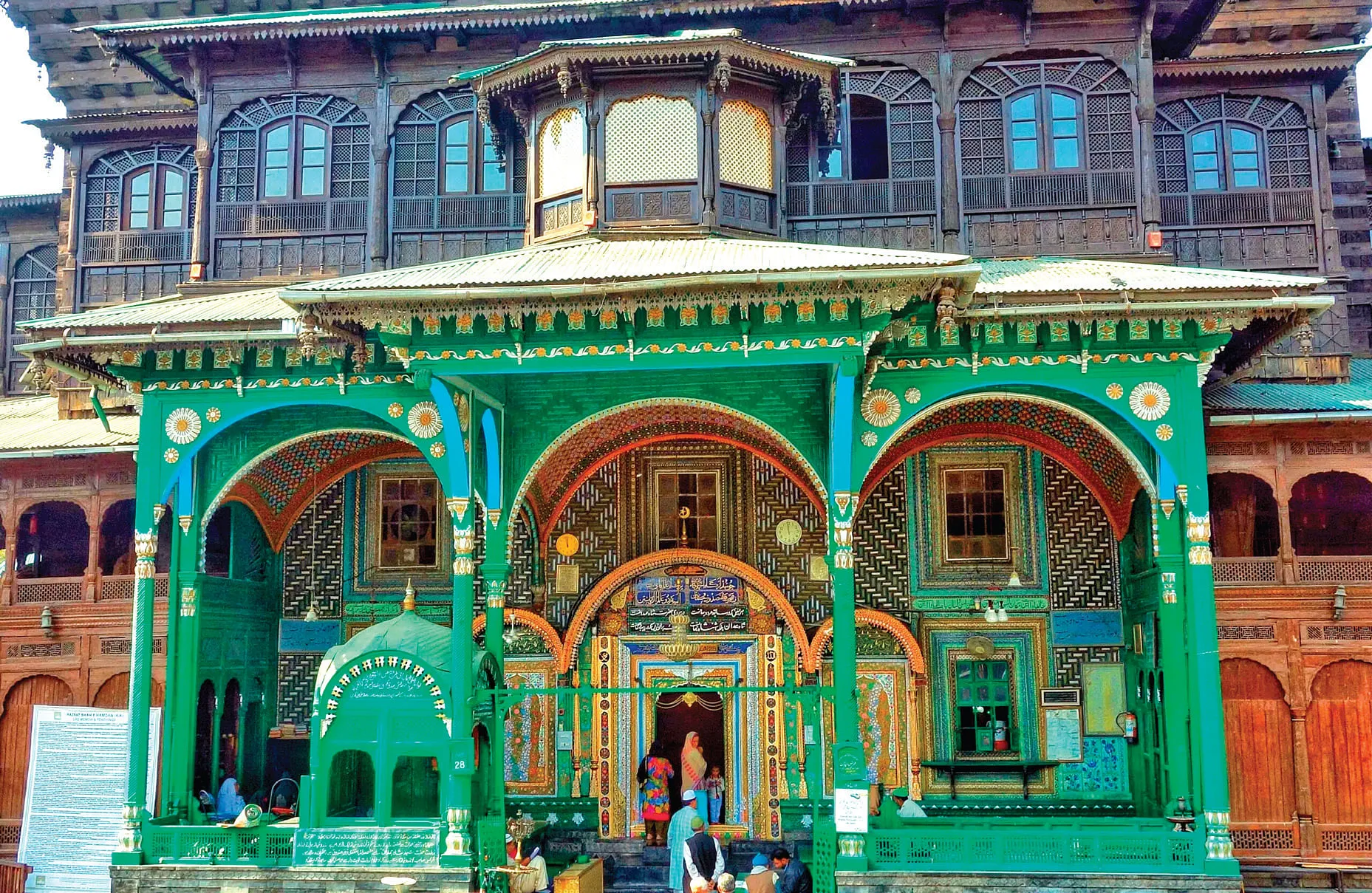 Khankah-e-Moula, mosque in the name of Shah-e-Hamdan, Srinagar
Iranian Muslims—predominantly followers of Shiite Islam—also maintain deep reverence for Ali ibn Abi Talib, the fourth caliph in Sunni tradition and the first Imam in Shiite theology. Hazrat Ali is admired not only as a political leader but also as a profound spiritual teacher who emphasised justice, humility, and moral courage.
Yet the history of Islam also witnessed internal challenges from extremist interpretations of religion. During the time of Hazrat Ali, the sect known as the Kharijites emerged and declared other Muslims unbelievers—a practice known as takfir. Their ideology justified violence against those they considered infidels and is often regarded by historians as one of the earliest manifestations of militant extremism in Islamic history.
In contrast, the Sufi traditions that flourished in both India and Iran consistently emphasised spirituality, compassion, and introspection rather than rigid doctrinal militancy. Inspired by the spiritual legacy of Hazrat Ali, these mystical traditions cultivated cultures that valued humility, tolerance, and coexistence.
Thus, the historical linkage between Indian Islam and Persian civilisation is not merely a matter of geography or political alliances. It is rooted in centuries of shared scholarship, spiritual exchange, and cultural dialogue. From the jurisprudence of Abu Hanifa to the teachings of Sufi saints such as Khwaja Moinuddin Chishti and Mir Sayyid Ali Hamadani, the formation of Indian Islam was deeply intertwined with the Persianate world.
ALSO READ: Indian Muslims must recall Imam Abu Hanifa’s theology of restraint
In a global climate increasingly troubled by religious extremism and ideological polarisation, this Indo-Iranian legacy offers a powerful reminder. Civilisations shaped by spirituality, pluralism, and intellectual openness possess the enduring capacity to promote peace, cultural dialogue, and human solidarity across boundaries of faith and nation.
Ghulam Rasool Dehlvi is an author and a scholar of Indian Sufism

.webp "Union Home Minister Amit Shah")