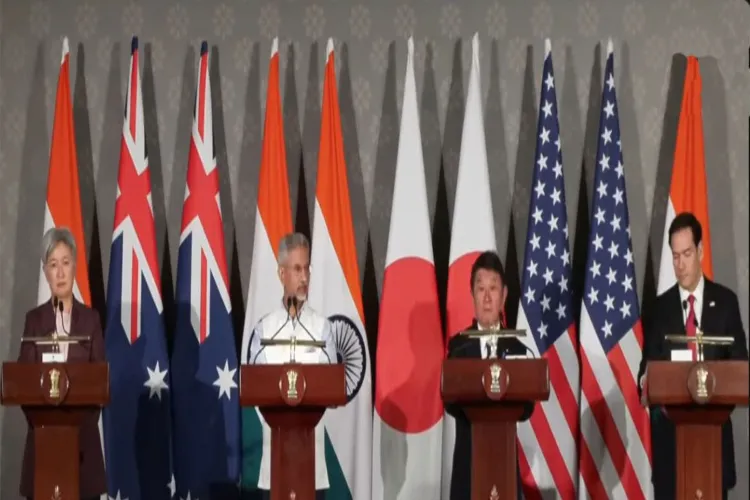
New Delhi
Against the backdrop of the continuing US-Iran tensions and discussions surrounding the reopening of the Strait of Hormuz, Quad foreign ministers meeting in New Delhi on Tuesday voiced serious concern over Iran’s control of the key maritime route.
The ministers also unveiled a major joint infrastructure initiative in Fiji and announced a new maritime surveillance programme for the Indo-Pacific region. The surveillance framework will combine the monitoring capabilities of India, the United States, Japan and Australia to create a shared operational picture and facilitate near real-time exchange of information across important shipping corridors.
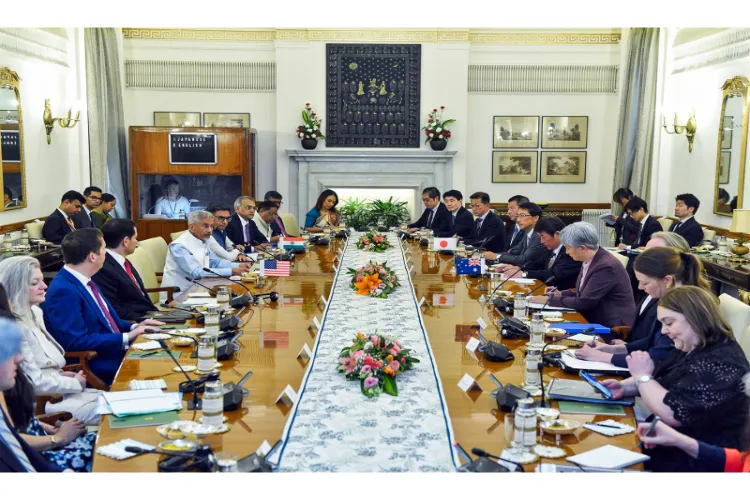
The first Quad ministerial meeting of 2026, hosted by India, brought together External Affairs Minister S Jaishankar, US Secretary of State Marco Rubio, Australian Foreign Minister Penny Wong and Japanese Foreign Minister Toshimitsu Motegi. The leaders discussed mounting global economic pressures and disruptions to maritime trade routes.
Addressing the media, Jaishankar described the discussions as “substantive and productive”, stressing that the talks centred on ensuring free and uninterrupted maritime trade while upholding international law.
“We discussed the importance of safe and unimpeded maritime commerce and reaffirmed our commitment to respecting international law,” Jaishankar said.
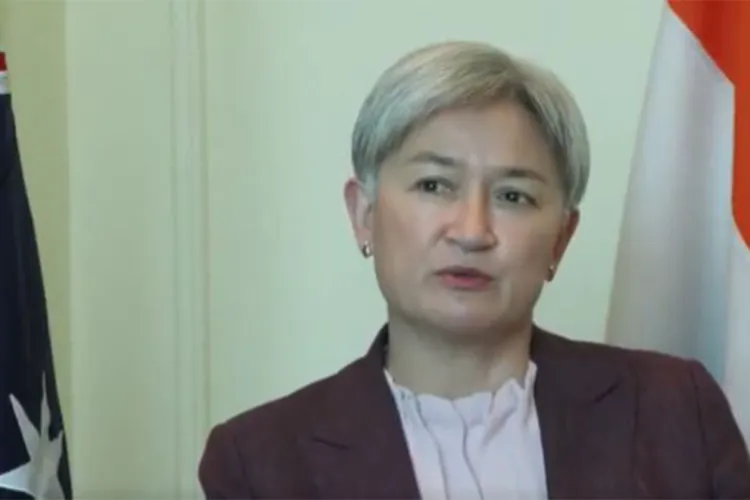
Australian Foreign Minister Penny Wong warned about growing instability in the region and highlighted the wider consequences of Iran’s actions in the Strait of Hormuz.
“We understand the implications of the Strait of Hormuz situation for energy security, regional economies and people across the Indo-Pacific,” Wong said after the meeting.
She also praised diplomatic efforts led by Secretary Rubio to restore freedom of navigation and ensure uninterrupted energy supplies, while rejecting any proposal to impose transit charges on international shipping routes.
Iran tightened its control over the Strait of Hormuz following the US-Israel conflict that erupted on February 28, a development that has unsettled global energy markets and trade flows. Tehran is reportedly considering a formal toll mechanism for vessels passing through the waterway.
Ahead of the meeting, Rubio had strongly opposed any such move, asserting that the Strait of Hormuz must remain open and free of tolls. He described any attempt to impose charges on maritime traffic as “unlawful, unsustainable and unacceptable.”
The Quad ministers also launched an Indo-Pacific Energy Security Initiative aimed at strengthening fuel and energy supply chains across the region. As part of the initiative, the United States will host a Quad Fuel Security Forum later this year.
Rubio said the Quad partnership was evolving into a results-oriented platform and highlighted the grouping’s growing strategic importance. He noted that the Quad countries together account for nearly one-third of the global economy and represent around two billion people.
Among the new initiatives announced was a joint port infrastructure project in Fiji under the Quad Ports of the Future Partnership. Rubio said the project would serve as a template for future regional infrastructure collaborations.
He also announced the Indo-Pacific Maritime Surveillance Collaboration (IPMSC), which seeks to strengthen information-sharing and maritime monitoring among Quad nations.
In addition, Rubio thanked India for agreeing to host the next “Quad at Sea” mission, which will bring together the coast guards of all four countries aboard a single vessel.
Highlighting the strategic significance of the region, Rubio noted that nearly 60 per cent of global maritime trade passes through the Indo-Pacific. He also confirmed the launch of a Critical Mineral Framework alongside the energy security initiative.
Japanese Foreign Minister Toshimitsu Motegi said the Quad members strongly opposed any unilateral attempts to alter the regional status quo through coercion or force.
“Through candid discussions, we aligned our understanding of regional developments and reaffirmed our opposition to unilateral actions that seek to change the status quo by coercion,” Motegi said.
He added that the ministers also recognised the broader impact of the Iran situation on Indo-Pacific energy security and underlined the need for diplomatic efforts to maintain safe navigation through the Strait of Hormuz and ensure stability in the Middle East.
READ MORE: Gurugram’s ‘Bulldozer Man’ RS Batth joins Muslims in Eid cleanliness drive
Motegi further said Japan hoped to coordinate the new energy security initiative with its “Power Asia” framework, which focuses on cooperation in crude oil and petroleum procurement across the region.










.webp "Home Minister Amit Shah")