




New Delhi
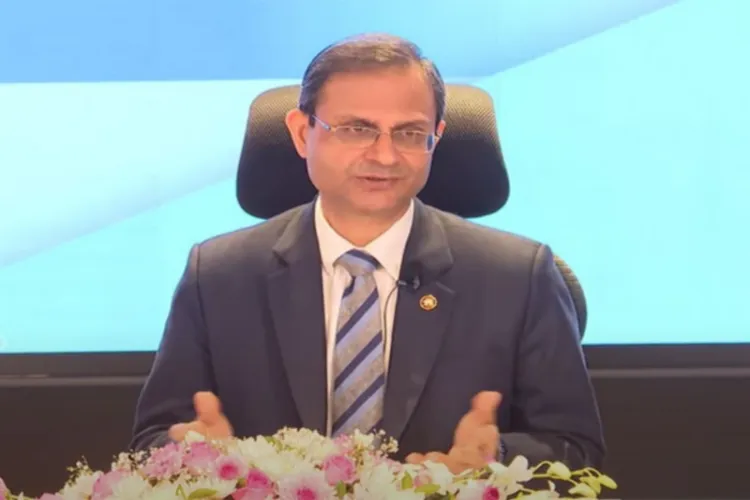
Reserve Bank of India (RBI) Governor Sanjay Malhotra has said the Monetary Policy Committee (MPC) will closely monitor inflation trends in the coming months, particularly after the increase in retail petrol and diesel prices in May, which is expected to push up fuel inflation.
In the minutes of the MPC meeting released on Friday, Malhotra noted that while food price conditions remain favourable in the near term, concerns persist over the possibility of a weak monsoon influenced by El Niño conditions.
The MPC, in its June 5 policy review, unanimously decided to keep the repo rate unchanged at 5.25 per cent and retained its neutral policy stance.
Explaining his vote, the Governor said a cautious “wait-and-watch” strategy was appropriate given the prevailing uncertainties. He pointed to evolving geopolitical developments in West Asia and weather-related risks as key factors influencing the policy outlook.
The RBI has revised its inflation forecast for 2026-27 upward to 5.1 per cent, with inflation projected to peak at 5.9 per cent during the third quarter. At the same time, the central bank lowered its economic growth estimate for the current financial year to 6.6 per cent from the 6.9 per cent projected in April.
Malhotra stressed that both inflation and growth forecasts remain subject to significant uncertainty. He said the trajectory of the conflict in West Asia, along with the intensity and distribution of the monsoon, would play a crucial role in shaping future economic outcomes.
Despite the higher headline inflation outlook, the Governor pointed out that core inflation is expected to remain at 4.7 per cent during the fiscal year. Excluding metals, core inflation would be even lower, he added.
READ MORE: Yusuf Khan picks Mewati folk music over engineering for perpetuating legacy
He further observed that the upward revision in inflation projections since the April policy meeting has been driven largely by food and fuel prices, which are primarily influenced by supply-side factors. According to Malhotra, these price increases may represent a one-time adjustment and may not necessarily translate into broader inflationary pressures across the economy.

.webp "Rocks bearing inscription in ancient Arabic excavated in Saudi Arabia's Madina region")







.webp "Israeli Prime Minister Benjamin Netanyahu")
.webp "Prime Minister Narendra Modi")

.webp)
_(1).webp)

.webp)
.webp)