Eman Sakina
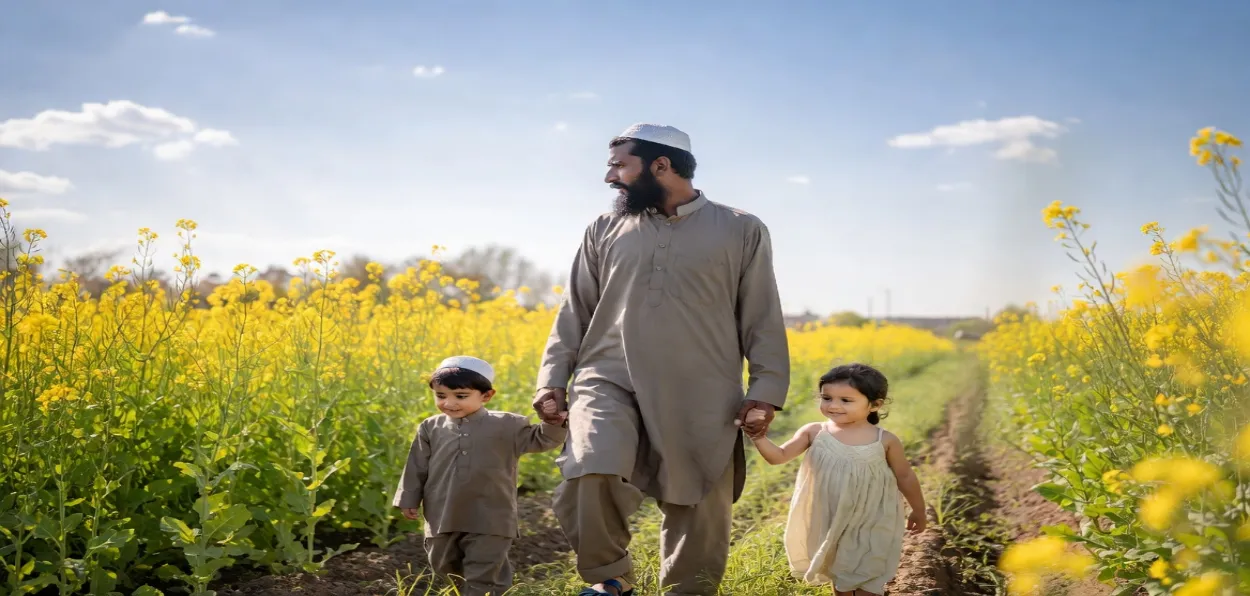
As per the Quran, a father is a guide, protector, mentor, teacher, and role model whose influence shapes generations. The Qur’an presents several remarkable father figures whose lives offer valuable lessons about responsibility, sacrifice, wisdom, patience, and unwavering faith in Allah. Their stories remind us that true fatherhood is measured not merely by what a man gives to his children, but by the values he instils in them.
Friday Musings
Among the greatest fathers mentioned in the Qur’an is Prophet Ibrahim, often called the father of prophets. His relationship with his son Prophet Ismail stands as one of the most powerful examples of trust and obedience to Allah. When Allah tested Ibrahim with the command to sacrifice his beloved son, he did not impose the decision upon Ismail. Instead, he consulted him with gentleness and respect: “O my son, indeed I have seen in a dream that I must sacrifice you, so see what you think.” (Qur’an 37:102)
This verse reveals the beautiful bond between father and son. Ibrahim taught faith through example, sincerity, and trust. His willingness to submit to Allah's command and Ismail’s willingness to obey demonstrate the strength of a family built upon faith. The commemoration of this sacrifice during Eid al-Adha continues to remind Muslims of devotion, patience, and obedience.
Another inspiring father is Prophet Yaqub, whose story is deeply connected to the life of his son Prophet Yusuf. Yaqub endured one of the greatest emotional trials a parent can face—the loss of a beloved child. For years, he remained separated from Yusuf, yet he never lost hope in Allah’s mercy. Despite his grief, he maintained patience and faith: “Indeed, I only complain of my suffering and my grief to Allah.” (Qur’an 12:86)
Yaqub teaches fathers the importance of emotional strength. He loved deeply, grieved sincerely, and yet remained steadfast in faith. His example shows that patience is not the absence of pain but the ability to trust Allah through it.
The Qur’an also presents Luqman, a righteous father known for his wisdom. Although many scholars differ on whether he was a prophet, his advice to his son is among the most profound parenting lessons in the Qur’an. Luqman focused on character, faith, humility, and moral conduct. He advised his son: “O my son, do not associate anything with Allah. Indeed, association with Him is great injustice.” (Qur’an 31:13)
His guidance continued with lessons on prayer, kindness, humility, gratitude, and good manners. Luqman’s example reminds parents that raising children is not merely about academic success or worldly achievements; it is about nurturing righteous character and a strong connection with Allah.
Prophet Nuh also offers a moving example of a father's concern for his child. Even as the flood approached and destruction became inevitable, Nuh pleaded with his son to join the believers and seek safety: These stories carry powerful lessons for fathers today. In an age where parenting is often reduced to financial provision, the Qur’an reminds us that children need much more. They need fathers who lead with faith, communicate with wisdom, show compassion, remain patient during difficulties, and serve as living examples of good character.
ALSO READ: Home Chef Maliha Baig brings secret Hyderabadi recipes to the table
The greatest fathers in Islamic history were not remembered because of wealth, status, or worldly accomplishments. They are remembered because they nurtured faith, demonstrated sacrifice, and remained devoted to Allah while fulfilling their responsibilities toward their children.