




 Sushma Ramachandran
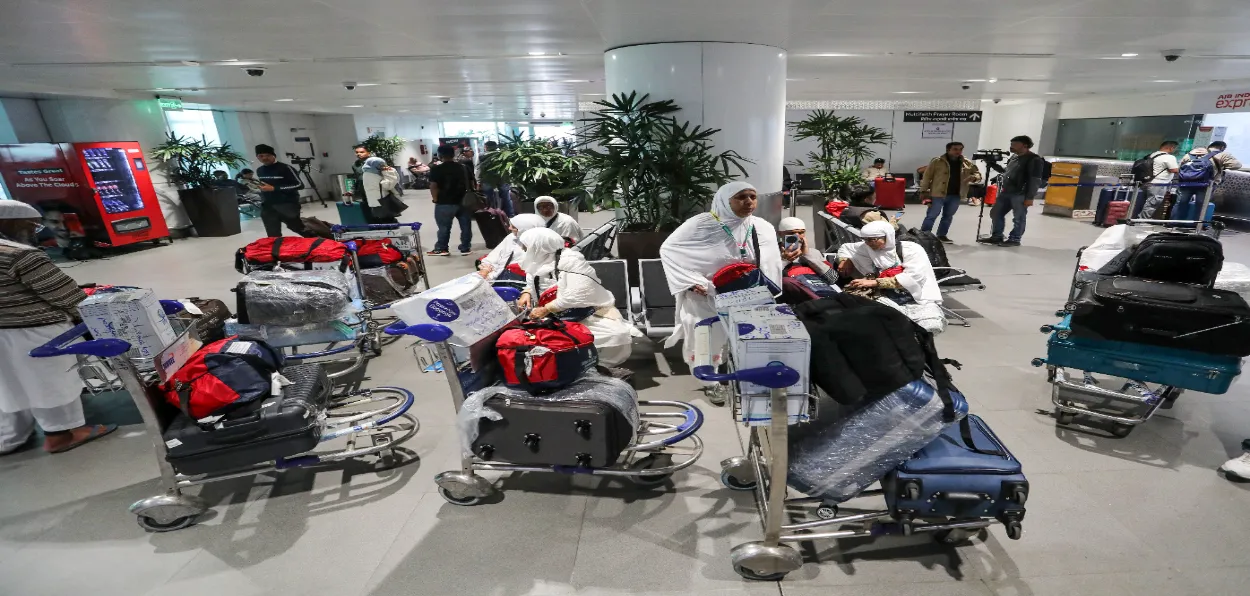
The end of 2025 has been marked by chaos in air travel. Mass cancellations of flights by leading air carrier Indigo in early December led to overcrowded airports with people desperate to reach their destinations. Passengers faced intense misery while waiting for hours for flights that were ultimately cancelled. Those able to fly with other carriers had to face skyrocketing fares.
The situation has now eased significantly, but the regulator has curtailed flights of the Indigo airline that commanded a giant share of the Indian aviation market.
The mayhem that descended on airports and exhausted passengers turned out to be the result of a new set of rules meant to provide greater safety to the travelling public. These envisage more time for pilots to rest. The number of rest hours was enhanced from 36 to 48 hours per week. It was done under a system termed the Flight Duty Time Limitation (FDTL) that regulated the duty hours of pilots. Unlike other domestic airlines, Indigo reportedly failed to restructure its schedule to incorporate the new guidelines.
The airline, on the other hand, has claimed there were multiple reasons for the mass cancellations rather than the new guidelines.
The outcome of this unprecedented disruption is two-fold. The first is an enquiry into the reasons for the disruption and hardship to passengers by the Civil Aviation Ministry, along with the regulator, the Directorate General of Civil Aviation (DGCA).
The second is that the future of the aviation industry must now be viewed through the lens of one carrier having become a virtual monopoly. The sector has been described as a duopoly, but the reality is that Indigo has a massive edge with a 65 percent share of the market. Air India is far behind with a 26 percent.
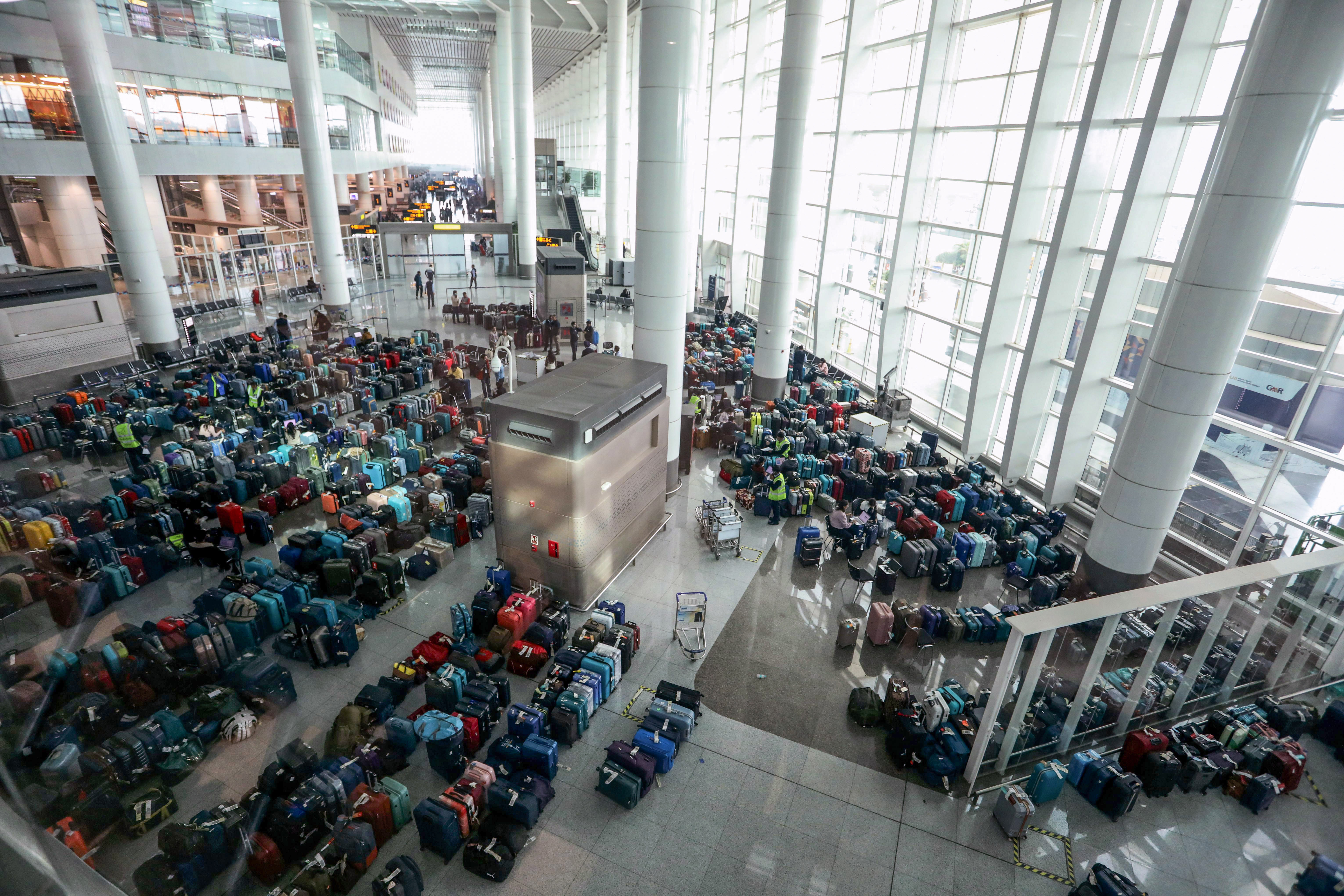 Baggages of stranded passengers during the mass flights cacellation by Indigo
The Aviation Ministry and the DGCA have responded to consumers’ anger over the fact that air safety seems to have been sacrificed to accommodate the whims of a major player in this sector. The result of public outcry is that the airline is being forced to fully refund the cancelled flights and speedily return the baggage of passengers. What is astounding is that these basic facilities are being provided through a government diktat rather than as part of regular company policy.
In addition, the airline’s winter schedule has been curtailed by ten percent. This may mean fewer flights available for flyers, but some of the slack is likely to be made up by other, albeit smaller, carriers. The regulator has also created a group to monitor the airline’s operations.
Aviation Minister Ram Mohan Naidu has assured that Indigo will not be allowed to go scot-free after creating this confusion. He has also declared that the action taken will ensure this kind of situation does not recur. For the time being, however, the new FDTL norms have had to be eased for the airline till it can recruit enough personnel. In other words, most domestic airlines will have to abide by the new rules, but Indigo will be exempt for two months. This may seem unfair, but the stringent imposition of the new regime could create discomfort for air travellers.
In the long run, the domestic aviation industry looks set to fly into rough weather given the current near-monopoly scenario. The Competition Commission of India is watching the situation and may have to intervene. It may not invoke its powers to break up unwieldy conglomerates, but it can take action to ensure that large entities do not misuse their dominant status.

Passengers stranded at Patna Airport due to Indigo Airlines' mass flight cancellation
At the same time, the rise of Indigo as the leading domestic carrier has not come overnight. It has been in the business for 19 years and has gained the confidence of passengers due to its efficiency and predictability. As a budget airline, it did not provide frills but became the preferred option of many simply because it fulfilled certain key promises. These are the promises of reaching destinations on time, and along with the baggage, in a seamless manner. The carrier has the reputation of being reliable despite irritation in recent years over the growing tendency to charge separately for individual services.
Another reason for the rapid ascent of the budget carrier has been the elimination of several major players over this period. Jet Airways, for instance, was unexpectedly blown out of the skies. SpiceJet ran into difficulties, reducing its fleet, leaving Air India as the major competitor. The latter has also been having teething troubles after being acquired by the Tatas, while other entrants like Akasa Air are still finding their feet in the industry.
Yet it has been Indigo’s recognition of its dominance and sense of inviolability that has ultimately caused the dent in its public image. Instances of high-handed behaviour with the travelling public have been increasing in recent times, with the media highlighting bizarre cases of passengers having to sit on the tarmac to eat their meals. The regulator, DGCA, has also not acted in monitoring the carrier’s adherence to flight safety rules like the new FDTL norms.
The current crisis in aviation must be viewed against the backdrop of the rising demand for air transport in the country. According to a recent report of the International Air Transport Association (IATA), scheduled flights have risen sharply from 613,000 in 2014 to nearly 1.1 million in 2024. The aviation sector now accounts for 1.3 per cent of GDP and has created about 7.7 million jobs.
ALSO READ: Rukhsana's story inspires Mewati women to fly with education
It is time for the government to end the dominance of a single carrier, encourage competition and support new entrants. It must be noted that all airlines, barring Indigo, have adapted rapidly to the new flight safety regulations. Those who follow rules must be rewarded, while those who do not must face the consequences. One hopes the Aviation Ministry will follow this principle as it seeks to create more competition in the skies in the future.



.webp "Representational Image")






.webp "Kassim Ahmad")

_(1).webp)
.webp)