Amir Suhail Wani
Pilgrimage is among humanity's oldest spiritual traditions. Every major religion recognises that while God is omnipresent, certain sacred places enable believers to experience the Divine with unusual intensity. Pilgrimage is therefore never merely a physical journey; it is an inward movement from the ordinary to the sacred.
Hinduism possesses one of the world's richest pilgrimage traditions, leading devotees to sacred rivers, temples and Himalayan shrines. Buddhism reveres Bodh Gaya, Sarnath and Kushinagar; Christianity treasures Jerusalem, Bethlehem and Rome; Sikhism honours Harmandir Sahib and other historic gurdwaras. Across traditions, pilgrimage teaches sacrifice, humility, perseverance and spiritual transformation. Muslims perform the Hajj.
Among India's great pilgrimages, the Amarnath Yatra occupies a unique place. Situated at an altitude of over 3,800 metres in the Kashmir Himalayas, the sacred cave has attracted devotees for centuries. According to Hindu tradition, it was here that Lord Shiva revealed the Amar Katha—the secret of immortality—to Goddess Parvati.
The naturally formed ice Shivling, waxing and waning with the lunar cycle, is revered as Shiva's manifestation. The difficult journey through glaciers, forests and mountain passes becomes an act of devotion, leaving pilgrims spiritually renewed long after they return home.
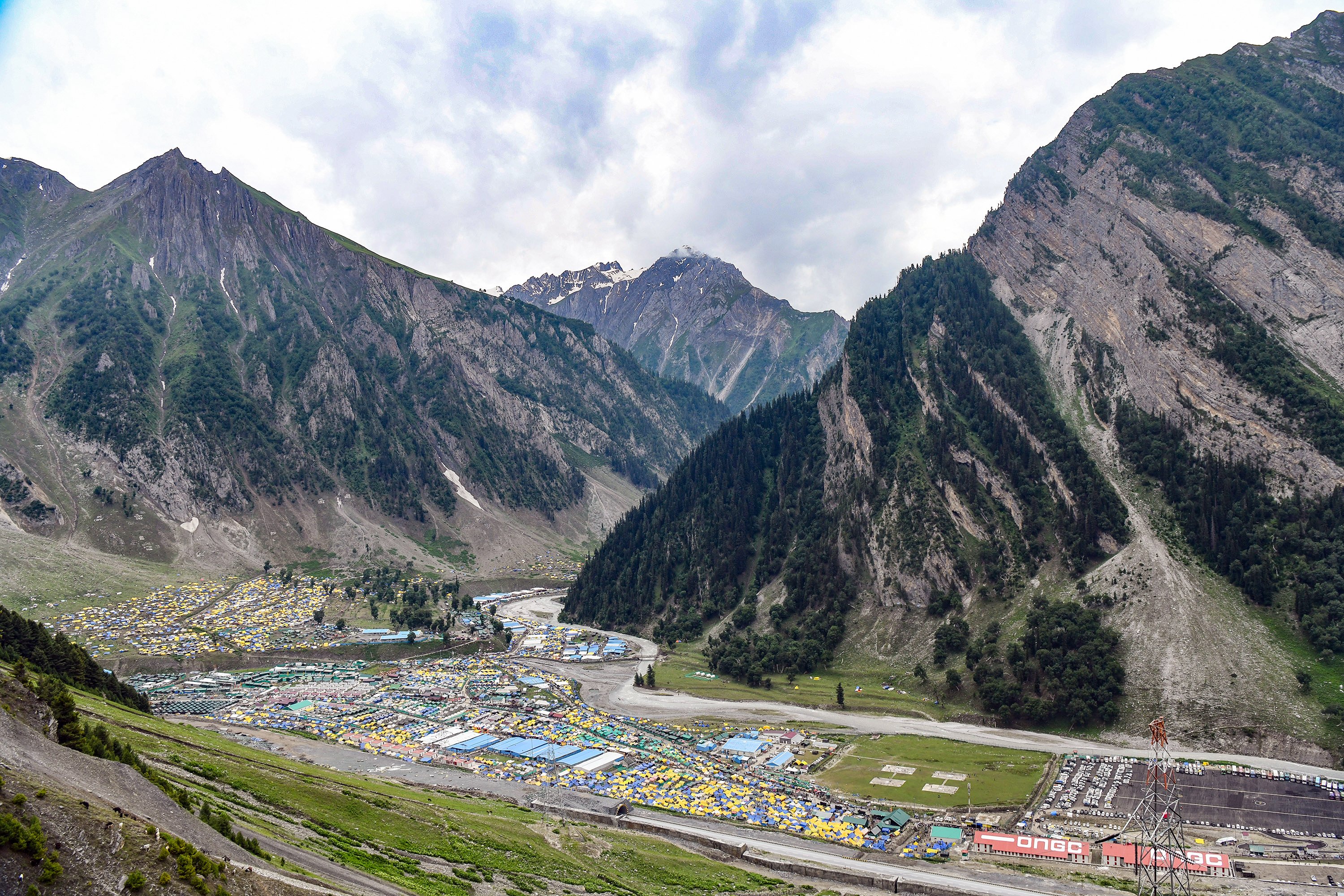
Aerial view of the base camp at Baltal
The history of the Yatrais is intertwined with Kashmir's own civilisational history. References appear in Kalhana's Rajatarangini, later Persian chronicles and local traditions. One of the most cherished narratives concerns the Muslim shepherd Buta Malik, who is believed to have rediscovered the sacred cave after receiving a miraculous gift from a saint.
Whether viewed as history or folklore, the story beautifully symbolises Kashmir's shared heritage, where the sacred transcends religious identities. For generations, Buta Malik's descendants retained a recognised association with the pilgrimage, reflecting a long tradition of coexistence.
Perhaps nowhere is interfaith cooperation more visible than during the Amarnath Yatra. For centuries, Kashmiri Muslims have regarded serving pilgrims as both an honour and a sacred responsibility. Long before organised tourism existed, local Muslims guided pilgrims through treacherous mountain routes, arranged ponies, carried luggage, erected shelters, provided food, transport and medical assistance, and often risked their own lives during snowstorms or landslides to rescue stranded devotees. Their service has never been merely commercial; it reflects Kashmir's enduring values of hospitality, compassion and service to travellers.
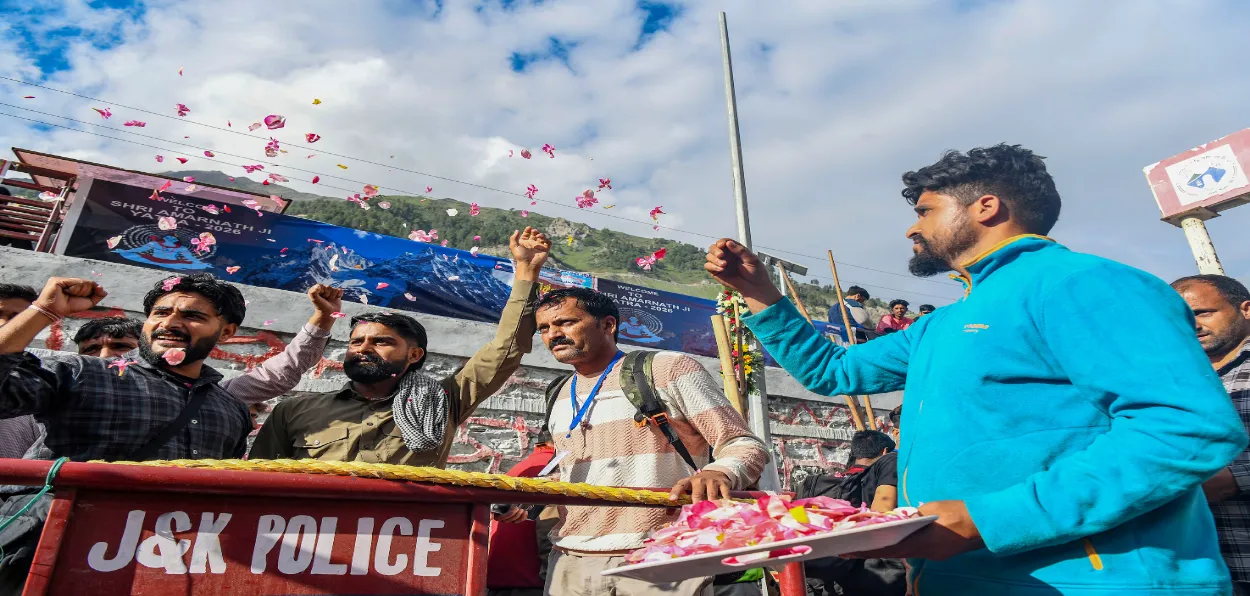
The Kashmiri tradition of mehmaannawazi finds one of its finest expressions during the Yatra. Pilgrims from distant states are welcomed by Muslim shopkeepers, taxi drivers, pony owners and volunteers with warmth and affection. Cups of kahwa, help for elderly travellers, guidance through unfamiliar terrain and countless anonymous acts of kindness create memories that endure for years. Though these stories rarely make headlines, they form the moral foundation upon which the Yatra has survived political upheavals and changing times.
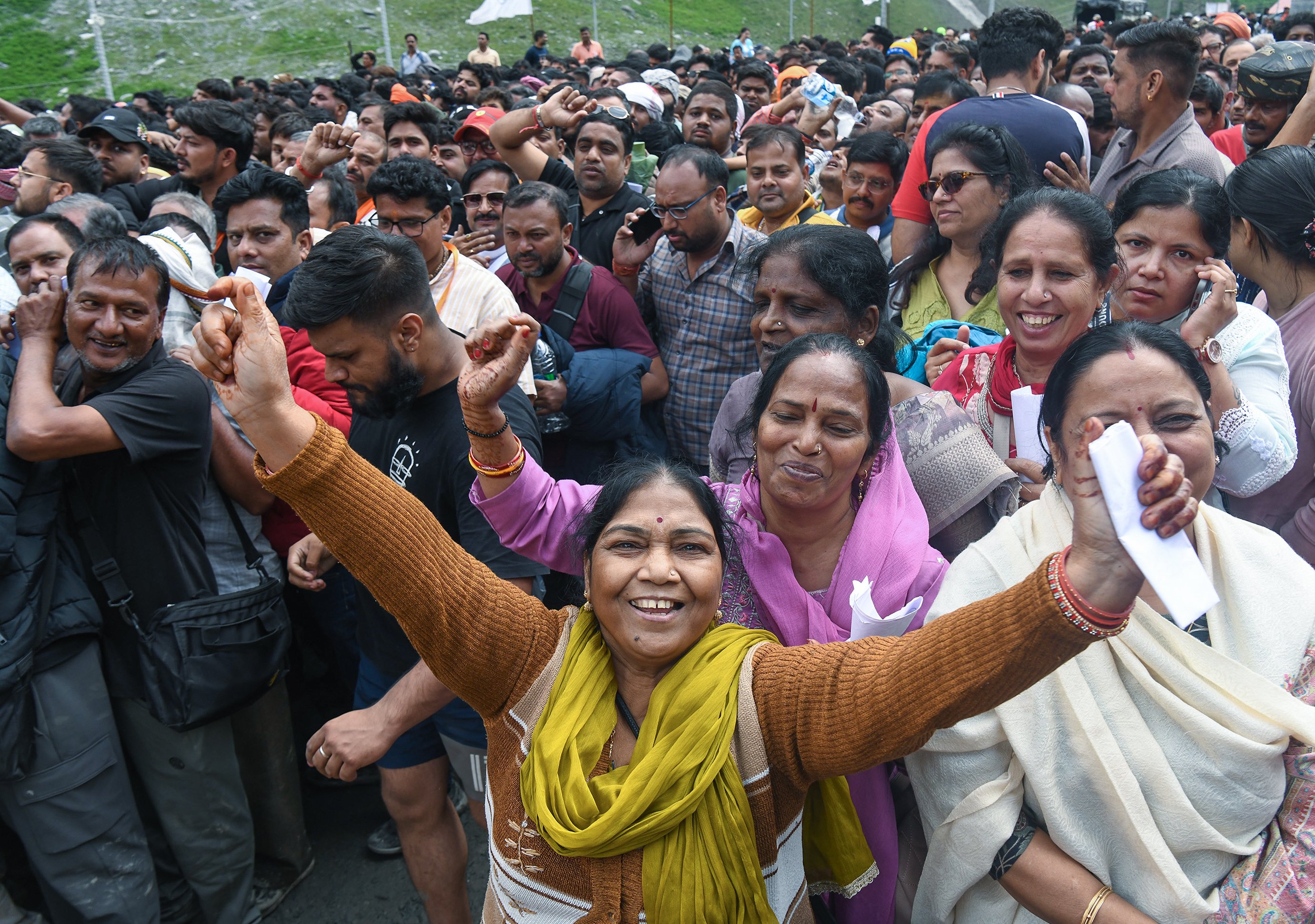 Pilgrims in queue for security check at Baltal
While the pilgrimage contributes significantly to the livelihoods of thousands of Kashmiris, reducing this relationship to economics alone would be a profound misunderstanding. Numerous examples exist of residents risking their own safety during cloudbursts, flash floods and accidents to rescue pilgrims. Such acts reveal an older civilizational ethic that continues to inspire compassion across religious boundaries.
#WATCH | Jammu and Kashmir | The first batch of devotees departs from Domail base camp in Baltal for their pilgrimage to the Holy cave of Shri Amarnath Ji pic.twitter.com/28K5pQwzE4
— ANI (@ANI) July 3, 2026
Every summer, the Amarnath Yatra transforms Kashmir into a remarkable spiritual festival. Roads become rivers of faith carrying pilgrims speaking dozens of Indian languages. Temporary markets, community kitchens and volunteer camps bring towns and villages to life. For the local population, irrespective of religion, the Yatra introduces a distinct rhythm marked by hospitality, cooperation and shared responsibility. It becomes not merely a Hindu pilgrimage but a celebration of Kashmir's ability to preserve and nurture a sacred national tradition.
The Yatra also carries immense significance for India's civilizational unity. Pilgrims from Tamil Nadu, Gujarat, Maharashtra, Assam, Punjab, Karnataka, Bengal and every other region walk together through Kashmir's mountains. Their interaction with local Kashmiri Muslims often dismantles stereotypes created by politics or sensational media narratives.
Equally important remains the continued participation of local communities. Arrangements by authorities are successful as these are complemented by the hospitality, logistical support and goodwill of ordinary Kashmiris. The Yatra therefore represents a collective achievement involving administrators, security personnel, healthcare workers, volunteers, civil society organisations and locals working together in harmony.
Ultimately, the Amarnath Yatra represents far more than an annual religious event. It symbolises the timeless dialogue between humanity and the Divine, between endurance and faith. At the same time, it stands as one of the finest expressions of Kashmir's composite culture, where people of different religions become partners in a shared spiritual endeavour.
The Muslim who guides an exhausted pilgrim, the Hindu devotee who returns home with memories of Kashmiri hospitality, the security personnel standing vigilant in harsh conditions and the volunteers serving food without discrimination all become participants in a larger pilgrimage—the pilgrimage towards mutual respect, compassion and national integration.
READ MORE: A Muslim village proves cleanliness, harmony, development go together
In an age increasingly marked by suspicion and polarisation, the Amarnath Yatra continues to proclaim a timeless truth: faith need not divide humanity; it can become the bridge that unites hearts.

.jpg "Gujarat’s women entrepreneurs bring their craftsmanship to life during Navratri")











.webp)