Eman Sakina
When discussions about climate change arise, they are often framed in scientific, political, or economic terms. We hear about rising global temperatures, melting glaciers, extreme weather events, and international agreements. While these conversations are important, Muslims must also recognise another dimension of the climate crisis—its moral and spiritual dimension. Climate change is not merely an environmental issue; it is a Haqooq-ul-Ibad issue.
Friday Musings
Haqooq ul Ibad translates to "the rights of servants" or "obligations to humanity". In Islamic teachings, it refers to the fundamental duties and moral responsibilities that individuals owe to one another, ranging from basic respect and kindness to honouring financial and social obligations
Islam places tremendous emphasis on these rights. While acts of worship such as prayer, fasting, and charity are essential, the faith also teaches that harming others, violating their rights, or neglecting our responsibilities toward them is a serious matter. The climate crisis should be understood through this lens because its consequences directly affect the lives, health, livelihoods, and futures of millions of people.
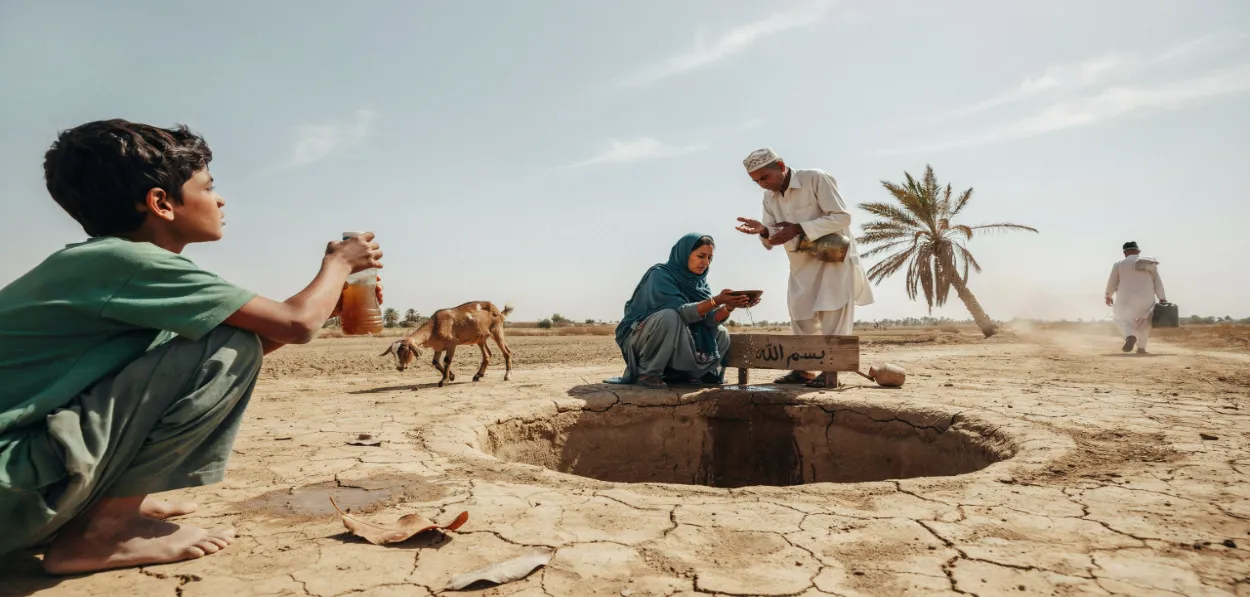
The effects of climate change are not distributed equally. Those who contribute the least to environmental destruction often suffer the most from its consequences. Poor communities, small farmers, coastal populations, and vulnerable nations bear the burden of floods, droughts, heatwaves, food insecurity, and displacement.
When crops fail due to prolonged drought, when families lose their homes to rising seas, or when children suffer from polluted air and contaminated water, the issue ceases to be merely environmental. It becomes a question of justice. The Qur'an repeatedly condemns corruption and destruction on earth: "Do not cause corruption on the earth after it has been set right." (Qur'an 7:56)
This command is not limited to social corruption alone. It encompasses any behaviour that damages the balance Allah has established in creation. The natural world is not a random collection of resources for unlimited exploitation. It is a trust entrusted to humanity.
Allah says: "And the sky He raised, and He set the balance, so that you may not transgress within the balance." (Qur'an 55:7-8)
The concept of balance, or mizan, lies at the heart of the Islamic worldview. Everything in creation operates according to a divinely established order. Human beings are beneficiaries of this balance, but they are also responsible for preserving it. When greed, wastefulness, and irresponsible consumption disrupt that balance, the consequences are felt by entire communities.
One of the most overlooked aspects of environmental degradation is its impact on future generations. Islam teaches that responsibility extends beyond the present moment. Parents work hard not only for themselves but also for their children and grandchildren. Likewise, societies must think beyond immediate convenience and short-term profit.
The Prophet Muhammad said: "If the Final Hour comes while one of you has a seedling in his hand, let him plant it."
This remarkable hadith reflects a profound ethic of hope, stewardship, and responsibility. Even when the future seems uncertain, believers are encouraged to contribute positively to the world around them.
Today, however, humanity faces a troubling contradiction. We consume resources at unprecedented levels while leaving environmental debts for future generations to pay. Forests disappear, rivers become polluted, species vanish, and ecosystems collapse. The children who inherit this world will live with the consequences of decisions they never made. From an Islamic perspective, denying future generations a healthy and sustainable environment is a violation of their rights.
The climate crisis is also connected to the issue of wastefulness.
Modern consumer culture often encourages excess. Food is discarded while millions remain hungry. Products are used briefly and thrown away. Energy is consumed carelessly. The environmental cost of such behaviour is enormous. Islam, however, teaches moderation in every aspect of life. The Prophet practised simplicity and discouraged extravagance even in acts of worship, such as using excessive water during ablution.
Understanding climate change as a Haqooq-ul-Ibad issue shifts the conversation from optional activism to moral obligation. Caring for the environment is not a luxury concern reserved for scientists or policymakers. It is part of fulfilling our responsibility toward fellow human beings. Every polluted river affects communities downstream. Every act of environmental negligence contributes, however indirectly, to human suffering.
This does not mean that individual actions alone can solve a global crisis. Governments, corporations, and international institutions bear significant responsibility. Yet Islam teaches that accountability exists at every level. Individuals must examine their consumption habits, communities must promote environmental awareness, businesses must adopt ethical practices, and leaders must pursue policies that protect both people and the planet. The earth belongs to Allah, and humanity has been entrusted with its care.
The climate crisis therefore challenges Muslims to rethink environmental responsibility not as a peripheral issue but as an essential component of faith. It is about protecting lives, safeguarding livelihoods, preserving resources, and ensuring justice for present and future generations. It is about recognising that environmental destruction ultimately harms people, especially the most vulnerable among us.
When viewed through the framework of Haqooq-ul-Ibad, climate change is no longer a distant global problem discussed in conferences and reports. It becomes a deeply personal moral concern. Every effort to reduce harm, conserve resources, protect ecosystems, and advocate for environmental justice becomes an act of fulfilling the rights of others.
ALSO READ: A Muslim village proves cleanliness, harmony, development go together
The question before us is not simply whether the climate is changing. The question is whether we are willing to uphold the trust Allah has given us and protect the rights of those whose lives are affected by our choices. In that sense, the climate crisis is not only an environmental emergency. It is a test of our faith, our ethics, and our commitment to justice.

_(1)_(1).webp "Khanqah Emadia Qalandaria, Patna, Bihar")






.webp "People offering Eid prayers at the Hazratbal shrine, Srinagar")